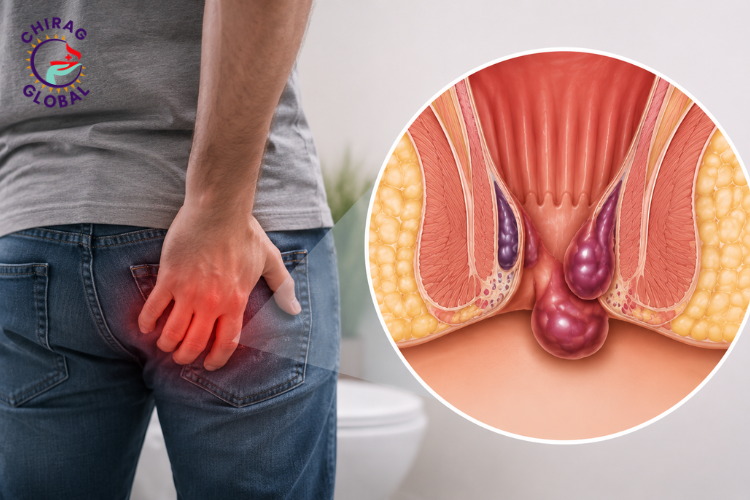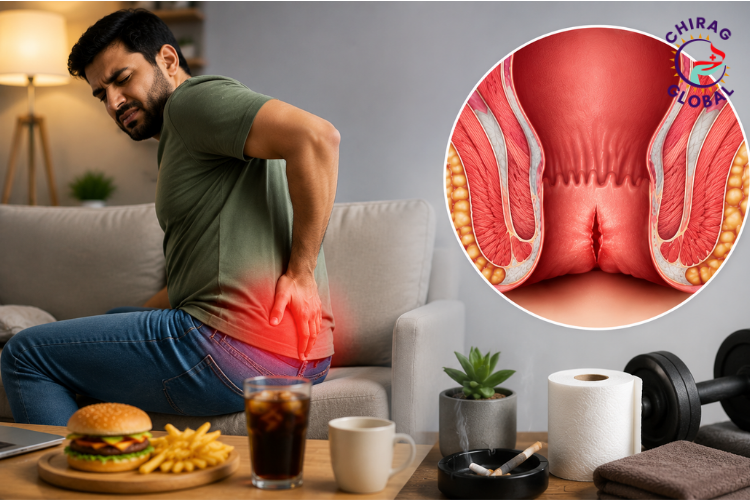

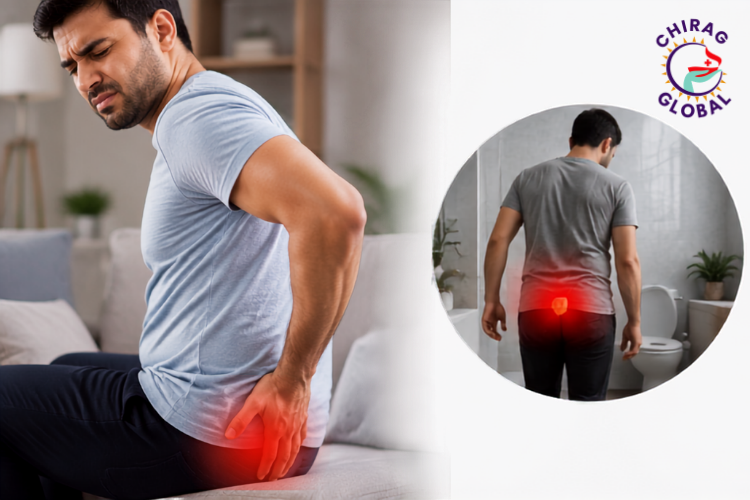
First stage piles are the earliest grade of internal hemorrhoids. They develop when the blood vessels and supporting tissues inside the anal canal become swollen, but the hemorrhoids remain inside the rectum and do not prolapse outside the anus.
Because the symptoms can be mild, some people may not realise they have hemorrhoids until they notice a small amount of bleeding during or after passing stool.
Recognising Grade 1 hemorrhoids early is useful because lifestyle and medical measures may often control symptoms and prevent the condition from progressing.
At Chirag Global Hospitals, Bangalore, patients with rectal bleeding, discomfort, or suspected piles can undergo appropriate evaluation to determine the cause and severity of the condition.
Book a Consultation | Call 08065903127
What Are First Stage Piles?
First stage piles, also called Grade 1 hemorrhoids, are internal hemorrhoids that remain within the anal canal.
Hemorrhoids are normal vascular structures that help support the anal canal. Problems occur when these tissues become enlarged, swollen, or displaced.
In Grade 1 piles:
- The hemorrhoids remain inside the anal canal.
- They do not protrude outside during bowel movements.
- They may cause bleeding.
- Symptoms may be intermittent.
- Constipation and straining can worsen the condition.
Grade 1 piles are different from more advanced hemorrhoids, where the swollen tissue may protrude through the anus.
What Are the Symptoms of First Stage Piles?
The symptoms of first stage piles can be subtle.
1. Bright-Red Rectal Bleeding
One of the most common symptoms is fresh, bright-red blood noticed:
- On toilet paper
- On the surface of stool
- In the toilet bowl after passing stool
Bleeding may occur without significant pain.
However, rectal bleeding should not automatically be attributed to piles. Other conditions can also cause bleeding and may require investigation.
2. Mild Anal Discomfort
Some people experience a feeling of discomfort or pressure around the anus.
This may become more noticeable after prolonged sitting or bowel movements.
3. Itching or Irritation
Mucus or irritation around the anal area may cause itching.
Repeated wiping or scratching can make the skin more irritated.
4. A Feeling of Incomplete Emptying
Some people may feel as though the bowel has not emptied completely after passing stool.
This symptom is not specific to piles and can occur with other bowel conditions as well.
5. Symptoms Associated With Constipation
First stage piles often occur alongside constipation.
Hard stools and repeated straining can increase pressure on the hemorrhoidal tissues and aggravate symptoms.
What Causes First Stage Piles?
Several factors can contribute to the development of Grade 1 hemorrhoids.
Constipation
Hard stool can make bowel movements difficult and increase straining.
Repeated straining places additional pressure on the tissues and veins around the anal canal.
Low-Fibre Diet
A diet that contains too little fibre can contribute to hard or infrequent stools.
Fibre helps increase stool bulk and can support easier bowel movements.
Excessive Straining
Repeatedly pushing forcefully during bowel movements can increase pressure within the anal and rectal blood vessels.
Prolonged Toilet Sitting
Spending a long time sitting on the toilet can increase pressure around the anal region.
Using a phone or reading while sitting on the toilet may unintentionally extend toilet time.
Pregnancy
Pregnancy can increase pressure on the veins in the pelvic and rectal region.
Hormonal changes can also contribute to constipation, potentially increasing the risk of hemorrhoid symptoms.
Lack of Physical Activity
A sedentary lifestyle can contribute to constipation and irregular bowel habits, which may indirectly increase the risk of hemorrhoid problems.
Chronic Diarrhoea
Frequent bowel movements and repeated wiping can irritate the anal area and may contribute to hemorrhoid symptoms.
How Are First Stage Piles Different From Other Grades?
Internal hemorrhoids are commonly classified according to whether and how they prolapse.
| Grade | What Happens |
| Grade 1 | Remain inside the anal canal and do not prolapse |
| Grade 2 | Prolapse during bowel movements but return inside on their own |
| Grade 3 | Prolapse and need to be pushed back manually |
| Grade 4 | Remain prolapsed and cannot be pushed back inside |
The grading system helps doctors determine the appropriate management approach.
Can First Stage Piles Become Worse?
They can, particularly when contributing factors remain untreated.
For example:
Constipation → hard stool → straining → increased pressure → hemorrhoid irritation
If this pattern continues for a long period, symptoms may become more frequent and hemorrhoids may progress.
However, not every person with Grade 1 piles will develop more advanced hemorrhoids.
Early management can help control symptoms and address the factors contributing to them.
Do First Stage Piles Need Surgery?
Usually, Grade 1 piles do not require surgery.
Many patients improve with dietary changes, bowel-habit modification, constipation management, and appropriate medical treatment.
If bleeding or other symptoms continue despite conservative management, a specialist may recommend further evaluation and, in selected cases, an office-based procedure.
The appropriate treatment depends on the diagnosis and severity of symptoms.
Can First Stage Piles Be Cured Permanently?
Symptoms can often be controlled effectively, particularly when contributing factors such as constipation and straining are addressed.
However, hemorrhoidal tissue can become symptomatic again if the underlying bowel habits return.
Maintaining healthy bowel habits is therefore important even after symptoms disappear.
What Foods Are Helpful for First Stage Piles?
A piles-friendly eating pattern should focus on fibre and adequate fluids.
Fruits
- Pears
- Apples
- Guava
- Oranges
- Kiwi
- Papaya
Vegetables
- Carrots
- Beans
- Broccoli
- Spinach
- Pumpkin
- Sweet potato
Whole Grains
- Oats
- Brown rice
- Whole-wheat roti
- Barley
- Millets
Legumes
- Dal
- Lentils
- Chickpeas
- Beans
- Green gram
Foods to Limit When You Have Piles
There is no universal list of foods that everyone with piles must completely avoid.
However, it may be helpful to reduce foods that contribute to a low-fibre eating pattern, such as:
- Highly processed snacks
- Refined-flour foods
- Excessive fast food
- Frequent fried foods
- Large quantities of processed meat
Very spicy food does not cause hemorrhoids in everyone, but it may worsen anal burning or irritation in some people.
Can First Stage Piles Cause Pain?
Grade 1 internal hemorrhoids commonly cause painless bleeding rather than severe pain.
Significant anal pain is less typical and may indicate another problem, such as:
- Anal fissure
- Thrombosed external hemorrhoid
- Anal abscess
- Other anorectal conditions
If you have severe or persistent anal pain, do not assume that piles are the only possible cause.
Conclusion
First stage piles, or Grade 1 hemorrhoids, are the earliest grade of internal hemorrhoids. They remain inside the anal canal and commonly cause symptoms such as bright-red bleeding, mild discomfort, or irritation rather than a visible prolapse.
Early management focuses mainly on keeping stools soft, increasing fibre, drinking adequate fluids, staying active, avoiding excessive straining, and developing healthy toilet habits. Most Grade 1 piles do not require surgery.
However, rectal bleeding should never automatically be assumed to be caused by hemorrhoids. If bleeding persists, becomes heavier, or occurs alongside significant pain or changes in bowel habits, medical evaluation is important to identify the actual cause.
Visit Chirag Global Hospitals Today!
Frequently Asked Questions
What are first stage piles?
First stage piles are Grade 1 internal hemorrhoids that remain inside the anal canal and do not prolapse outside the anus.
What is the most common symptom of Grade 1 piles?
Bright-red rectal bleeding, particularly during or after bowel movements, is a common symptom. Bleeding should still be evaluated if it is persistent or unexplained.
Do Grade 1 piles need surgery?
Usually not. Early piles are often managed with fibre, adequate fluids, constipation treatment, healthier bowel habits, and appropriate medical treatment.
Can Grade 1 piles go away?
Symptoms can improve significantly with appropriate management. Preventing constipation and excessive straining can reduce the likelihood of recurrence.
Are first stage piles painful?
Grade 1 internal hemorrhoids often cause bleeding without significant pain. Severe pain should prompt evaluation for another condition.