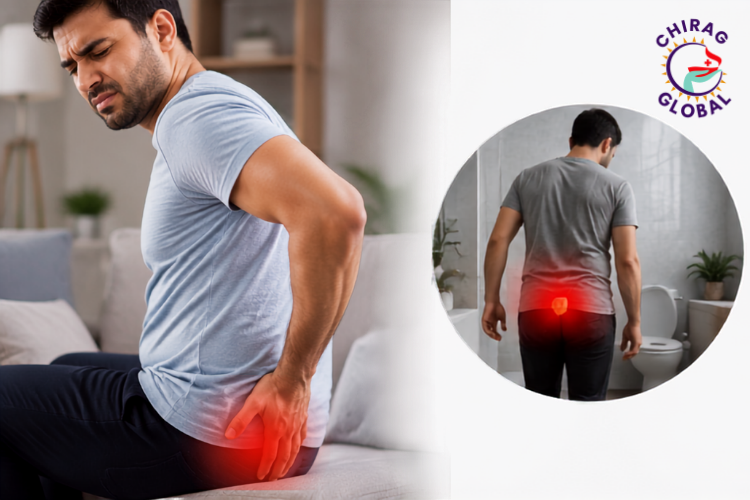

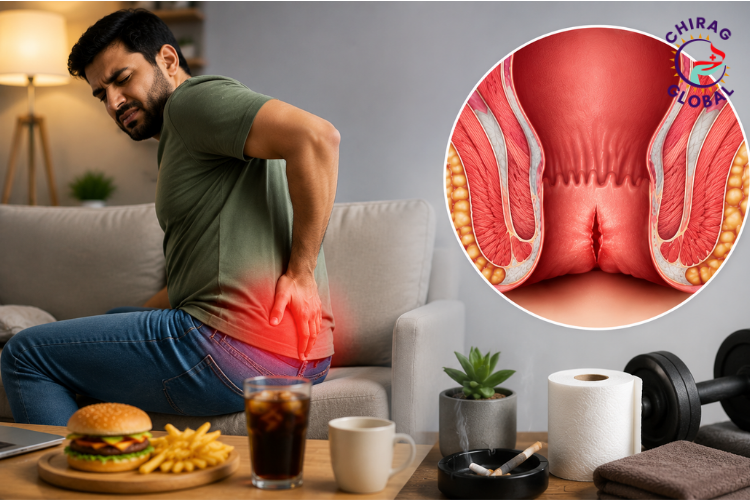
An anal fissure is a small tear in the lining of the anus that can cause sharp pain, burning, and bright-red bleeding during or after bowel movements. While many acute fissures can improve with appropriate care, recovery is not always straightforward.
Several everyday habits and untreated bowel problems can repeatedly irritate the area and make recovery take longer. This is why understanding anal fissure recovery time involves more than simply waiting for the tear to close. Keeping stools soft, reducing strain, managing constipation, and following appropriate treatment can all play an important role.
If symptoms persist despite these measures, the fissure may need medical evaluation to determine whether it has become chronic or whether another anorectal condition is responsible.
At Chirag Global Hospitals, Bangalore, patients with persistent anal pain, bleeding, or suspected fissures can receive appropriate evaluation and treatment based on the underlying cause.
Book a Consultation | Call 08065903127
How Long Does an Anal Fissure Take to Recover?
There is no single recovery time that applies to everyone.
A recent or acute anal fissure may improve within several weeks when the factors causing repeated irritation are addressed.
A fissure that persists or repeatedly reopens may become chronic and can require more specialised treatment.
Recovery depends on factors such as:
- Cause of the fissure
- Stool consistency
- Constipation
- Anal sphincter spasm
- Frequency of bowel movements
- Treatment being used
- Whether the fissure repeatedly reopens
- Presence of another underlying condition
The most important point is that symptom improvement and complete tissue healing are not necessarily the same thing.
7 Factors That May Delay Anal Fissure Recovery
1. Continuing to Pass Hard Stool
Hard stool can repeatedly stretch the anal lining.
Even if the fissure begins to improve, one particularly hard bowel movement can irritate or reopen the area.
This can create a cycle:
Hard stool → fissure irritation → pain → avoidance of bowel movements → constipation → harder stool
Breaking this cycle is an important part of recovery.
What can help?
Depending on your individual needs:
- Increase fibre gradually
- Drink adequate fluids
- Eat more fruits and vegetables
- Include whole grains and legumes
- Follow constipation treatment recommended by your healthcare professional
2. Straining During Bowel Movements
Repeated forceful straining can place additional pressure on the anal canal.
Some people continue straining because they feel that they have not completely emptied their bowel.
Try to avoid sitting and pushing for prolonged periods.
If bowel movements consistently require significant straining, the underlying constipation or evacuation problem should be assessed.
3. Ignoring the Urge to Pass Stool
Delaying a bowel movement repeatedly can allow stool to remain in the colon for longer.
As more water is absorbed, the stool may become harder.
This can make the next bowel movement more difficult and potentially irritate a healing fissure.
Responding to the natural urge to pass stool can help establish healthier bowel habits.
4. Not Managing the Underlying Constipation
Treating the fissure itself may not be enough if constipation continues.
For example, topical medication may reduce symptoms, but if hard stool continues to traumatise the area, recovery may be delayed.
Constipation management should therefore be considered an important part of fissure care.
If constipation is persistent, a healthcare professional can help determine whether dietary changes, medication, or further investigation is appropriate.
5. Stopping Treatment as Soon as the Pain Improves
Pain may decrease before the fissure has completely healed.
This can make someone feel that treatment is no longer necessary.
However, stopping prescribed treatment prematurely may allow the underlying problem to return.
If your doctor has prescribed medication, use it according to the recommended instructions rather than stopping it solely because symptoms have improved.
6. Repeated Diarrhoea or Frequent Bowel Movements
Fissures are often associated with constipation, but frequent loose stools can also irritate the anal lining.
Repeated bowel movements can expose the area to:
- Friction
- Moisture
- Digestive contents
- Frequent wiping
If diarrhoea continues, identifying and managing its cause may be important for allowing the fissure to recover.
7. Ignoring a Fissure That Has Become Persistent
An acute fissure may heal with conservative treatment.
However, a fissure that does not improve or repeatedly returns may require specialist evaluation.
Chronic fissures can develop additional features, such as:
- A sentinel skin tag
- An enlarged anal papilla
- Visible internal sphincter fibres
Persistent symptoms do not necessarily mean that treatment has failed. They may indicate that the condition needs a different management approach.
Conclusion
Anal fissure recovery time varies from person to person. A recent fissure may improve within several weeks when the underlying causes are addressed, while persistent or recurrent fissures may require more specialised treatment.
The biggest obstacles to recovery are often hard stools, constipation, repeated straining, frequent diarrhoea, and stopping treatment too early. Keeping bowel movements soft and avoiding repeated trauma can give the affected tissue a better opportunity to recover.
If anal pain or bleeding persists or repeatedly returns, do not continue treating the symptoms indefinitely at home. A specialist evaluation can determine whether the fissure is healing normally, has become chronic, or whether another anorectal condition is responsible.
Visit Chirag Global Hospitals Today!
Frequently Asked Questions
How long does an anal fissure take to recover?
Many acute fissures can improve within several weeks with appropriate management, but recovery varies. Chronic or recurrent fissures may take longer and sometimes require specialist treatment.
Why is my anal fissure not healing?
Ongoing hard stools, constipation, excessive straining, diarrhoea, anal sphincter spasm, or an untreated underlying condition can interfere with recovery.
Does less pain mean my fissure is completely healed?
Not necessarily. Pain may improve before the tissue has fully healed.
Can an anal fissure heal without surgery?
Yes. Many acute fissures respond to conservative and medical treatment. Chronic fissures that do not respond adequately may require additional procedures.
Can constipation make fissure recovery slower?
Yes. Hard stools and repeated straining can repeatedly traumatise the fissure and interfere with recovery.