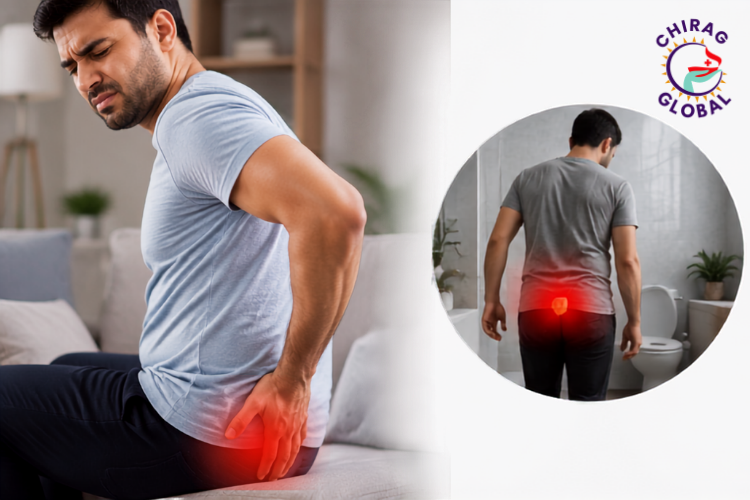

A sudden, painful lump near the anus can be alarming, especially when it appears without much warning. One possible cause is thrombosed piles, a type of hemorrhoid in which a blood clot forms inside an external hemorrhoidal vein.
Unlike many uncomplicated hemorrhoids, thrombosed piles can become noticeably painful within a short period. The lump may feel firm or tender and can sometimes appear blue, purple, or dark in colour.
Although the condition may improve with conservative care, severe pain or persistent symptoms may require medical evaluation. It is also important to distinguish thrombosed hemorrhoids from other causes of a painful lump around the anus, such as an anal abscess.
At Chirag Global Hospitals, Bangalore, persistent or severe symptoms can be evaluated to identify the cause and determine the appropriate treatment.
Book a Consultation | Call 08065903127
What Are Thrombosed Piles?
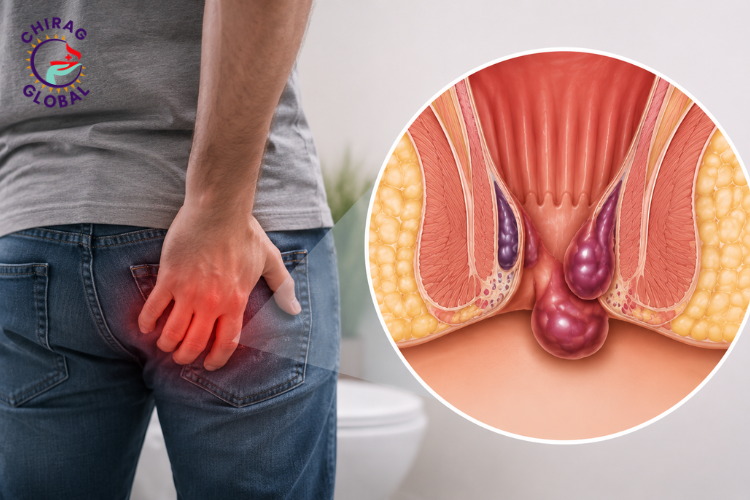
Thrombosed piles occur when a blood clot, also called a thrombus, develops within an external hemorrhoid.
Hemorrhoids are swollen vascular structures in and around the anal canal. When a clot forms within an external hemorrhoidal vein, the area can become:
- Swollen
- Firm
- Tender
- Painful
A thrombosed hemorrhoid is usually located around the outside of the anus rather than deep inside the anal canal.
The sudden appearance of a painful lump is one of its most recognisable features.
What Do Thrombosed Piles Look Like?
A thrombosed external hemorrhoid may appear as a:
- Firm lump near the anus
- Blue or purple swelling
- Dark-coloured bump
- Tender mass under the skin
However, appearance alone cannot confirm the diagnosis.
A painful lump around the anus can also be caused by an abscess or another condition, so medical assessment may be necessary when symptoms are severe or unusual.
What Causes Thrombosed Piles?
A thrombosis can occur when blood collects and forms a clot within an external hemorrhoidal vein.
Factors that may increase pressure around the anal region include:
Constipation
Hard stools can lead to repeated straining during bowel movements.
Excessive Straining
Forceful pushing can increase pressure on the veins around the anus.
Prolonged Sitting
Long periods of sitting, including prolonged time spent on the toilet, may contribute to increased pressure in the anorectal area.
Heavy Lifting
Activities involving significant straining may increase pressure within the abdomen and pelvic region.
Pregnancy
Pregnancy can increase pressure on pelvic and rectal veins and may contribute to hemorrhoid problems.
Diarrhoea
Frequent bowel movements and repeated wiping can irritate the anal region.
A thrombosed hemorrhoid can also occur without an obvious trigger.
Symptoms of Thrombosed Piles
The symptoms can develop suddenly.
Common signs include:
- Sudden anal pain
- A firm lump near the anus
- Swelling
- Tenderness
- Bluish or purple discolouration
- Discomfort while sitting
- Pain during bowel movements
Some thrombosed hemorrhoids may also bleed if the overlying skin breaks.
Why Are Thrombosed Piles So Painful?
The blood clot causes swelling within a confined area.
This increases pressure on surrounding tissues and can produce significant pain and tenderness.
Pain is often particularly noticeable during the early phase of thrombosis.
As the clot gradually breaks down or is absorbed, the swelling and pain can decrease.
Thrombosed Piles vs Regular Piles
Although both involve hemorrhoidal tissue, the symptoms can be different.
| Feature | Regular Hemorrhoids | Thrombosed Piles |
| Pain | May be mild or absent | Often sudden and significant |
| Lump | May be soft or swollen | Often firm and tender |
| Colour | Usually skin-coloured or similar to surrounding tissue | May appear blue or purple |
| Clot | Not necessarily present | Blood clot is present |
| Onset | May develop gradually | Often sudden |
| Location | Internal or external | Usually external |
The distinction is important because treatment may differ depending on the presentation.
Are Thrombosed Piles Dangerous?
Thrombosed piles are generally not considered life-threatening, but they can cause substantial pain.
The condition may improve naturally as the body gradually absorbs the clot.
However, a painful lump should not automatically be assumed to be a thrombosed hemorrhoid. An anal abscess, for example, can also cause a painful swelling and may require prompt drainage.
Medical evaluation is particularly important when pain is severe or accompanied by fever, pus, or rapidly increasing swelling.
Conclusion
Thrombosed piles occur when a blood clot forms within an external hemorrhoidal vein. They commonly present as a sudden, firm, tender lump near the anus and can cause considerable pain.
Many cases improve with conservative care, including keeping stools soft, avoiding straining, maintaining adequate fibre and fluid intake, and using appropriate symptom relief. Selected patients with severe, recently developed symptoms may benefit from a procedure.
Because other conditions, particularly an anal abscess, can cause a painful lump in the same area, persistent or severe symptoms should be evaluated by a medical professional rather than treated at home by attempting to drain the swelling.
Visit Chirag Global Hospitals Today!
Frequently Asked Questions
What are thrombosed piles?
Thrombosed piles are external hemorrhoids in which a blood clot forms inside a hemorrhoidal vein, resulting in a firm and often painful lump.
What is the main symptom of thrombosed piles?
Sudden, significant pain accompanied by a firm lump near the anus is a common presentation.
Can thrombosed piles heal naturally?
Yes. Many thrombosed external hemorrhoids gradually improve as the body absorbs the clot.
How long does the pain from thrombosed piles last?
Pain often improves over several days, but the lump or swelling can take longer to completely resolve.
Are thrombosed piles the same as internal hemorrhoids?
No. Thrombosed piles usually refer to a blood clot within an external hemorrhoid, while internal hemorrhoids develop inside the anal canal.
Can constipation cause thrombosed piles?
Constipation and repeated straining can increase pressure around the anal veins and may contribute to hemorrhoid problems.