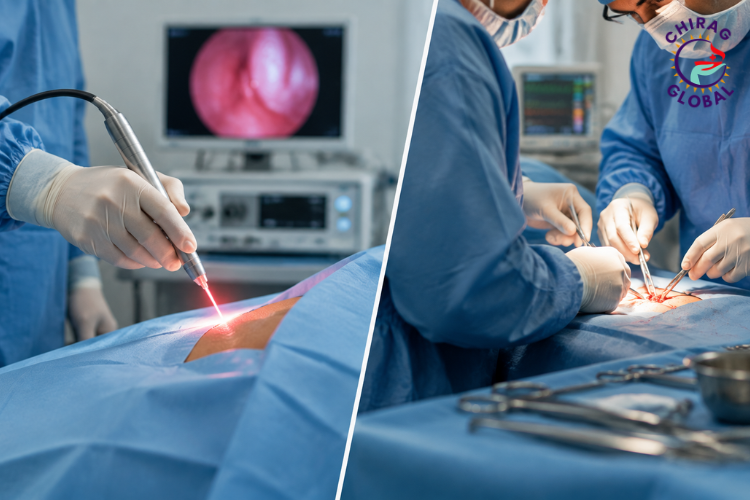


If you have been told that you may need piles surgery, it is natural to have questions. Will surgery be painful? Do all piles require an operation? Is laser treatment suitable? How long does recovery take? Can piles come back after surgery?
At Chirag Global Hospitals, Bangalore, Dr. Rajasekhar M. R. and the colorectal care team evaluate the type, grade, symptoms, and overall condition before recommending a treatment approach. The hospital’s current information describes Dr. Rajasekhar as its Founder and Chief Proctologist, while its piles treatment services include both minimally invasive and surgical options.
Book a Consultation | Call 08065903127
This guide answers 10 common piles surgery questions to help patients understand what to expect before making a treatment decision.
1. Does Everyone With Piles Need Surgery?
No.
This is one of the most important things to understand about piles. Surgery is not automatically required just because you have hemorrhoids.
Many people with mild or early piles can improve with dietary changes, increased fiber, adequate fluids, better bowel habits, and other medical treatments. Office-based procedures such as rubber band ligation may also be appropriate for many patients with symptomatic internal hemorrhoids.
Surgery may be considered when:
- Piles are large or significantly prolapsed
- Symptoms continue despite conservative treatment
- There is recurrent or troublesome bleeding
- Internal and external hemorrhoids occur together
- Symptoms are significantly affecting daily activities
- The condition is advanced or complicated
The decision should be based on examination rather than symptoms alone.
For example, the American Society of Colon and Rectal Surgeons recommends considering excisional hemorrhoidectomy for selected patients with external hemorrhoids or symptomatic combined internal and external hemorrhoids, particularly Grades III–IV.
Dr. Rajasekhar’s approach: First determine whether surgery is actually necessary. If another treatment is appropriate, surgery may not be the first choice.
2. How Does a Doctor Know Whether I Need Piles Surgery?
A diagnosis usually starts with your symptoms and medical history, followed by a physical examination.
Your doctor may ask about:
- Bleeding during bowel movements
- Pain or discomfort
- Constipation
- Straining
- Whether a lump comes out during bowel movements
- Whether the lump returns on its own or needs to be pushed back
- Previous piles treatments
- Changes in bowel habits
An examination may help determine whether the problem is internal hemorrhoids, external hemorrhoids, prolapse, an anal fissure, or another anorectal condition. Depending on the symptoms, an anoscopy or another examination may be required.
This distinction matters because rectal bleeding should not automatically be assumed to be piles. Other bowel conditions can cause similar symptoms, so persistent or unexplained bleeding deserves appropriate medical evaluation.
At Chirag Global Hospitals, treatment planning is described as being based on evaluation of symptoms, grade, bowel habits, and associated anorectal conditions.
3. What Types of Piles Surgery Are Available?
There is no single piles operation that is appropriate for every patient.
Depending on the diagnosis, treatment may include:
Hemorrhoidectomy
A hemorrhoidectomy removes hemorrhoidal tissue surgically. It remains an important treatment for selected patients with large external hemorrhoids or symptomatic combined internal and external hemorrhoids, particularly advanced disease.
Laser-Based Treatment
Laser treatment uses controlled laser energy to treat selected hemorrhoidal tissue. Comparative studies suggest that laser hemorrhoidoplasty can have advantages such as less postoperative pain and bleeding in selected patients, although evidence quality and long-term durability vary.
Doppler-Guided Hemorrhoidal Artery Procedures
Techniques such as Doppler-guided hemorrhoidal artery ligation may be considered for selected internal hemorrhoids. The ASCRS guideline notes that these approaches may reduce pain compared with excisional hemorrhoidectomy but can have higher recurrence rates.
Stapled Hemorrhoidopexy
Stapling can reposition prolapsing internal hemorrhoidal tissue. However, current ASCRS guidance does not recommend it routinely as a first-line surgical treatment because of its efficacy and risk profile.
The important point is that the procedure should follow the diagnosis, not the other way around.
4. Is Piles Surgery Painful?
Some discomfort is expected after piles surgery, but the amount depends heavily on the procedure performed.
Excisional hemorrhoidectomy generally involves more postoperative discomfort because tissue is surgically removed. Other minimally invasive procedures may involve less postoperative pain in appropriately selected patients. Comparative studies of laser hemorrhoidoplasty have found lower early postoperative pain compared with conventional hemorrhoidectomy, although individual experiences vary.
Patients should not expect any procedure to be completely pain-free.
Pain management may include:
- Prescribed pain medication
- Keeping stools soft
- Avoiding straining
- Following the recommended diet
- Adequate fluid intake
- Gentle movement as advised
- Local care recommended by the treating team
Your surgeon should explain what level of discomfort is expected with the specific procedure being considered.
5. How Long Does It Take to Recover From Piles Surgery?
There is no single recovery timeline for every piles operation.
Recovery depends on:
- Type of procedure
- Extent of hemorrhoidal disease
- Number and location of treated areas
- Your general health
- Bowel habits
- Whether complications occur
- The physical demands of your work
Some minimally invasive procedures may allow patients to return to normal activities relatively quickly, while conventional hemorrhoidectomy generally requires a longer recovery period.
For conventional hemorrhoid surgery, some hospital guidance notes that recovery can take a few weeks, with pain particularly noticeable during bowel movements in the early period.
Your surgeon should give you an individualized recovery plan rather than promising a fixed number of days.
6. What Should I Eat After Piles Surgery?
One of the most important goals after treatment is to avoid hard stools and straining.
A diet containing adequate fiber can help make stools softer and easier to pass. Fluids also help fiber work effectively.
Depending on your doctor’s advice, your recovery diet may include:
- Vegetables
- Fruits
- Whole grains
- Legumes
- Other fiber-rich foods
- Adequate fluids
Your doctor may also recommend a fiber supplement or stool-softening medication if appropriate.
Avoiding constipation is important because repeated straining can contribute to hemorrhoid symptoms and can make recovery more uncomfortable.
Do Not Suddenly Overload on Fiber
If your usual diet is low in fiber, increasing it gradually may be more comfortable. Your doctor can advise you based on your bowel habits and medical condition.
7. Can I Go to the Toilet Normally After Piles Surgery?
Yes, bowel movements are expected after surgery, but the first few bowel movements may feel uncomfortable.
Patients sometimes delay going to the toilet because they are worried about pain. However, intentionally holding stool can contribute to constipation and make stools harder to pass.
Your surgical team may recommend:
- Adequate fluids
- Fiber
- Stool-softening medication when appropriate
- Avoiding excessive straining
- Following the prescribed bowel-care plan
NIDDK recommends avoiding straining and prolonged toilet sitting as part of hemorrhoid management.
Do not take laxatives, enemas, or other bowel medicines after surgery without following your treating doctor’s instructions.
8. Is Laser Piles Treatment Suitable for Everyone?
No.
Laser treatment has become an important minimally invasive option, but it should not be considered a universal replacement for conventional surgery.
Research comparing laser hemorrhoidoplasty with conventional hemorrhoidectomy has generally found lower early postoperative pain and some other short-term recovery advantages with laser in selected patients. However, recent evidence also notes uncertainty around long-term durability and emphasizes that conventional excisional surgery remains important for appropriate advanced cases.
Chirag Global Hospitals similarly states that laser treatment is considered after evaluating the type, grade, symptoms, and severity of piles, and that advanced cases may require a different treatment approach.
Therefore, the better question is not:
“Is laser better than surgery?”
Instead, ask:
“Which procedure is appropriate for my type and grade of piles?”
That answer requires a clinical examination.
9. Can Piles Come Back After Surgery?
Yes, piles can recur after treatment.
Treatment addresses the existing hemorrhoidal problem, but factors such as constipation, repeated straining, low fiber intake, prolonged toilet sitting, and unhealthy bowel habits can continue to contribute to hemorrhoidal symptoms.
This is why long-term bowel management matters.
After treatment, patients should generally focus on:
- Keeping stools soft
- Eating adequate fiber
- Drinking enough fluids
- Avoiding unnecessary straining
- Not sitting on the toilet for long periods
- Staying physically active as advised
- Attending follow-up appointments
Recurrence does not necessarily mean that the previous procedure was unsuccessful. Different hemorrhoidal tissue can become symptomatic over time, and individual recurrence risk varies.
10. What Should I Ask My Doctor Before Piles Surgery?
A consultation is the right time to ask questions rather than simply agreeing to a procedure without understanding it.
Consider asking:
About the Diagnosis
- What grade and type of piles do I have?
- Do I have internal, external, or combined hemorrhoids?
- Could my symptoms be caused by something else?
About Treatment
- Do I actually need surgery?
- What non-surgical options are available?
- Which procedure are you recommending and why?
- Is laser treatment appropriate for my condition?
- What are the alternatives?
About Recovery
- How much discomfort should I expect?
- When can I return to work?
- When can I exercise?
- What should I eat after surgery?
- How should I manage bowel movements?
About Risks
- What complications should I know about?
- What symptoms after surgery would require urgent attention?
- What is the possibility of recurrence?
These questions can help you understand the reasoning behind the treatment plan and prepare realistically for recovery.
Piles Surgery at Chirag Global Hospitals: What to Expect
At Chirag Global Hospitals, Bangalore, piles treatment is described as a diagnosis-based process rather than a one-size-fits-all procedure. The hospital offers evaluation and treatment options that may include conservative management, minimally invasive procedures, laser treatment, and surgery depending on the patient’s condition.
Dr. Rajasekhar M. R. is listed by the hospital as Founder and Chief Proctologist, with MBBS and MS qualifications.
A consultation may help determine:
- What is causing your symptoms
- Whether you actually have piles
- The type and grade of hemorrhoids
- Whether conservative treatment is sufficient
- Whether a procedure is appropriate
- Which treatment option best matches your condition
- What to expect during recovery
The goal should be to choose an appropriate treatment based on the diagnosis rather than choosing a procedure simply because it is newer or more widely advertised.
Conclusion
Having piles does not automatically mean you need surgery. Some patients improve with dietary and lifestyle measures or office-based procedures, while others with persistent, prolapsed, external, or advanced hemorrhoids may require surgery.
If surgery is recommended, ask about the exact diagnosis, available alternatives, expected recovery, possible complications, and why a particular procedure is appropriate for you.
At Chirag Global Hospitals, Bangalore, patients can discuss their symptoms and treatment options with the colorectal and proctology team before deciding on a procedure.
Visit Chirag Global Hospitals Today!
Frequently Asked Questions About Piles Surgery
1. When Is Surgery Needed for Piles?
Surgery may be considered when piles are large, significantly prolapsed, persist despite other treatments, or cause troublesome symptoms. The decision depends on the individual diagnosis.
2. Is Piles Surgery Painful?
Discomfort is common after surgery, particularly with conventional hemorrhoidectomy. The amount of pain varies according to the procedure and individual patient.
3. How Long Does Piles Surgery Recovery Take?
Recovery varies by procedure and patient. Some minimally invasive procedures may have a shorter recovery period, while conventional hemorrhoidectomy can take several weeks.
4. Is Laser Treatment Suitable for All Piles Patients?
No. Laser treatment may be suitable for selected patients, but advanced or complicated cases may require another approach.
5. Can Piles Return After Surgery?
Yes. Recurrence is possible. Maintaining healthy bowel habits and managing constipation and straining can help reduce factors associated with hemorrhoidal symptoms.
6. Can I Avoid Surgery if I Have Piles?
Some patients can manage piles without surgery, particularly when the condition is mild or responds to conservative treatment or office-based procedures. Advanced disease may require a procedure or surgery.
7. What Should I Eat After Piles Surgery?
A fiber-rich diet and adequate fluids can help keep stools softer and easier to pass. Your surgeon may provide individualized dietary and medication instructions.
8. Can Bleeding From the Anus Always Be Blamed on Piles?
No. Rectal bleeding can have several causes. Persistent or unexplained bleeding should be medically evaluated rather than automatically attributed to hemorrhoids.
9. What Is the Difference Between Laser Treatment and Hemorrhoidectomy?
Laser hemorrhoidoplasty is a minimally invasive technique used in selected cases, while hemorrhoidectomy surgically removes hemorrhoidal tissue. Comparative studies suggest laser can have some short-term recovery advantages, but the appropriate option depends on the patient’s condition.
10. What Should I Ask Before Agreeing to Piles Surgery?
Ask about your exact diagnosis, grade of piles, whether surgery is necessary, alternative treatments, the recommended procedure, expected recovery, possible complications, and recurrence.