

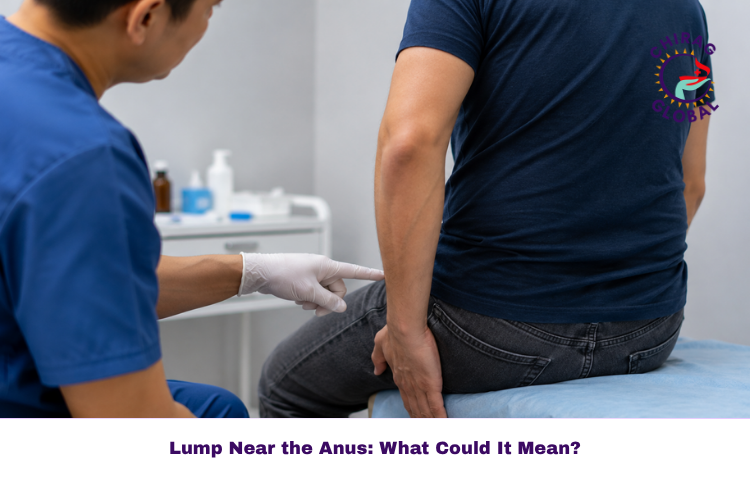
Finding a lump near the anus can be alarming. Whether it appears suddenly or develops gradually, it may cause discomfort, pain, itching, or simply raise concerns about what it could be. While some anal lumps are caused by relatively common conditions such as hemorrhoids, others may be related to infections or colorectal disorders that require medical attention.
At Chirag Global Hospitals, Bangalore, colorectal specialists evaluate patients with various anorectal conditions, helping identify the exact cause of symptoms and recommend appropriate treatment. Because several conditions can present as a lump near the anus, an accurate diagnosis is essential rather than assuming it is simply piles.
This article explains the possible causes of a lump near the anus, the symptoms that may accompany it, warning signs you should not ignore, and when to consult a colorectal specialist.
Book a Consultation | Call 08065903127
What Is a Lump Near the Anus?
A lump near the anus refers to any swelling, bump, or protrusion around the anal opening. The lump may be:
- Soft or firm
- Small or large
- Painful or painless
- Temporary or persistent
Some lumps appear suddenly, while others develop gradually over time. The appearance and associated symptoms often depend on the underlying condition.
Common Causes of a Lump Near the Anus
1. External Hemorrhoids (Piles)
One of the most common causes of a lump near the anus is an external hemorrhoid.
Hemorrhoids develop when the veins around the anus become swollen due to increased pressure.
Symptoms may include:
- A soft or swollen lump
- Pain during bowel movements
- Itching
- Burning sensation
- Mild bleeding
External hemorrhoids can become more noticeable after prolonged sitting or straining.
2. Thrombosed External Hemorrhoid
Sometimes, a blood clot forms inside an external hemorrhoid, creating what is known as a thrombosed hemorrhoid.
Unlike ordinary hemorrhoids, this condition often causes:
- Sudden severe pain
- A hard lump near the anus
- Bluish or purple discoloration
- Significant swelling
- Difficulty sitting comfortably
A thrombosed hemorrhoid should be evaluated by a healthcare professional.
3. Anal Abscess
An anal abscess is a collection of pus caused by a bacterial infection near the anus.
This condition usually develops quickly and can cause:
- A painful lump near the anus
- Redness
- Warmth around the swelling
- Fever
- Pus drainage
- Difficulty sitting
An untreated abscess may lead to further complications, making early treatment important.
4. Anal Fistula
An anal fistula is a small tunnel that forms between the anal canal and the skin around the anus, often after an abscess.
A fistula may present as:
- A recurring lump
- Persistent drainage
- Pus discharge
- Skin irritation
- Repeated infections
People who have experienced an anal abscess are at higher risk of developing a fistula.
5. Anal Fissure with a Sentinel Pile
A chronic anal fissure may result in the formation of a small skin tag called a sentinel pile.
Symptoms may include:
- A small lump near the anus
- Sharp pain during bowel movements
- Bright red bleeding
- Burning sensation
Although the lump itself may not be painful, the underlying fissure often causes significant discomfort.
6. Perianal Skin Tags
Skin tags are harmless folds of skin that may remain after healed hemorrhoids or fissures.
These are usually:
- Soft
- Painless
- Skin-colored
- Stable in size
Although skin tags generally do not require treatment, they may occasionally cause hygiene concerns or irritation.
7. Rectal Prolapse
Rectal prolapse occurs when part of the rectum protrudes through the anus.
Unlike a fixed lump, rectal prolapse may appear during bowel movements and become more noticeable with straining.
Symptoms may include:
- Tissue protruding from the anus
- Mucus discharge
- Bleeding
- Difficulty controlling bowel movements
- Feeling of incomplete bowel emptying
This condition requires medical evaluation.
8. Pilonidal Sinus
Although a pilonidal sinus typically develops near the tailbone rather than directly beside the anus, patients sometimes mistake it for an anal lump.
A pilonidal sinus may cause:
- Swelling near the top of the buttock crease
- Pain while sitting
- Redness
- Pus discharge
- Recurrent infections
Its location helps distinguish it from other causes of a lump near the anus.
9. Perianal Cyst
A cyst can also present as a lump near the anus.
These lumps are usually:
- Slow-growing
- Smooth
- Round
- Painless initially
If the cyst becomes infected, it may become painful, swollen, and filled with pus.
Symptoms That May Occur Along with a Lump Near the Anus
Depending on the underlying condition, you may also experience:
- Pain
- Itching
- Burning sensation
- Bleeding
- Swelling
- Pus discharge
- Mucus leakage
- Difficulty sitting
- Pain during bowel movements
- Fever
The combination of symptoms often helps the doctor identify the underlying cause.
When Is a Lump Near the Anus a Medical Emergency?
Although not every anal lump is an emergency, you should seek prompt medical attention if you experience:
- Severe pain
- Rapidly increasing swelling
- Fever
- Chills
- Heavy bleeding
- Foul-smelling discharge
- Inability to pass stool
- Difficulty controlling bowel movements
These symptoms may indicate infection or another condition requiring urgent care.
Can a Lump Near the Anus Be Prevented?
Although not every condition is preventable, healthy bowel habits can reduce the risk of several anorectal disorders.
Helpful measures include:
- Eating a high-fibre diet
- Drinking adequate water
- Staying physically active
- Avoiding prolonged sitting
- Responding promptly to the urge to pass stool
- Maintaining good anal hygiene
- Avoiding excessive straining during bowel movements
Expert Colorectal Care at Chirag Global Hospitals, Bangalore
At Chirag Global Hospitals, Bangalore, experienced colorectal specialists provide comprehensive evaluation and treatment for patients experiencing a lump near the anus. Using advanced diagnostic techniques, the team accurately identifies the underlying condition and develops a personalized treatment plan based on each patient’s symptoms and overall health.
Whether the lump is caused by hemorrhoids, an abscess, a fistula, a fissure, rectal prolapse, or another colorectal condition, early medical care can help relieve symptoms and improve long-term outcomes.
Visit Chirag Global Hospitals Today!
Conclusion
Discovering a lump near the anus can be worrying, but it does not always indicate a serious condition. Common causes include hemorrhoids, anal abscesses, fistulas, fissures, skin tags, rectal prolapse, pilonidal sinus, and perianal cysts. Because these conditions can have similar symptoms, an accurate diagnosis is essential to determine the most appropriate treatment.
If you notice a persistent or painful lump near the anus, especially if it is accompanied by bleeding, pus discharge, fever, or difficulty with bowel movements, consulting the colorectal specialists at Chirag Global Hospitals, Bangalore, can help identify the cause early and provide effective, personalized care.
Frequently Asked Questions
Is every lump near the anus caused by piles?
No. A lump near the anus can result from hemorrhoids, anal abscess, fistula, fissure, skin tags, rectal prolapse, pilonidal sinus, or other anorectal conditions.
Can a lump near the anus disappear on its own?
Some small hemorrhoids or temporary swelling may improve, but persistent or painful lumps should always be evaluated by a doctor.
Is a painful lump always an abscess?
No. A painful lump may be caused by a thrombosed hemorrhoid, abscess, fissure, or another anorectal condition. Proper diagnosis is important.
Can constipation cause a lump near the anus?
Chronic constipation increases the risk of conditions such as hemorrhoids and anal fissures, both of which may present as a lump.
When should I see a doctor for a lump near the anus?
You should consult a colorectal specialist if the lump is painful, continues to grow, bleeds, drains pus, or is associated with fever or changes in bowel habits.