
Hearing that you have polyps in the colon can be worrying, and one of the first questions many people ask is, “Does this mean I have cancer?” The reassuring answer is that most colon polyps are not cancerous. However, some types of polyps have the potential to develop into colorectal cancer over time if they are not detected and treated appropriately.
At Chirag Global Hospitals, Bangalore, colorectal specialists evaluate and manage patients with polyps in the colon, helping identify which polyps require monitoring, removal, or further investigation. Early diagnosis plays a key role in preventing colorectal cancer and maintaining long-term bowel health.
This article explains what colon polyps are, whether they are always cancerous, the different types, symptoms, risk factors, diagnosis, treatment options, and when to seek medical care.
Book a Consultation | Call 08065903127
What Are Polyps in the Colon?
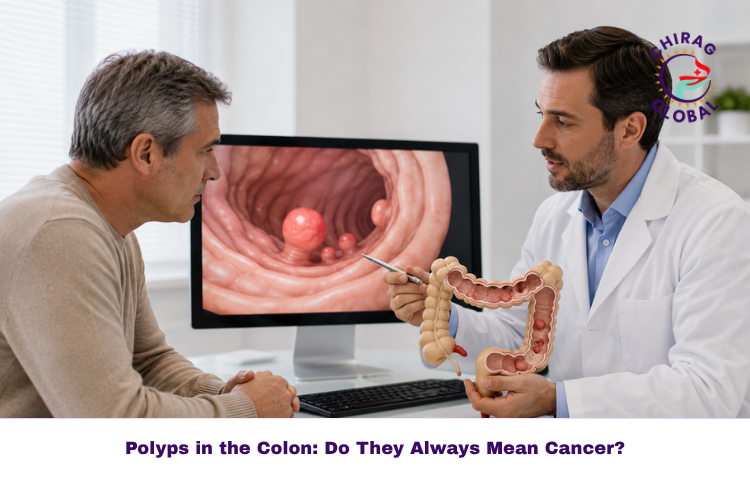
Polyps in the colon are abnormal growths that develop on the inner lining of the large intestine (colon). They may appear as small, flat lesions or grow on a stalk, resembling a mushroom.
Colon polyps can occur anywhere in the large intestine and may vary in size from a few millimeters to several centimeters.
Many people have one polyp, while others may develop multiple polyps during their lifetime.
Are Polyps in the Colon Always Cancerous?
No. Most polyps in the colon are benign (non-cancerous) when they are first detected.
However, certain types of polyps can gradually change into cancer over several years if they remain untreated. This is why doctors often recommend removing polyps during a colonoscopy whenever possible.
The presence of a colon polyp does not automatically mean a person has colorectal cancer, but it does mean the polyp should be evaluated carefully.
Types of Polyps in the Colon
Different types of polyps in the colon carry different risks.
1. Hyperplastic Polyps
Hyperplastic polyps are generally:
- Small
- Non-cancerous
- Commonly found in the lower colon or rectum
These polyps usually have a very low risk of becoming cancerous.
2. Adenomatous Polyps (Adenomas)
Adenomas are the most common type of precancerous colon polyp.
Although most adenomas do not become cancer, they have the potential to develop into colorectal cancer over time if left untreated.
Because of this risk, doctors usually recommend removing them.
3. Serrated Polyps
Serrated polyps vary in their cancer risk.
Some are harmless, while larger serrated polyps located in the upper colon may have a higher likelihood of progressing to cancer if not treated.
4. Inflammatory Polyps
Inflammatory polyps are often associated with inflammatory bowel diseases such as ulcerative colitis or Crohn’s disease.
These polyps themselves are usually not cancerous, but the underlying bowel disease may increase the long-term risk of colorectal cancer.
Why Do Colon Polyps Develop?
The exact cause of polyps in the colon is not always known.
However, several factors may contribute to their development.
These include:
- Increasing age
- Family history of colon polyps
- Family history of colorectal cancer
- Obesity
- Smoking
- Excessive alcohol consumption
- Diets high in processed or red meat
- Low-fibre diets
- Physical inactivity
- Type 2 diabetes
- Certain inherited genetic conditions
Many people develop polyps without having any obvious risk factors.
Symptoms of Polyps in the Colon
Most polyps in the colon cause no symptoms, especially when they are small.
When symptoms do occur, they may include:
- Blood in the stool
- Rectal bleeding
- Changes in bowel habits
- Persistent constipation
- Persistent diarrhea
- Abdominal discomfort
- Fatigue caused by slow blood loss
- Iron deficiency anemia
Because many polyps are silent, routine screening becomes particularly important.
Can Colon Polyps Turn Into Cancer?
Not all colon polyps become cancerous.
However, some adenomatous and serrated polyps may gradually develop into colorectal cancer over several years.
The likelihood depends on factors such as:
- Type of polyp
- Size
- Number of polyps
- Microscopic appearance
- Presence of abnormal cells
Early detection and removal significantly reduce the risk of cancer developing.
Who Is More Likely to Develop Polyps in the Colon?
The risk increases in people who:
- Are over 45 years of age
- Have a family history of colon polyps
- Have a family history of colorectal cancer
- Have inflammatory bowel disease
- Are overweight
- Smoke
- Consume excessive alcohol
- Follow a low-fibre diet
- Lead a sedentary lifestyle
Individuals with inherited genetic syndromes may develop multiple colon polyps at a younger age.
How Are Colon Polyps Treated?
Treatment depends on the type, size, and number of polyps.
Polypectomy
Most colon polyps are removed during colonoscopy using specialized instruments.
This procedure is usually sufficient for many patients.
Surgical Removal
Larger or difficult-to-remove polyps may require surgery.
Regular Surveillance
Patients who have had polyps removed may need follow-up colonoscopies at intervals recommended by their doctor.
Monitoring helps detect new polyps before they become problematic.
Conclusion
Finding polyps in the colon does not automatically mean you have cancer. Most colon polyps are non-cancerous, but some can gradually develop into colorectal cancer if they remain untreated. Understanding the different types of polyps, recognizing possible symptoms, and participating in regular screening are essential steps in protecting your colorectal health.
If you have been diagnosed with polyps in the colon, have symptoms such as rectal bleeding or changes in bowel habits, or have a family history of colorectal cancer, the colorectal specialists at Chirag Global Hospitals, Bangalore, can provide a thorough evaluation, appropriate treatment, and ongoing surveillance to help reduce your future cancer risk.
Visit Chirag Global Hospitals Today!
Frequently Asked Questions
Are all polyps in the colon cancerous?
No. Most colon polyps are benign. However, some types can become cancerous over time if left untreated.
Can colon polyps cause symptoms?
Many colon polyps do not cause symptoms. Larger polyps may lead to rectal bleeding, blood in the stool, or changes in bowel habits.
If a polyp is removed, does that mean I had cancer?
No. Many removed polyps are non-cancerous or precancerous. Laboratory analysis determines their exact nature.
Can colon polyps return?
Yes. Some people develop new polyps after previous ones have been removed, which is why follow-up colonoscopies are important.
When should I undergo screening?
Adults at average risk are generally advised to begin colorectal cancer screening at the age recommended by their healthcare provider, while those with a family history or other risk factors may need earlier screening.