
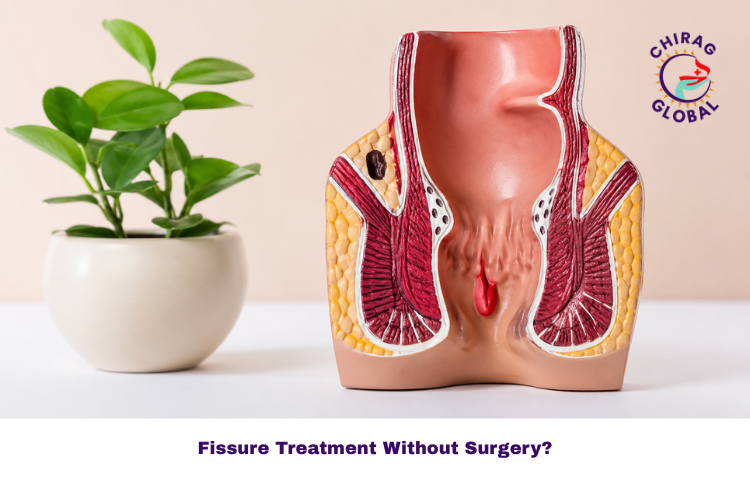
Many people with anal fissure want to know one thing clearly: can fissure heal without surgery? The answer is yes, many acute fissures can heal without surgery when treated early with stool softeners, medicines, sitz bath, fibre-rich diet, hydration, and proper bowel habit correction.
However, not every fissure heals with medicines alone. A chronic fissure, recurring fissure, fissure associated with anal spasm, or fissure that keeps reopening after hard stool may need further evaluation. In some cases, laser treatment or surgery may be considered if conservative care does not help.
At Chirag Global Hospitals, Bangalore, fissure treatment is planned after understanding the patient’s pain pattern, bleeding, constipation history, stool hardness, anal spasm, duration of symptoms, and previous treatment response. The goal is to treat the fissure safely and reduce the chance of recurrence.
Want to Avoid Fissure Surgery?
If you have sharp pain, burning, bleeding, or discomfort while passing stool, early evaluation can help identify whether your fissure may heal with medicines or needs further treatment.
Book a Consultation | Call 08065903127
Can Fissure Heal Without Surgery?
Yes, fissure can heal without surgery in many cases, especially when it is recent or acute. An acute fissure is usually a fresh tear in the anal lining, often caused by hard stool, constipation, or straining.
Non-surgical treatment may help when:
- The fissure is recent
- Pain is mild to moderate
- Constipation can be controlled
- Stool becomes soft
- There is no chronic fissure change
- Anal spasm is not severe
- Symptoms improve with medicines and sitz bath
- The patient follows bowel habit advice properly
The key point is that fissure healing depends not only on creams or medicines, but also on reducing the pressure and repeated injury caused by hard stool.
When Is Non-Surgical Treatment More Likely to Work?
Non-surgical treatment is more likely to work when the fissure is treated early. If the tear is recent and the patient avoids straining, the anal lining may get enough time to heal.
A fissure may improve without surgery when:
- Stool becomes softer
- Pain starts reducing
- Bleeding reduces
- Burning after stool passage improves
- The fissure does not keep reopening
- Constipation is managed properly
- Sitz bath and medicines are followed as advised
Patients with repeated pain while passing stool should not keep delaying care, because repeated tearing can make fissure more difficult to heal.
Why Some Fissures Do Not Heal Without Surgery
Some fissures become chronic because the tear keeps reopening or the anal muscle remains tight. This can create a cycle of pain, spasm, poor healing, and repeated injury.
A fissure may not heal easily without further treatment if there is:
- Chronic constipation
- Repeated hard stool
- Continuous straining
- Anal muscle spasm
- Poor blood flow to the fissure area
- Scar tissue or chronic fissure changes
- Skin tag near the fissure
- Repeated bleeding
- Pain lasting for weeks
- Temporary relief followed by recurrence
In such cases, the fissure may need more than ointments and home care. A doctor may evaluate whether chronic fissure treatment, laser treatment, or surgery is required.
Acute Fissure vs Chronic Fissure: Why It Matters
Whether fissure can heal without surgery depends strongly on whether it is acute or chronic.
| Feature | Acute Fissure | Chronic Fissure |
| Duration | Recent | Long-standing or recurring |
| Healing chance without surgery | Often possible with early care | Less likely if spasm or chronic changes exist |
| Main trigger | Hard stool, constipation, straining | Repeated tearing, spasm, scar tissue |
| Pain pattern | Sharp pain during stool passage | Recurring pain, burning, long-lasting discomfort |
| Treatment | Medicines, stool softeners, sitz bath | May need advanced care if not healing |
| Recurrence risk | Lower if constipation is corrected | Higher if root cause continues |
For a broader explanation of treatment options, read fissure treatment in Bangalore.
Non-Surgical Treatment Options for Fissure
The main goal of non-surgical fissure treatment is to soften stool, reduce pain, relax anal spasm, support healing, and prevent the tear from reopening.
1. Stool Softeners and Constipation Control
Hard stool is one of the main reasons fissures form and keep reopening. Stool softeners may be advised in selected cases to make bowel movements easier and less painful.
Constipation control may include:
- Drinking enough water
- Eating fibre-rich foods
- Avoiding straining
- Avoiding long toilet sitting
- Not delaying bowel movements
- Walking regularly
- Taking stool softeners only if advised
If constipation continues, fissure symptoms may return even after temporary relief.
2. Fibre-Rich Diet
Fibre helps improve stool consistency and reduces the need to strain during bowel movements.
Fibre-rich foods may include:
- Fruits
- Vegetables
- Whole grains
- Legumes
- Fibre-rich cereals
- Seeds where suitable
Diet correction is important because fissure healing becomes difficult if every bowel movement reopens the tear.
3. Adequate Water Intake
Low water intake can make stool hard and difficult to pass. Hydration helps support softer stool and smoother bowel movements.
Water intake alone may not cure fissure, but it supports constipation control and healing.
4. Sitz Bath
A warm sitz bath may help reduce pain, burning, irritation, and anal muscle tightness. It is often advised after bowel movements or during painful episodes.
Sitz bath may support comfort, but it may not be enough for chronic or recurring fissures.
5. Medicines and Ointments
Doctors may prescribe medicines or ointments to reduce pain, burning, inflammation, or anal spasm. Some medicines may help relax the anal muscle and support healing in selected patients.
Ointments should be used only as advised. Repeated self-use without diagnosis may delay proper treatment, especially if the fissure is chronic.
6. Avoiding Strain During Bowel Movements
Straining increases pressure in the anal canal and may reopen the fissure.
Helpful habits include:
- Do not force stool passage
- Do not sit on the toilet for long periods
- Avoid using the phone while sitting on the toilet
- Respond to bowel urges on time
- Avoid repeated pushing
These habits are important even after the fissure improves.
How Long Does a Fissure Take to Heal Without Surgery?
Healing time varies from patient to patient. Some acute fissures may improve with early care, while chronic fissures may take longer or may not heal completely with medicines alone.
Healing depends on:
- Duration of fissure
- Constipation control
- Stool consistency
- Anal spasm
- Pain severity
- Previous recurrence
- Correct use of medicines
- Whether chronic tissue changes are present
If symptoms do not improve after proper care, it is better to consult a doctor instead of continuing temporary treatment repeatedly.
When Surgery May Be Needed
Surgery may be considered when fissure becomes chronic, does not heal with proper medical care, or keeps returning despite stool softeners, medicines, sitz bath, and bowel habit correction.
Surgery may be discussed if there is:
- Chronic fissure
- Persistent anal spasm
- Repeated tearing
- Severe pain despite treatment
- Long-standing symptoms
- Skin tag or chronic fissure changes
- No improvement after conservative care
- Recurring fissure after temporary relief
If the fissure is chronic or not healing, patients may need evaluation for fissure surgery in Bangalore.
Is Laser Treatment an Option Without Conventional Surgery?
For selected chronic or recurring fissures, laser fissure treatment in Bangalore may be considered after examination. Laser treatment is not required for every fissure patient, and it is not the first option for most acute fissures.
Laser treatment may be discussed when:
- The fissure is chronic
- Pain keeps returning
- Medicines have not helped enough
- Anal spasm or chronic tissue changes are present
- The doctor finds it suitable after examination
The right option depends on diagnosis, not only patient preference.
Can Fissure Come Back After Healing Without Surgery?
Yes, fissure can come back if constipation, hard stool, straining, low fibre intake, dehydration, or long toilet sitting continues.
To reduce recurrence risk:
- Keep stool soft
- Eat fibre-rich foods
- Drink enough water
- Avoid straining
- Treat constipation early
- Do not delay bowel movements
- Avoid long toilet sitting
- Follow prescribed medicines correctly
- Consult a doctor if symptoms return
Even if fissure heals without surgery, long-term bowel habit correction is important.
Non-Surgical Fissure Care at Chirag Global Hospitals
At Chirag Global Hospitals, Bangalore, fissure care begins with identifying whether the fissure is acute, chronic, recurring, or associated with anal spasm.
The evaluation may include:
- Pain pattern review
- Bleeding history
- Constipation and stool pattern assessment
- Duration of symptoms
- Previous treatment response
- Checking for anal spasm
- Examination for fissure and related conditions
- Evaluation for piles, fistula, abscess, or infection
- Discussion of medical and procedure-based options
If the fissure is suitable for non-surgical care, medicines, stool softeners, sitz bath, and bowel habit correction may be advised. If it is chronic or not healing, laser treatment or surgery may be discussed.
Final Thoughts
So, can a fissure heal without surgery? Yes, many acute fissures can heal without surgery when treated early with stool softeners, medicines, sitz bath, fibre-rich diet, hydration, and bowel habit correction.
However, chronic, recurring, or non-healing fissures may need further evaluation. If anal spasm, repeated tearing, scar tissue, or poor healing is present, laser treatment or surgery may be considered.
At Chirag Global Hospitals, fissure care is planned after understanding the cause, severity, duration, and recurrence pattern. The safest approach is to get diagnosed early and choose treatment based on the condition.
FAQs on Can Fissure Heal Without Surgery?
1. Can fissure heal without surgery?
Yes, many acute fissures can heal without surgery with medicines, stool softeners, sitz bath, fibre-rich diet, hydration, and avoiding straining. Chronic fissures may need further treatment.
2. How do I know if my fissure is healing?
Pain, burning, and bleeding may reduce when fissure starts healing. However, if symptoms return after hard stool or continue for weeks, medical evaluation is important.
3. When does fissure need surgery?
Fissure surgery may be considered when the fissure becomes chronic, keeps returning, or does not heal with medicines, stool softeners, sitz bath, and bowel habit correction.
4. Can chronic fissure heal without surgery?
Some chronic fissures may improve with proper medical care, but many need further evaluation if anal spasm, scar tissue, or repeated tearing is present.
5. What helps fissure heal naturally?
Soft stool, fibre-rich diet, adequate water intake, avoiding straining, sitz bath, and prescribed medicines may support healing in suitable cases.
6. Can fissure come back after healing?
Yes, fissure can come back if constipation, hard stool, straining, dehydration, low fibre intake, or long toilet sitting continues.
7. Is laser treatment needed for fissure?
Laser treatment is not needed for every fissure. It may be considered for selected chronic or recurring fissures after examination.