
Pain while passing stool can be uncomfortable, stressful, and sometimes frightening, especially when it happens repeatedly or is followed by burning, bleeding, or fear of using the toilet. Many people assume the pain is due to piles, but one of the most common causes of sharp pain during bowel movements is an anal fissure.
A fissure is a small tear in the lining of the anus. It often develops after passing hard stool, straining, constipation, or repeated irritation. The pain can feel sharp, cutting, burning, or stinging, and it may continue for several minutes or even hours after passing stool.
At Chirag Global Hospitals, Bangalore, patients with pain while passing stool are evaluated to identify whether the cause is fissure, piles, constipation, infection, abscess, fistula, or another anorectal condition. The treatment depends on the actual cause, not just the symptom.
Need Help with Pain While Passing Stool?
If you have sharp pain, burning, bleeding, or discomfort during bowel movements, a consultation can help identify whether it is fissure, piles, constipation-related injury, or another anorectal condition.
Book a Consultation | Call 08065903127
Is Pain While Passing Stool a Sign of Fissure?
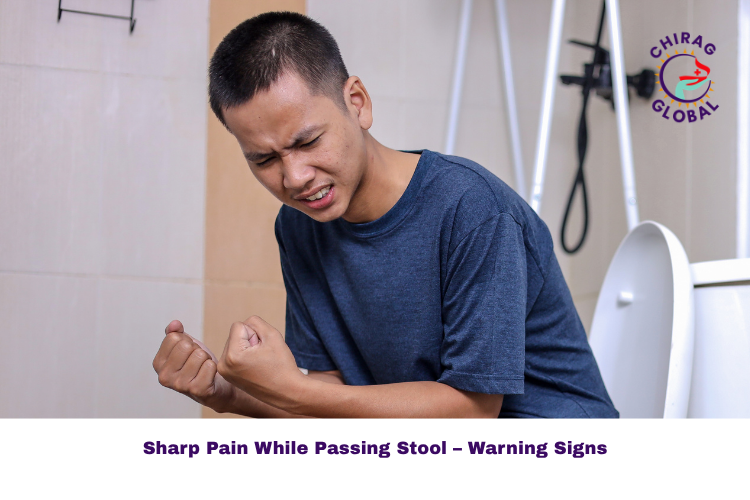
Pain while passing stool may be a sign of fissure, especially if the pain is sharp, cutting, or burning. Fissure pain usually starts during stool passage and may continue after the bowel movement is over.
A fissure is more likely if you have:
- Sharp pain during stool passage
- Burning pain after passing stool
- Bright red blood on tissue or stool
- Pain that makes you avoid bowel movements
- Constipation or hard stool
- A feeling of tightness or spasm near the anus
- Repeated pain after passing hard stool
However, not every case of pain while passing stool is a fissure. Piles, abscess, infection, fistula, skin irritation, and other rectal conditions can also cause pain. This is why a proper diagnosis is important if symptoms continue.
What Does Fissure Pain Feel Like?
Fissure pain is often described differently from piles pain. Many patients describe it as:
- A cutting pain
- A tearing sensation
- Sharp pain while stool passes
- Burning after bowel movement
- Stinging pain around the anus
- Pain that continues even after passing stool
- Fear of passing stool again because of pain
This pain happens because the fissure is a tear in a sensitive area. The internal anal muscle may also tighten after the tear occurs. This tightening, called anal spasm, can make pain worse and delay healing.
Why Does Pain Continue After Passing Stool?
Pain after passing stool may continue because of irritation, swelling, or anal muscle spasm. In fissure cases, the tear can trigger the internal anal muscle to tighten. This can reduce blood flow to the area and make healing slower.
Pain may continue after stool passage due to:
- Anal fissure
- Hard stool stretching the anal opening
- Ongoing anal spasm
- Local irritation
- Swelling around the anal opening
- Repeated wiping or rubbing
- Infection or abscess in some cases
If the pain lasts for hours or keeps returning, it should not be ignored.
Pain While Passing Stool with Bleeding
Pain with bleeding is a common reason people worry. Bright red blood during or after stool passage may happen with fissure or piles, but the pain pattern can help understand the possible cause.
A fissure usually causes sharp pain with bright red bleeding. Piles may cause bleeding with swelling, itching, discomfort, or a lump near the anus. Some patients may have both fissure and piles together.
Bleeding should always be evaluated if it is repeated, heavy, or associated with severe pain. Do not assume all bleeding is due to piles or fissure without examination.
Common Causes of Pain While Passing Stool
Pain while passing stool can happen for several reasons. The right treatment depends on identifying the cause.
1. Anal Fissure
This is one of the most common causes of sharp pain during stool passage. It usually happens due to hard stool, constipation, straining, or repeated irritation.
2. Constipation
Hard stool can stretch and injure the anal lining. Constipation can also make fissure pain worse because every bowel movement reopens the tear.
3. Piles
Piles are swollen blood vessels around the anus or rectum. They may cause bleeding, swelling, itching, discomfort, or pain, especially if external piles become swollen or thrombosed.
4. Anal Abscess or Infection
An abscess may cause severe pain, swelling, fever, pus discharge, or worsening discomfort. This needs prompt medical attention.
5. Fistula
A fistula may cause pain, discharge, swelling, or repeated infection near the anus. It is different from fissure and needs separate evaluation.
6. Skin Irritation
Excessive wiping, diarrhoea, harsh soaps, or repeated moisture can irritate the anal area and cause pain or burning
When Is Pain While Passing Stool Not Normal?
Mild pain after hard stool may settle with proper care. But some symptoms need medical evaluation.
You should consult a doctor if you have:
- Severe pain while passing stool
- Pain that continues after bowel movement
- Repeated bleeding
- Burning that lasts for hours
- Constipation with recurring pain
- A hard lump near the anus
- Swelling or pus discharge
- Fever with anal pain
- Pain that makes you avoid the toilet
- Symptoms lasting more than a few days
If pain keeps returning, it may mean the fissure is not healing or another anorectal condition is present.
Final Thoughts
Pain while passing stool is not something you should ignore, especially if it is sharp, burning, recurring, or associated with bleeding. A fissure is one of the most common causes, but piles, abscess, fistula, infection, and constipation-related irritation can also cause similar symptoms.
The safest approach is to reduce straining, manage constipation, avoid repeated self-medication, and get examined if symptoms continue. At Chirag Global Hospitals, treatment is planned based on the cause of pain, not assumptions.
If you are wondering whether your pain is due to fissure, consult a specialist and get the right diagnosis early.
FAQs
1. Why do I have pain while passing stool?
Pain while passing stool may be due to fissure, constipation, piles, infection, abscess, fistula, or local irritation. Sharp cutting pain is commonly seen with anal fissure.
2. Is pain while passing stool a fissure?
It may be a fissure if the pain is sharp, cutting, or burning and occurs during or after bowel movements. A doctor can confirm the cause after examination.
3. Why does fissure pain continue after passing stool?
Fissure pain may continue because of anal muscle spasm. The muscle tightens after the tear, causing burning or pain even after stool passage.
4. Can constipation cause pain while passing stool?
Yes. Hard stool and straining can stretch or tear the anal lining, causing fissure-like pain and bleeding.
5. Is bleeding with painful stool serious?
Bleeding should be evaluated, especially if it is repeated. Fissure and piles can both cause bleeding, but other rectal conditions may also be responsible.
6. What helps reduce pain while passing stool?
Fibre-rich food, adequate water intake, avoiding straining, warm sitz bath, stool softeners if advised, and medical treatment may help depending on the cause.