
For many people, weight training is an important part of staying fit and building strength. However, people who regularly lift heavy weights sometimes wonder whether gym workouts can cause piles or make existing haemorrhoids worse.
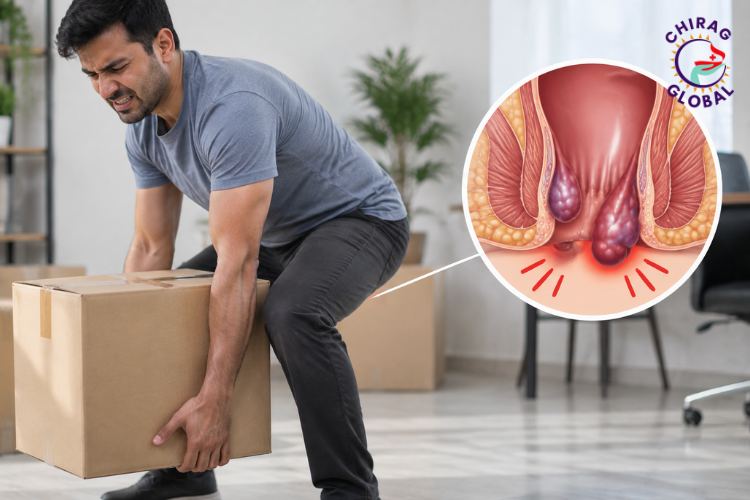
Heavy lifting itself is not considered the only cause of piles. However, repeated straining, improper breathing, constipation, and increased pressure inside the abdomen during intense lifting may contribute to haemorrhoid symptoms in some people.
At Chirag Global Hopitals, patients experiencing symptoms such as rectal bleeding, pain, itching, swelling, or discomfort while passing stools can undergo medical evaluation to determine whether piles or another condition is responsible.
Understanding how weightlifting affects abdominal pressure can help gym-goers exercise more safely and recognise when symptoms need medical attention.
Book a Consultation | Call 08065903127
Can Heavy Weightlifting Cause Piles?
Heavy weightlifting does not automatically cause piles.
Piles, also called haemorrhoids, develop when veins in and around the anus or lower rectum become swollen or enlarged. Several factors can increase pressure on these veins, including:
- Chronic constipation
- Excessive straining during bowel movements
- Sitting on the toilet for long periods
- Pregnancy
- Obesity
- Low-fibre diets
- Frequent diarrhoea
- Age-related weakening of supporting tissues
- Repeated activities that significantly increase abdominal pressure
Heavy lifting may become one contributing factor when a person frequently strains or holds their breath while lifting.
Therefore, it is more accurate to say that improper or extremely strenuous weightlifting may increase pressure that can aggravate piles, rather than saying weightlifting directly causes haemorrhoids in everyone.
How Does Weightlifting Affect Piles?
During exercises such as squats, deadlifts, leg presses, and heavy compound lifts, the body naturally generates pressure inside the abdomen to stabilise the spine.
Some lifters also perform the Valsalva manoeuvre, intentionally or unintentionally. This involves holding the breath while straining against a closed airway.
This technique can temporarily increase intra-abdominal pressure.
When repeated frequently, particularly in someone who already has constipation or haemorrhoids, this pressure may place additional strain on the blood vessels around the rectum and anus.
People with existing piles may consequently notice:
- Increased swelling
- Anal discomfort
- Bleeding after bowel movements
- A feeling of pressure around the anus
- Increased irritation after workouts
The effect varies considerably from person to person.
Can Weightlifting Make Existing Piles Worse?
Yes, certain forms of strenuous lifting may aggravate existing haemorrhoid symptoms.
If piles are already inflamed or swollen, repeatedly lifting very heavy weights while holding your breath can increase pressure within the pelvic and rectal area.
Symptoms may become more noticeable following:
- Heavy squats
- Deadlifts
- Leg presses
- Powerlifting
- Strongman-style exercises
- Repeated maximum-effort lifting
However, this does not mean that everyone with piles needs to stop exercising.
The intensity of exercise, lifting technique, breathing pattern, severity of haemorrhoids, and overall bowel health all matter.
What Symptoms of Piles Should Gym-Goers Watch For?
People who regularly exercise or lift weights should not automatically assume that every rectal symptom is caused by the gym.
Common symptoms associated with haemorrhoids include:
Bright Red Blood
Small amounts of bright red blood may appear:
- On toilet paper
- On the stool
- In the toilet bowl
Rectal bleeding should still be medically evaluated because several other gastrointestinal conditions can also cause bleeding.
Pain or Discomfort
External haemorrhoids may become painful, particularly when swollen or thrombosed.
Anal Itching
Irritation around the anus may cause persistent itching or burning.
Swelling Around the Anus
External haemorrhoids may feel like small lumps near the anal opening.
Prolapse
Internal haemorrhoids can sometimes protrude through the anus during bowel movements.
Depending on their severity, they may return inside naturally or require manual reduction.
Does Holding Your Breath While Lifting Increase the Risk?
Breath-holding during heavy lifting can significantly increase intra-abdominal pressure.
Experienced athletes sometimes use controlled breath-holding to stabilise the torso during demanding lifts. However, repeatedly straining while holding the breath may worsen pelvic pressure in people already prone to haemorrhoids.
For recreational gym-goers, learning appropriate breathing techniques can reduce unnecessary straining.
A trainer or physiotherapist can help identify the safest breathing pattern based on the exercise being performed.
Can Squats Cause Piles?
Squats themselves do not directly cause piles.
However, performing extremely heavy squats while:
- Holding your breath
- Straining excessively
- Using poor lifting technique
- Training while severely constipated
may increase abdominal and pelvic pressure.
Someone with active haemorrhoid symptoms may temporarily find lighter resistance or alternative exercises more comfortable until symptoms improve.
Can Deadlifts Worsen Haemorrhoids?
Deadlifts require significant core stabilisation and can generate considerable intra-abdominal pressure.
A person who already has piles may experience worsening discomfort if repeatedly performing near-maximum lifts.
Rather than completely avoiding deadlifts, some individuals may benefit from temporarily reducing:
- Training weight
- Number of repetitions
- Maximum-effort sets
Medical advice may be appropriate if symptoms continue despite modifying workouts.
Constipation May Be a Bigger Risk Than the Gym
One important factor that gym-goers sometimes overlook is constipation.
Constipation and excessive straining while passing stools are well-established contributors to haemorrhoid symptoms.
Certain fitness habits may indirectly increase constipation risk, such as:
- Eating very high-protein diets without enough fibre
- Not drinking enough water
- Using excessive processed protein foods
- Ignoring the urge to pass stools
- Suddenly changing diet during bulking or cutting phases
A bodybuilder who lifts heavy weights but maintains healthy bowel habits may have fewer problems than someone who regularly strains during bowel movements.
Can Protein Supplements Cause Piles?
Protein powders do not directly cause haemorrhoids.
However, some people experience constipation after significantly increasing protein intake, particularly when fibre and fluid consumption remain low.
Constipation can increase the need to strain during bowel movements, which may aggravate piles.
People using protein supplements should also consume adequate:
- Water
- Vegetables
- Fruits
- Whole grains
- Other fibre-rich foods
Dietary requirements vary depending on individual health conditions, training intensity, and calorie requirements.
Can Pre-Workout Supplements Affect Piles?
Most pre-workout supplements do not directly cause piles.
However, certain supplements containing large amounts of caffeine or stimulants may affect bowel habits or hydration in some individuals.
The more important factors remain:
- Adequate hydration
- Regular bowel movements
- Appropriate fibre intake
- Avoiding prolonged straining
Anyone repeatedly experiencing digestive problems after using a supplement should consider discussing it with a doctor or qualified dietitian.
Should You Stop Going to the Gym If You Have Piles?
Not necessarily.
Moderate physical activity can support overall digestive health and may help reduce constipation.
Activities that may generally be easier during a haemorrhoid flare-up include:
- Walking
- Light jogging
- Swimming
- Gentle strength training
- Stretching
- Low-impact cardiovascular exercise
People experiencing significant pain, bleeding, swelling, or prolapsed haemorrhoids may need to temporarily reduce strenuous weightlifting until they are medically evaluated.
How to Exercise Safely With Piles
A few practical changes can reduce unnecessary pressure during workouts.
1. Avoid Excessive Straining
Do not repeatedly attempt weights that require extreme effort.
Reducing the load temporarily may allow you to maintain your workout routine with less pressure.
2. Use Proper Breathing Technique
Avoid uncontrolled breath-holding during repetitions.
Learning appropriate breathing techniques can help control abdominal pressure.
3. Increase Weight Gradually
Progressive overload is safer than suddenly attempting significantly heavier weights.
4. Stay Hydrated
Adequate fluid intake helps maintain softer stools and supports regular bowel movements.
5. Eat Enough Fibre
Fibre helps stools retain water and pass more easily.
Good dietary sources include:
- Vegetables
- Fruits
- Whole grains
- Beans
- Lentils
- Nuts
- Seeds
6. Avoid Straining During Bowel Movements
Spending long periods pushing on the toilet can worsen haemorrhoids.
7. Do Not Ignore Symptoms
Repeated rectal bleeding or persistent anal pain should not simply be blamed on exercise.
A medical examination can help identify the actual cause.
When Should You See a Doctor?
You should consider medical evaluation if you experience:
- Repeated rectal bleeding
- Persistent anal pain
- Increasing swelling
- A painful lump near the anus
- Haemorrhoids that repeatedly prolapse
- Symptoms that do not improve with lifestyle changes
- Changes in bowel habits
- Unexplained weight loss
- Dark or black stools
Significant bleeding, severe pain, dizziness, weakness, or black stools may require urgent medical assessment.
Not every episode of rectal bleeding is caused by haemorrhoids, so recurrent bleeding should always be properly evaluated.
How Are Piles Diagnosed?
Diagnosis usually begins with a discussion about symptoms, bowel habits, lifestyle, and medical history.
Depending on the symptoms, examination may include:
- External examination
- Digital rectal examination
- Anoscopy or proctoscopy
- Additional gastrointestinal investigations when necessary
The appropriate investigation depends on age, symptoms, bleeding pattern, family history, and other clinical findings.
Treatment Options for Piles
Treatment depends on the type and severity of haemorrhoids.
Lifestyle and Dietary Management
Mild cases may improve with:
- Increased dietary fibre
- Adequate hydration
- Avoiding straining
- Regular exercise
- Improved toilet habits
Medication
Doctors may recommend medicines or topical treatments to relieve symptoms in appropriate cases.
Minimally Invasive Procedures
Persistent or more advanced haemorrhoids may require procedures such as:
- Rubber band ligation
- Injection treatment
- Other minimally invasive haemorrhoid procedures
Surgical Treatment
Large, recurrent, thrombosed, or advanced haemorrhoids may occasionally require surgical treatment.
The appropriate procedure depends on the individual’s haemorrhoid grade, symptoms, examination findings, and overall health.
Gym and Piles: Finding the Right Balance
Going to the gym does not automatically mean you will develop piles.
The bigger issue is how pressure is managed.
Repeated heavy straining, breath-holding, constipation, dehydration, and poor bowel habits can combine to aggravate haemorrhoid symptoms.
For most people, maintaining good hydration, eating enough fibre, practising proper lifting technique, and avoiding excessive straining can help reduce unnecessary pressure.
If symptoms repeatedly return after heavy lifting, reducing workout intensity temporarily and undergoing medical evaluation may be appropriate.
Conclusion
Heavy weightlifting is not considered a direct or sole cause of piles. However, repeatedly lifting very heavy weights while straining or holding the breath can increase abdominal and pelvic pressure and may worsen existing haemorrhoids.
Constipation, poor hydration, inadequate fibre intake, and excessive straining during bowel movements may play an equally important or greater role.
Good lifting technique, proper breathing, gradual progression, adequate hydration, and healthy bowel habits can help gym-goers continue exercising while reducing unnecessary pressure.
Anyone experiencing persistent bleeding, pain, swelling, or recurrent haemorrhoids should seek medical evaluation rather than assuming the symptoms are simply caused by weightlifting.
Visit Chirag Global Hospitals!
Frequently Asked Questions
1. Can gym workouts cause piles?
Gym workouts do not directly cause piles in most people. However, repeated heavy straining and increased abdominal pressure may aggravate haemorrhoids, especially in people who already have constipation or existing piles.
2. Can I lift weights if I have haemorrhoids?
Many people with mild haemorrhoids can continue exercising. However, very heavy lifting may need to be reduced temporarily if it causes pain, bleeding, swelling, or worsening symptoms.
3. Do squats make piles worse?
Normal squats do not automatically worsen piles. Extremely heavy squats combined with breath-holding and excessive straining may increase pressure and aggravate symptoms in some people.
4. Can constipation from a high-protein diet cause piles?
A high-protein diet itself does not directly cause piles. However, if the diet is low in fibre and fluids, constipation may develop. Repeated straining during bowel movements can contribute to haemorrhoid symptoms.
5. Should I stop deadlifts if I have piles?
Not everyone needs to stop deadlifting. If symptoms worsen during or after heavy deadlifts, reducing the weight and avoiding maximum-effort lifting may help. Persistent bleeding, pain, or swelling should be medically evaluated.