

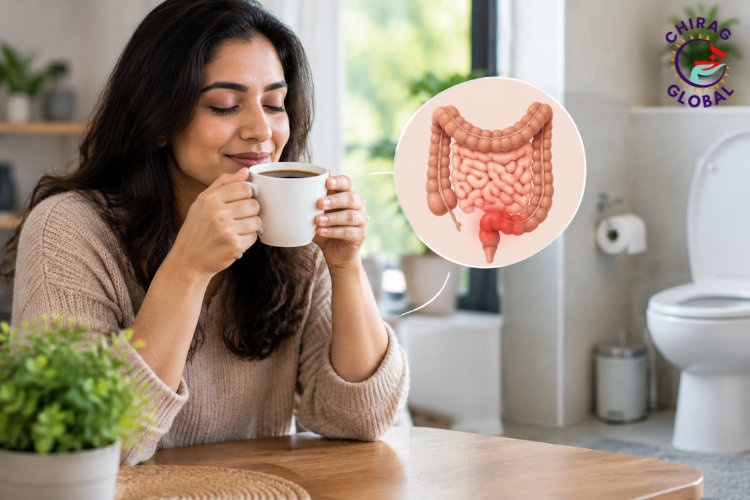
For many people, the morning does not feel complete without a cup of coffee. Interestingly, coffee can do more than make you feel awake. Some people notice that they need to use the toilet soon after drinking it.
But does coffee actually help constipation, or can drinking too much make the problem worse?
At Chirag Global Hopitals, understanding everyday habits such as diet, hydration and caffeine intake is an important part of managing digestive concerns. Coffee may stimulate bowel movements in some people, but its effect can vary depending on your digestive health, caffeine sensitivity, hydration and overall lifestyle.
In this article, we explain the relationship between coffee and bowel movements, why coffee can make you poop and whether it should be relied upon for constipation relief.
Book a Consultation | Call 08065903127
What Is Constipation?
Constipation generally refers to having infrequent bowel movements or difficulty passing stools.
A person with constipation may experience:
- Hard or dry stools
- Straining while passing stools
- Fewer bowel movements than usual
- A feeling that the bowel has not emptied completely
- Abdominal discomfort or bloating
- Difficulty passing stool
Occasional constipation is common. It may happen because of inadequate fibre intake, low water consumption, reduced physical activity, travel, stress, medications or changes in routine.
However, constipation that continues for several weeks or repeatedly returns may require medical evaluation.
Why Does Coffee Make You Poop?
Many people notice a bowel movement after coffee, sometimes within a short period after drinking it.
Coffee can stimulate activity in the digestive tract and may increase contractions in the colon. These contractions help move stool towards the rectum.
Coffee may also stimulate what is known as the gastrocolic reflex.
The gastrocolic reflex is a natural response in which eating or drinking signals the colon to increase movement. It is often strongest in the morning, which may explain why morning coffee is particularly effective for some people.
Coffee may also influence digestive hormones that help regulate movement through the gastrointestinal tract.
Interestingly, both caffeinated and decaffeinated coffee may stimulate bowel activity, suggesting that caffeine is not the only component responsible.
Does Coffee Help Constipation?
For some people, yes.
Coffee may temporarily help encourage a bowel movement by stimulating colon activity.
People with mild or occasional constipation may notice that warm coffee helps them pass stool, particularly when combined with breakfast.
However, coffee for constipation should not be considered a treatment by itself.
The most effective long-term approach usually involves improving:
- Dietary fibre
- Water intake
- Physical activity
- Toilet habits
- Overall diet
- Underlying digestive conditions
Coffee may support bowel movement in some individuals, but its effect differs from person to person.
Can Coffee Make Constipation Worse?
Coffee does not automatically cause constipation.
In moderate amounts, coffee is unlikely to significantly dehydrate most healthy adults. However, drinking large amounts of caffeinated beverages can affect some people differently.
Constipation may worsen when coffee becomes a substitute for water or when a person’s overall fluid intake is inadequate.
Several other factors may also contribute.
1. Drinking Too Much Coffee
Excessive caffeine may cause digestive discomfort, increased urination, anxiety, disturbed sleep or changes in bowel habits.
People who drink several cups of coffee while consuming very little water may not be supporting healthy stool consistency.
2. Not Drinking Enough Water
Water helps keep stool softer and easier to pass.
If someone relies heavily on coffee throughout the day but drinks very little water, constipation may become more noticeable.
Coffee should therefore complement, rather than replace, normal fluid intake.
3. Adding Large Amounts of Sugar
Coffee itself may not be the main problem.
Regularly consuming coffee containing large quantities of sugar, syrups or high-calorie additives may contribute to an unbalanced diet.
A diet low in fibre and high in processed foods is more likely to contribute to constipation.
4. Dairy Sensitivity
Milk or cream added to coffee may cause digestive symptoms in people who are sensitive to lactose or certain dairy products.
Symptoms may include:
- Gas
- Bloating
- Abdominal discomfort
- Diarrhoea
- Changes in bowel habits
In these situations, the problem may be related to what is added to the coffee rather than the coffee itself.
Does Caffeine Cause Constipation?
The relationship between caffeine and constipation is not straightforward.
Caffeine can stimulate the gastrointestinal system in some people, which may actually encourage bowel movements.
However, too much caffeine may lead to digestive discomfort or interfere with hydration habits in certain individuals.
Therefore, drinking more coffee is not necessarily better when you are constipated.
Moderation is usually more sensible than relying on several cups of coffee to trigger bowel movements.
Is Black Coffee Better for Constipation?
Some people prefer black coffee because it avoids milk, cream and added sugar.
Black coffee may stimulate bowel activity in people who respond to coffee, but there is no guarantee that it will relieve constipation.
If constipation is caused mainly by inadequate fibre, insufficient hydration, medication or an underlying medical condition, black coffee will not address the actual cause.
Does Hot Coffee Work Better Than Cold Coffee?
Warm beverages may feel soothing and may help stimulate digestive activity as part of a morning routine.
However, there is no need to drink extremely hot coffee.
Both hot and cold coffee contain compounds that may influence digestive activity.
Individual response is more important than temperature.
Can Decaf Coffee Make You Poop?
Yes, it can.
Some people experience bowel stimulation even after drinking decaffeinated coffee.
This suggests that compounds other than caffeine may contribute to the digestive effects of coffee.
Therefore, people who are sensitive to caffeine but enjoy coffee may notice similar digestive effects from decaffeinated varieties.
How Much Coffee Is Too Much?
Tolerance to coffee differs significantly between individuals.
Some people feel comfortable after one or two cups, while others develop:
- Heartburn
- Abdominal discomfort
- Loose stools
- Palpitations
- Anxiety
- Sleep problems
If coffee regularly causes unpleasant digestive symptoms, reducing the quantity or switching to decaffeinated coffee may help.
People with certain medical conditions, pregnant women or those taking particular medications may also need individual guidance regarding caffeine intake.
Healthier Ways to Improve Bowel Movements
Instead of depending only on coffee, focus on habits that support normal bowel function.
Increase Fibre Gradually
Fibre adds bulk to stool and supports regular bowel movements.
Good sources include:
- Vegetables
- Fruits
- Whole grains
- Beans
- Lentils
- Nuts
- Seeds
Increasing fibre too quickly can cause bloating, so gradual changes are usually easier for the digestive system.
Drink Enough Fluids
Adequate hydration helps prevent stools from becoming excessively hard and dry.
Water should remain your primary source of hydration even if you regularly drink tea or coffee.
Stay Physically Active
Regular movement can support normal intestinal activity.
Even daily walking may help people who spend long periods sitting.
Follow a Regular Toilet Routine
Ignoring the urge to pass stool can contribute to constipation.
Allow yourself enough time to use the toilet, particularly after meals when the gastrocolic reflex may naturally stimulate bowel activity.
Include Fibre-Rich Breakfast Foods
If morning coffee seems to encourage a bowel movement, combining it with a balanced breakfast containing fibre may be more useful than drinking coffee alone.
Examples include oats, fruit, wholegrain foods or seeds.
Coffee and IBS: Should You Be Careful?
People with irritable bowel syndrome, commonly called IBS, may react differently to coffee.
Coffee can stimulate intestinal contractions, which may lead to:
- Urgency
- Abdominal cramps
- Loose stools
- Diarrhoea
For someone with constipation-predominant IBS, coffee may occasionally promote bowel movement. However, for others, it may increase discomfort.
Keeping a food and symptom diary can help identify whether coffee is improving or worsening your symptoms.
When Should You See a Doctor for Constipation?
Occasional constipation can often improve with dietary and lifestyle changes.
However, medical evaluation is advisable if constipation is persistent or accompanied by symptoms such as:
- Blood in the stool
- Unexplained weight loss
- Severe abdominal pain
- Persistent vomiting
- Significant abdominal swelling
- Sudden changes in bowel habits
- Recurrent constipation
- Very narrow stools that persist
- Inability to pass stool or gas
Constipation can sometimes be associated with medications, hormonal problems, digestive disorders or structural conditions. Persistent symptoms should therefore not simply be managed by drinking more coffee.
Coffee and Constipation: The Bottom Line
So, does coffee help constipation?
For some people, coffee can stimulate colon activity and trigger a bowel movement. This is one reason many people feel the urge to use the toilet after their morning coffee.
However, coffee is not a reliable treatment for constipation.
Drinking excessive amounts may cause digestive discomfort, while replacing water with coffee can contribute to poor hydration habits.
For healthier bowel movements, focus on adequate fibre, sufficient fluids, regular physical activity and consistent toilet habits.
If constipation continues despite these changes, speak with a healthcare professional to identify the underlying cause rather than depending on coffee for temporary relief.
Visit Chirag Global Hospitals!
Frequently Asked Questions
1. Why does coffee make me poop immediately?
Coffee may stimulate contractions in the colon and activate the gastrocolic reflex, which encourages the digestive system to move stool towards the rectum. Some people are more sensitive to this effect than others.
2. Is coffee good for constipation?
Coffee may help stimulate a bowel movement in some people with occasional constipation, but it should not replace adequate fibre, hydration, exercise or appropriate medical treatment.
3. Can too much coffee cause constipation?
Coffee itself does not necessarily cause constipation. However, excessive coffee consumption combined with inadequate water intake, poor diet or other lifestyle factors may contribute to digestive problems.
4. Is black coffee a natural laxative?
Coffee can stimulate bowel activity, but it is not medically classified as a laxative and should not be relied upon as one.
5. Does decaf coffee help bowel movements?
Decaffeinated coffee may also stimulate bowel movements in some individuals, indicating that substances other than caffeine may contribute to coffee’s effect on the digestive tract.
6. Should I drink coffee every morning for constipation?
If you enjoy coffee and tolerate it well, moderate consumption may form part of your normal routine. However, needing coffee every day just to pass stool may indicate that your fibre, hydration, lifestyle or digestive health needs attention.