
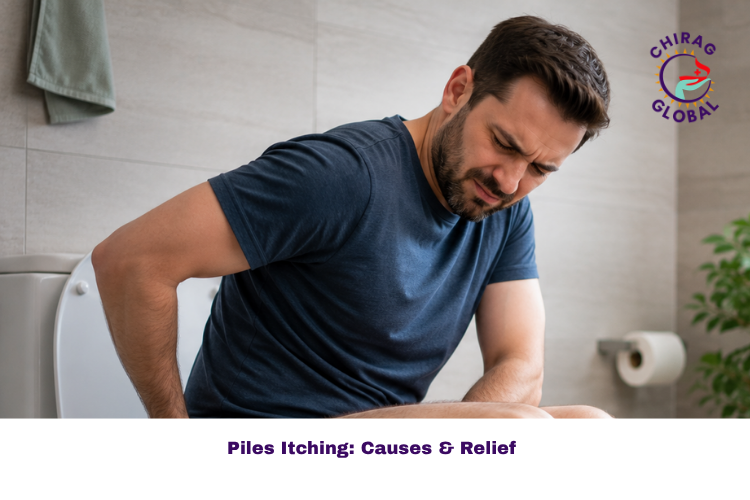
Piles itching is one of the most common and frustrating symptoms experienced by people with hemorrhoids. The constant urge to scratch, burning sensation, and irritation around the anus can make sitting, walking, and even sleeping uncomfortable. While occasional itching may seem like a minor problem, persistent itching could indicate inflamed hemorrhoids or irritation that requires proper attention.
At Chirag Global Hospitals, Bangalore, colorectal specialists regularly treat patients experiencing piles-related discomfort, including itching, pain, swelling, and bleeding. Understanding why piles itch and learning how to manage the symptoms can help improve comfort and prevent the condition from worsening.
This article explains the common causes of piles itching, ways to find relief, and the warning signs that should prompt you to seek medical advice.
Book a Consultation | Call 08065903127
Why Do Piles Itch?
There isn’t just one reason for piles itching. Several factors can irritate the sensitive skin around the anus and trigger persistent discomfort.
1. Mucus Leakage from Internal Piles
Internal hemorrhoids can sometimes produce small amounts of mucus.
When this mucus leaks onto the surrounding skin, it keeps the area moist and causes irritation. Continuous moisture can lead to itching that becomes worse after bowel movements or prolonged sitting.
Many people may not even notice the leakage until itching becomes frequent.
2. Swollen External Hemorrhoids
External hemorrhoids often become inflamed due to increased pressure on the veins around the anus.
The swollen tissue may rub against clothing or the surrounding skin, causing:
- Persistent itching
- Burning sensation
- Tenderness
- Skin irritation
The larger the swelling, the more noticeable the discomfort may become.
3. Moisture Around the Anal Area
Excess moisture is one of the most common triggers for piles itching.
Moisture may result from:
- Mucus discharge
- Sweat
- Incomplete cleaning after bowel movements
Constant dampness softens the skin, making it more prone to irritation and itching.
4. Inflammation Around the Hemorrhoids
Inflammation is the body’s natural response to swollen hemorrhoidal tissue.
As the area becomes inflamed, nerve endings become more sensitive, leading to:
- Itching
- Burning
- Mild soreness
- Increased sensitivity
Inflammation often worsens after prolonged sitting or straining during bowel movements.
5. Irritation After Passing Hard Stools
Hard stools can rub against already inflamed hemorrhoids during bowel movements.
This friction may:
- Increase itching
- Cause minor skin irritation
- Trigger burning after using the toilet
Repeated straining can make these symptoms more persistent.
6. Overcleaning the Area
Many people try to relieve itching by washing the area repeatedly.
However, excessive cleaning with:
- Harsh soaps
- Scented wipes
- Strong antiseptic products
can strip the skin’s natural protective barrier and make itching worse.
Gentle cleaning is usually more effective than excessive scrubbing.
7. Poor Anal Hygiene
On the other hand, inadequate cleaning after bowel movements can leave stool particles behind, leading to irritation.
Poor hygiene may contribute to:
- Persistent itching
- Unpleasant odor
- Skin inflammation
Maintaining good hygiene without overcleaning is important.
8. Prolonged Sitting
Sitting for long periods increases pressure on the anal veins.
This may:
- Increase swelling
- Reduce circulation around the hemorrhoids
- Make itching more noticeable
Office workers, drivers, and people with sedentary lifestyles often report worsening symptoms after extended periods of sitting.
9. Healing Hemorrhoids
As inflamed hemorrhoids begin to heal, itching may temporarily increase.
This is a normal part of the healing process for many skin conditions.
However, persistent or worsening itching should still be evaluated, especially if accompanied by other symptoms.
10. Scratching Makes the Problem Worse
One of the biggest mistakes people make is scratching the itchy area.
Although scratching may provide temporary relief, it can:
- Damage the skin
- Increase inflammation
- Lead to small cuts
- Increase the risk of infection
- Make itching even more intense
Breaking this itch-scratch cycle is essential for recovery.
Symptoms That May Occur Along With Piles Itching
People experiencing piles itching may also notice:
- Burning sensation
- Pain during bowel movements
- Swelling around the anus
- A lump near the anal opening
- Bleeding after passing stools
- Moisture around the anus
- Discomfort while sitting
The combination of symptoms varies depending on whether the hemorrhoids are internal or external.
When Is Piles Itching a Warning Sign?
Occasional itching may improve with simple care. However, medical evaluation is recommended if itching is accompanied by:
- Persistent bleeding
- Severe pain
- A painful lump
- Continuous mucus discharge
- Swelling that worsens
- Fever
- Symptoms lasting for several weeks
These signs may indicate complications or another anorectal condition that requires treatment.
How to Find Relief from Piles Itching
Keep the Area Clean
Wash gently with lukewarm water after bowel movements.
Avoid vigorous rubbing, as it can worsen irritation.
Keep the Area Dry
After washing, gently pat the area dry with a soft towel.
Excess moisture can increase itching.
Avoid Scratching
Although difficult, avoiding scratching helps prevent further irritation and skin damage.
Eat a Fibre-Rich Diet
Soft stools reduce friction during bowel movements.
Good sources of fibre include:
- Fruits
- Vegetables
- Whole grains
- Legumes
Drink Plenty of Water
Staying hydrated helps keep stools softer and reduces straining.
Avoid Sitting for Long Hours
Take regular breaks if your work involves prolonged sitting.
Walking for a few minutes every hour can help reduce pressure around the anal area.
Follow Medical Advice
Persistent piles itching may require medical treatment rather than home remedies alone.
A specialist can determine whether symptoms are caused by:
- Internal hemorrhoids
- External hemorrhoids
- Anal fissures
- Skin irritation
- Other colorectal conditions
Conclusion
Piles itching can be more than just an uncomfortable nuisance—it is often a sign of irritation, inflammation, or swelling caused by hemorrhoids. Factors such as mucus leakage, moisture, prolonged sitting, hard stools, and improper hygiene can all contribute to persistent itching. While simple lifestyle measures may help relieve mild symptoms, ongoing itching should not be ignored, especially if it is accompanied by pain, bleeding, or swelling.
If piles itching is affecting your comfort or daily routine, consulting the colorectal specialists at Chirag Global Hospitals, Bangalore, can help identify the underlying cause and guide you toward the most appropriate treatment for lasting relief.
Visit Chirag Global Hospitals Today!
Frequently Asked Questions
Is itching a common symptom of piles?
Yes. Itching is one of the most common symptoms of hemorrhoids, particularly external piles and internal piles with mucus leakage.
Why do piles itch more after bowel movements?
Passing stool can temporarily irritate inflamed hemorrhoids, and any remaining moisture or mucus around the anal area can increase itching.
Does scratching piles make them worse?
Yes. Scratching can damage the skin, increase inflammation, and raise the risk of infection, making symptoms worse over time.
Can piles itching go away on its own?
Mild itching may improve with proper hygiene and healthy bowel habits. However, persistent itching should be evaluated by a healthcare professional.
When should I see a doctor for piles itching?
You should consult a specialist if itching is severe, lasts for several weeks, is associated with bleeding or pain, or interferes with your daily life.