
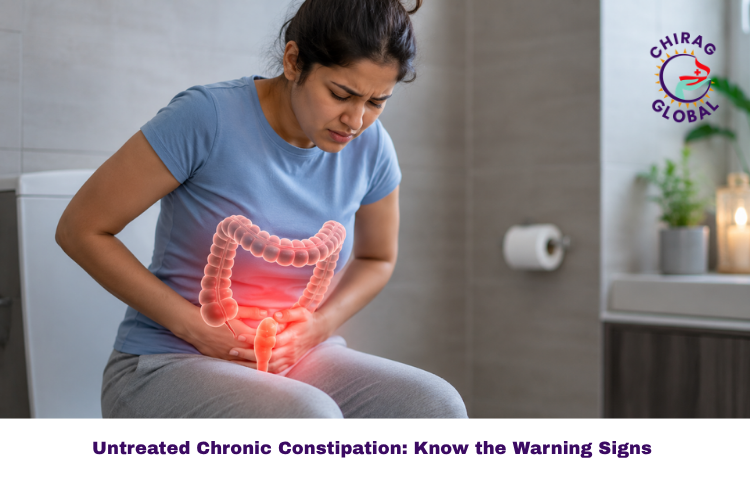
Constipation is a common digestive problem that many people experience occasionally. However, when constipation continues for weeks or keeps returning frequently, it can become a chronic condition that affects overall health and daily comfort. While some people try to manage it with temporary solutions, untreated chronic constipation can gradually lead to painful complications and may affect the normal functioning of the bowel.
At Chirag Global Hospitals, Bangalore, colorectal specialists evaluate patients with long-standing constipation to identify the underlying cause and prevent complications. Understanding the risks of ignoring chronic constipation can help you seek timely medical attention and protect your digestive health.
This article explains the possible complications of leaving chronic constipation untreated and the warning signs that indicate you should consult a specialist.
Book a Consultation | Call 08065903127
What Is Chronic Constipation?
Chronic constipation refers to difficulty passing stools that continues for an extended period. It is not just about having fewer bowel movements; it also includes problems such as:
- Hard or dry stools
- Excessive straining during bowel movements
- Feeling that the bowel has not emptied completely
- A sensation of blockage
- Spending a long time in the toilet
- Frequent need for manual assistance to pass stool
When these symptoms continue for several weeks or occur repeatedly, it may indicate chronic constipation that requires proper evaluation.
Why Should Untreated Chronic Constipation Not Be Ignored?
Many people consider constipation a minor issue, but ongoing difficulty passing stools increases pressure inside the rectum and surrounding tissues.
Over time, repeated straining and stool buildup can contribute to several complications, including painful anorectal conditions and changes in bowel function.
Complications of Untreated Chronic Constipation
1. Hemorrhoids (Piles)
One of the most common complications of untreated chronic constipation is hemorrhoids, also known as piles.
When you repeatedly strain to pass hard stools, increased pressure is placed on the veins around the anus. Over time, these veins may become swollen and enlarged.
Symptoms of piles may include:
- Pain or discomfort while passing stools
- Bleeding during bowel movements
- Itching around the anus
- Swelling or lumps near the anal area
People with chronic constipation often experience repeated irritation, which can worsen hemorrhoid symptoms.
2. Anal Fissures
Hard and dry stools can stretch and tear the delicate skin lining the anus, leading to an anal fissure.
An anal fissure may cause:
- Sharp pain during bowel movements
- Burning sensation after passing stool
- Small amounts of bright red blood
- Fear of using the toilet due to pain
When constipation continues, repeated hard stools can prevent the fissure from healing and may turn it into a chronic condition.
3. Fecal Impaction
One of the more serious complications of untreated chronic constipation is fecal impaction.
This occurs when a large amount of hardened stool becomes stuck in the rectum and cannot be passed naturally.
Symptoms may include:
- Severe difficulty passing stool
- Abdominal discomfort
- Bloating
- Feeling of fullness
- Leakage of liquid stool around the blockage
Fecal impaction requires medical attention because it may not resolve without proper treatment.
4. Rectal Prolapse
Long-term straining caused by chronic constipation can weaken the muscles and tissues supporting the rectum.
This may lead to rectal prolapse, where part of the rectal tissue moves outside through the anal opening.
Possible symptoms include:
- A feeling of tissue coming out during bowel movements
- Discomfort while sitting
- Mucus discharge
- Bleeding
- Difficulty controlling bowel movements
Early evaluation can help prevent worsening of this condition.
5. Chronic Abdominal Pain and Bloating
When stool remains in the colon for a prolonged period, it can cause discomfort and affect normal digestion.
People with chronic constipation may experience:
- Abdominal pain
- Bloating
- Gas buildup
- Feeling of heaviness
- Reduced appetite
Persistent discomfort can interfere with daily activities and overall quality of life.
6. Pelvic Floor Dysfunction
The pelvic floor muscles play an important role in controlling bowel movements.
Repeated straining due to chronic constipation may affect how these muscles coordinate, making it difficult to pass stool even when there is an urge.
Symptoms may include:
- Difficulty relaxing during bowel movements
- Excessive pushing
- Feeling of incomplete emptying
- Spending a long time in the bathroom
This can create a cycle where constipation continues despite frequent attempts to empty the bowel.
7. Worsening of Existing Colorectal Conditions
If a person already has conditions such as piles, anal fissures, or other anorectal problems, untreated chronic constipation can make symptoms worse.
Repeated straining may lead to:
- Increased pain
- More frequent bleeding episodes
- Delayed healing
- Recurring inflammation
Managing constipation is often an important part of preventing these conditions from worsening.
8. Reduced Quality of Life
Chronic constipation affects more than just bowel movements. Ongoing discomfort can impact physical and emotional well-being.
People may experience:
- Anxiety about using the toilet
- Avoiding travel or social activities
- Difficulty concentrating
- Reduced comfort during daily routines
Addressing the underlying cause can significantly improve quality of life.
Conclusion
Ignoring constipation that continues for a long time may seem harmless, but untreated chronic constipation can gradually lead to painful complications such as piles, anal fissures, fecal impaction, rectal prolapse, and ongoing bowel discomfort.
Recognizing persistent symptoms and seeking medical advice early can help prevent these problems and improve digestive health. If constipation has become a recurring issue or is affecting your daily life, consulting the colorectal specialists at Chirag Global Hospitals, Bangalore, can help identify the cause and guide you toward effective care.
Visit Chirag Global Hospitals Today!
Frequently Asked Questions
Can untreated chronic constipation become serious?
Yes. Long-term constipation can contribute to complications such as piles, anal fissures, fecal impaction, and rectal prolapse.
How long is considered chronic constipation?
Constipation that continues for several weeks or keeps recurring regularly may be considered chronic and should be evaluated.
Can constipation cause piles?
Yes. Repeated straining during bowel movements increases pressure on anal veins and can contribute to hemorrhoids.
Is bleeding during constipation normal?
Bleeding should not be ignored. It may occur due to fissures or piles but requires medical evaluation if it persists.
Can chronic constipation be treated?
Yes. Treatment depends on the underlying cause and may include lifestyle changes, medications, bowel management techniques, or specialist care.