
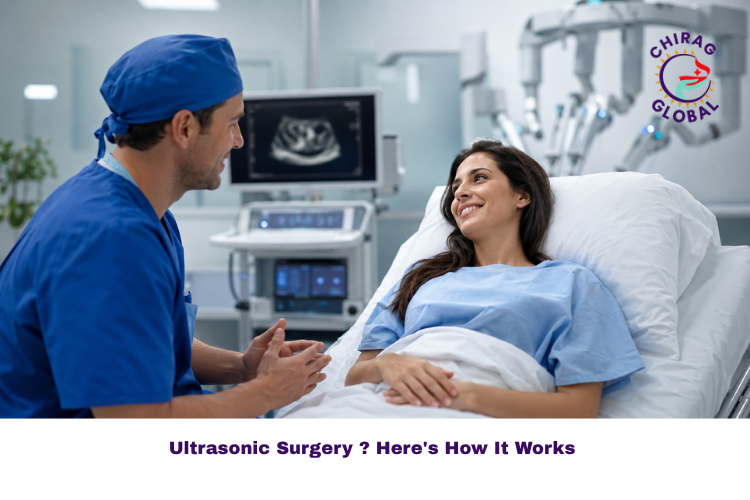
Ultrasonic surgery is an advanced technique increasingly used in proctology to treat conditions such as piles (hemorrhoids), anal fissures, and fistulas. By using ultrasonic energy, surgeons can cut, coagulate, and seal tissues precisely, reducing bleeding, pain, and recovery time.
At Chirag Global Hospitals, Bangalore, experienced colorectal surgeons use ultrasonic surgery to improve patient outcomes, particularly in cases where traditional procedures may involve more tissue trauma and longer healing.
Book a Consultation | Call 08065903127
What Is Ultrasonic Surgery?
Ultrasonic surgery uses high-frequency ultrasonic vibrations to simultaneously:
- Cut tissue
- Coagulate blood vessels
- Minimize collateral damage
Unlike conventional electrosurgery, ultrasonic instruments do not rely on electrical current passing through the patient. Instead, the mechanical energy vibrates tissue molecules, generating heat sufficient to cut and coagulate simultaneously.
This allows surgeons to perform delicate procedures in sensitive areas, such as the anal canal and rectum, with:
- Minimal bleeding
- Reduced thermal damage to surrounding tissues
- Shorter operative time
- Faster post-operative recovery
How Ultrasonic Surgery Works in Proctology
1. Preoperative Evaluation
Before surgery, patients undergo a thorough evaluation:
- Clinical examination of the anorectal region
- Imaging if needed (ultrasound, MRI, or endoscopy)
- Assessment of the disease type: piles, fistula, fissure, or combined conditions
2. Anesthesia
Ultrasonic proctology procedures are performed under:
- Local anesthesia with sedation for minor cases
- Spinal or general anesthesia for more complex cases
3. Ultrasonic Device Application
The surgeon applies a specialized ultrasonic instrument to the affected tissue.
- The probe vibrates at high frequency (typically 20–60 kHz)
- Tissue proteins denature, allowing precise cutting
- Blood vessels are sealed immediately due to protein coagulation
- The surrounding tissue remains largely unaffected
4. Tissue Dissection and Hemostasis
Ultrasonic energy allows the surgeon to:
- Remove enlarged hemorrhoidal tissue
- Excise fistula tracts
- Resect scar tissue from chronic fissures
- Achieve hemostasis (stop bleeding) simultaneously
5. Closure and Recovery
- Ultrasonic surgery minimizes tissue trauma, so suturing is often simpler or limited
- The procedure reduces post-operative pain, swelling, and the risk of infection
- Patients usually recover faster than with conventional surgery
Advantages of Ultrasonic Surgery in Proctology
- Reduced bleeding: Blood vessels are sealed immediately during cutting
- Minimal collateral damage: Surrounding tissues remain healthy
- Faster healing: Less trauma promotes quicker tissue repair
- Lower post-operative pain: Patients experience less discomfort
- Precision: Ideal for delicate anorectal anatomy
- Shorter operative time: Efficient tissue dissection and coagulation
- Versatility: Can be used for piles, fistulas, fissures, and minor rectal lesions
Conditions Treated With Ultrasonic Surgery
At Chirag Global Hospitals, ultrasonic surgery is used for:
- Piles (Hemorrhoids): Safe excision of internal and external hemorrhoids
- Anal Fistula: Precise removal of fistula tracts with minimal sphincter damage
- Chronic Anal Fissure: Excision of scar tissue and improved blood supply to the fissure
- Rectal Lesions: Small benign growths and scar tissue removal
- Combined Conditions: When more than one anorectal condition coexists
What to Expect After Ultrasonic Surgery
- Minor discomfort and swelling for a few days
- Early mobilization encouraged
- Diet: high-fiber foods, hydration to ease bowel movements
- Avoid straining during defecation
- Follow-up visits to monitor healing and check for recurrence
Patients typically return to normal daily activities faster than with traditional proctology surgery.
Conclusion
Ultrasonic surgery is transforming proctology by enabling precise, safe, and effective treatment for piles, fissures, fistulas, and other anorectal conditions. It reduces bleeding, minimizes tissue trauma, and promotes faster recovery.
If you are experiencing hemorrhoids, anal fissure, fistula, or other anorectal problems, consult the colorectal specialists at Chirag Global Hospitals, Bangalore to see if ultrasonic surgery is suitable for you.
FAQs
Is ultrasonic surgery safe for piles and fistulas?
Yes, it is safe when performed by experienced colorectal surgeons and reduces bleeding and tissue trauma.
How long does recovery take?
Most patients resume daily activities within 3–5 days, depending on the procedure type and complexity.
Is there less pain compared to traditional surgery?
Yes, the minimally invasive nature and precise cutting reduce post-operative pain.
Can all anorectal conditions be treated with ultrasonic surgery?
It is suitable for many cases, including piles, fistulas, fissures, and minor rectal lesions, but the surgeon evaluates suitability individually.
Is there a risk of recurrence after ultrasonic surgery?
Recurrence risk is low when the procedure is done correctly and patients follow post-operative care instructions.