
When parents notice blood in a baby’s diaper, swelling, or a small lump around the anus, hemorrhoids may be one of the conditions they think about. However, hemorrhoids in babies are uncommon, and several other conditions can cause similar symptoms.
Constipation and straining may contribute to irritation around the anus, but an anal fissure is another common possibility when a child has pain or blood during bowel movements. Other gastrointestinal or anorectal conditions can also cause bleeding.
Because babies cannot explain what they are experiencing, unexplained rectal bleeding or a persistent anal lump should be evaluated by a healthcare professional rather than assumed to be baby hemorrhoids.
At Chirag Global Hospitals, appropriate evaluation can help determine the cause of anorectal symptoms and guide further management when specialist care is needed.
Book a Consultation | Call 08065903127
Are Hemorrhoids Common in Babies?
No. Hemorrhoids in babies are uncommon.
Straining associated with hard stools may increase pressure and irritation around the anal area. However, this does not mean that every baby who strains or becomes constipated has hemorrhoids.
In young children, an anal fissure can also develop when hard stool stretches or injures the anal tissue.
This is why the underlying cause of symptoms should be identified rather than diagnosing hemorrhoids based only on appearance.
What Can Cause Hemorrhoid-Like Symptoms in Babies?
Several conditions can produce symptoms that may look similar to hemorrhoids.
Constipation
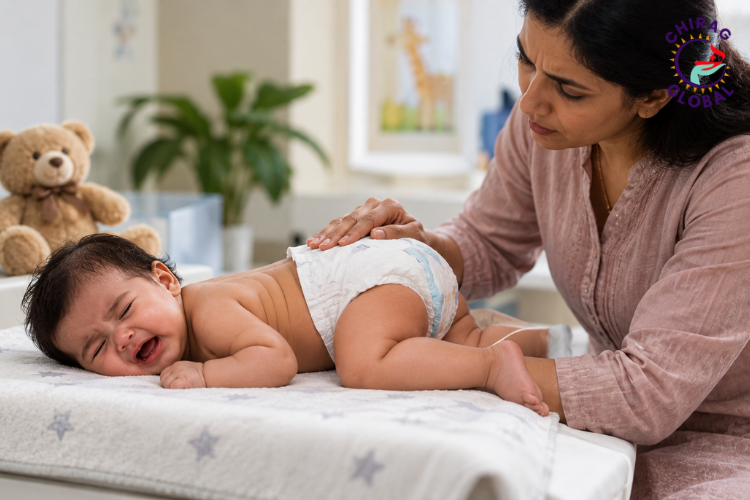
Constipation can cause hard or difficult-to-pass stools and may lead to repeated straining.
A baby or toddler with constipation may:
- Pass hard or dry stools
- Have fewer bowel movements than usual
- Cry or appear uncomfortable while passing stool
- Strain repeatedly
- Develop irritation around the anus
Constipation can become more noticeable during dietary changes, such as the transition to solid foods.
Straining During Bowel Movements
Straining can increase pressure around the anal area.
Parents may notice a baby:
- Turning red while passing stool
- Grunting
- Crying during bowel movements
- Taking longer to pass hard stool
- Appearing uncomfortable when pooping
However, occasional grunting and straining can occur normally in young infants, particularly when their bowel movements are otherwise soft and regular.
Anal Fissure
An anal fissure is a small tear in the tissue around the anus.
It can occur when a child passes a hard or large stool and may cause:
- Pain during bowel movements
- Crying while passing stool
- Small amounts of bright-red blood
- Blood on the outside of the stool or diaper
Because anal fissures can resemble hemorrhoid symptoms, examination may be needed to determine the cause.
Other Causes
Rectal bleeding or an anal lump in a baby can have causes other than hemorrhoids or constipation.
Depending on the symptoms, a healthcare professional may consider other gastrointestinal or anorectal conditions.
This is particularly important when bleeding is recurrent, significant, or accompanied by other symptoms.
What Do Hemorrhoids Look Like in a Baby?
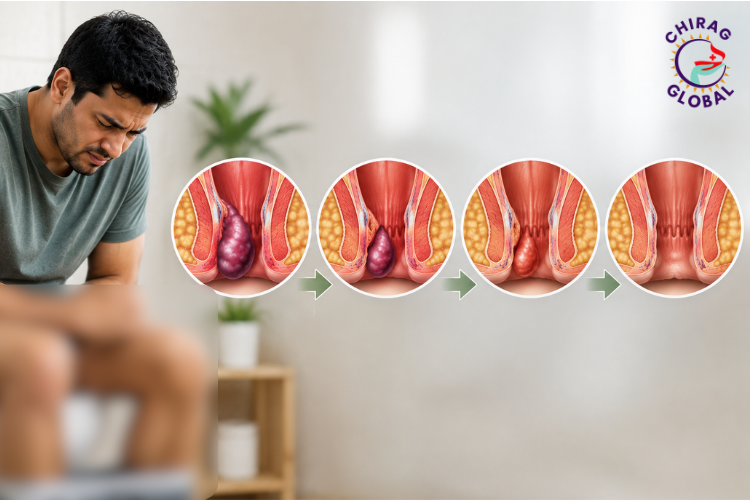
If a baby does have an external hemorrhoid, parents may notice:
- A small bump near the anus
- Swelling around the anal opening
- A reddish or bluish area
- Tenderness or discomfort
- Irritation
- Blood during or after a bowel movement
However, not every lump around a baby’s anus is a hemorrhoid.
A skin tag, anal fissure, abscess, cyst, or another condition can sometimes produce a similar appearance.
Parents should avoid trying to diagnose the cause based only on how the area looks.
Is Blood in a Baby’s Diaper a Sign of Hemorrhoids?
Not necessarily.
Blood in a baby’s diaper can have several causes. An anal fissure is one possible explanation, especially when the child has constipation or passes hard stool.
Hemorrhoids are another possible cause, but they are uncommon in babies.
Other gastrointestinal conditions can also cause blood in the stool.
For this reason, infant rectal bleeding should be discussed with a healthcare professional, particularly when the cause is unclear, the bleeding is repeated, or the baby has other symptoms.
Hemorrhoids vs Anal Fissure in Babies
Hemorrhoids and anal fissures are different conditions, although their symptoms can sometimes overlap.
| Feature | Hemorrhoids | Anal Fissure |
| What it is | Swollen or enlarged blood vessels and supporting tissues | A small tear in the anal tissue |
| Common in babies? | Uncommon | Can occur in children, particularly with hard stools |
| Bleeding | Can occur | Can occur |
| Pain | May cause discomfort, especially with external disease | Often causes pain during or after bowel movements |
| Relationship with constipation | May be associated with straining | Commonly associated with hard stools |
| Diagnosis | Clinical evaluation | Clinical evaluation |
The appearance of the area alone may not be enough to determine the diagnosis.
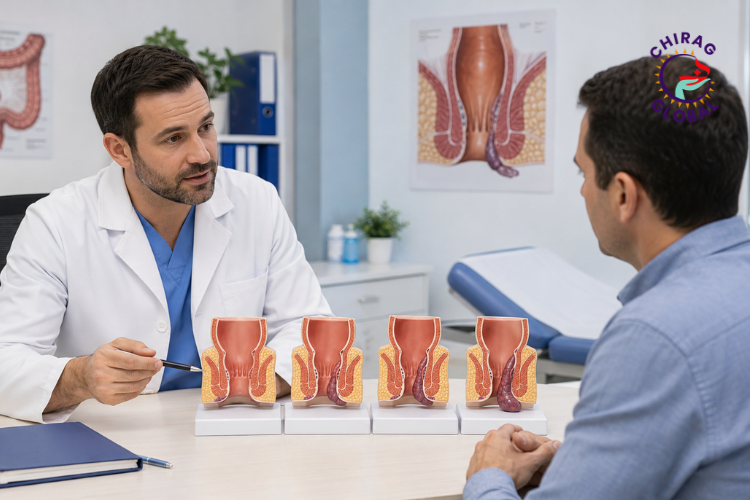
How Are Hemorrhoids in Babies Diagnosed?
Because hemorrhoids are uncommon in infants, a healthcare professional may consider several possible causes of the symptoms.
Medical History
The doctor may ask about:
- Bowel movement frequency
- Stool consistency
- Constipation
- Straining
- Blood noticed in the diaper
- Feeding pattern
- Recent dietary changes
- Vomiting or abdominal symptoms
- Other changes in the baby’s behavior or health
Physical Examination
A healthcare professional may examine the area around the anus to look for signs of:
- Hemorrhoids
- Anal fissures
- Skin irritation
- Swelling
- Lumps
- Other abnormalities
Additional testing may be considered when the symptoms or medical history suggest another underlying cause.
How Are Hemorrhoids in Babies Treated?
Treatment depends on the actual cause of the symptoms.
Because hemorrhoids are uncommon in babies, treatment should not be started based solely on a suspected diagnosis.
Managing Constipation
If constipation is contributing to the symptoms, a pediatrician may recommend age-appropriate measures to make bowel movements easier.
The appropriate approach depends on the child’s:
- Age
- Feeding pattern
- Diet
- Stool consistency
- Overall health
Parents should not start laxatives, enemas, suppositories, or other constipation treatments without medical advice.
Gentle Anal Care
Keeping the area clean can help reduce additional irritation.
During diaper changes:
- Clean the area gently
- Avoid aggressive wiping
- Avoid harsh soaps or irritating products
- Pat the area dry rather than rubbing it
Medical Treatment
Most suspected mild hemorrhoid symptoms in babies are managed conservatively when hemorrhoids are actually confirmed.
If symptoms are severe, persistent, or caused by another condition, the treatment will depend on the diagnosis.
Surgical treatment for hemorrhoids in babies would be unusual and would only be considered in specific circumstances by an appropriate specialist.
Can Baby Hemorrhoids Go Away on Their Own?
Some mild hemorrhoidal symptoms may improve as irritation and contributing factors settle.
However, parents should not assume that an anal lump or bleeding will disappear without evaluation.
If a baby has persistent bleeding, swelling, pain, or an unusual lump, medical assessment is important to determine the actual cause.
How Can Parents Help Prevent Constipation?
Preventing constipation may help reduce hard stools and repeated straining.
Depending on the child’s age and feeding stage, parents can discuss the following with their pediatrician:
- Appropriate fluid intake
- Age-appropriate dietary fiber after solids are introduced
- Suitable fruits and vegetables
- Regular bowel habits for toddlers
- Avoiding unnecessary stool withholding
- Early management of constipation
The appropriate approach can differ considerably between a newborn, breastfed infant, formula-fed infant, and toddler.
Parents should follow age-specific advice from their child’s healthcare professional.
Can You Use Hemorrhoid Cream on a Baby?
Parents should not use adult hemorrhoid creams or ointments on a baby without medical advice.
Some products intended for adults may not be appropriate for infants. Babies may also have a different underlying condition that requires different treatment.
The same caution applies to:
- Laxatives
- Enemas
- Suppositories
- Pain-relief creams
- Other topical medications
Always consult a pediatric healthcare professional before giving medication or applying treatment to a baby’s anal area.
When Should You Take a Baby to the Doctor?
Parents should contact a healthcare professional if a baby has blood in the stool or bleeding from the anus.
Medical evaluation becomes particularly important when bleeding occurs with:
- Persistent constipation
- Significant pain
- Difficulty passing stool
- Vomiting
- Abdominal swelling
- Abdominal pain
- Poor feeding
- Fever
- Unusual sleepiness or weakness
- Repeated or increasing bleeding
- A persistent or enlarging anal lump
Because rectal bleeding in infants can have several causes, it is safer to have the symptom assessed rather than assuming it is hemorrhoids.
When Is Rectal Bleeding in a Baby an Emergency?
Seek urgent medical attention if your baby has:
- Heavy or ongoing bleeding
- Severe pain
- Significant abdominal swelling or pain
- Repeated vomiting
- Unusual weakness
- Difficulty waking or marked lethargy
- A high fever with concerning symptoms
- A rapidly worsening overall condition
Do not wait for a suspected hemorrhoid to improve if your baby’s condition appears to be deteriorating.
Can Hemorrhoids in Toddlers Be Different?
Hemorrhoids remain relatively uncommon in toddlers, but constipation and stool withholding can become more relevant as children transition to toilet training.
Toddlers may sometimes avoid passing stool because of previous painful bowel movements. This can contribute to harder stools and repeated straining.
If a toddler repeatedly experiences pain, bleeding, constipation, or difficulty passing stool, medical advice can help identify and address the underlying bowel problem.
What Parents Should Know About Baby Piles
The term baby piles is sometimes used to describe any bump, swelling, or bleeding around a baby’s anus. However, these symptoms do not necessarily indicate hemorrhoids.
An anal fissure, skin irritation, infection, or another condition may produce similar symptoms.
Therefore, parents should focus on identifying the cause rather than treating the symptom as hemorrhoids without an examination.
Frequently Asked Questions About Hemorrhoids in Babies
Are hemorrhoids common in babies?
No. Hemorrhoids are uncommon in babies. When an infant has bleeding, swelling, or a lump around the anus, other causes should also be considered.
Can constipation cause hemorrhoids in babies?
Constipation and repeated straining can increase pressure and irritation around the anal area. However, constipation can also cause an anal fissure, which may lead to pain and rectal bleeding.
Why is there blood in my baby’s diaper?
Blood in a baby’s diaper can have several causes, including an anal fissure and other gastrointestinal or anorectal conditions. Hemorrhoids are possible but uncommon. Contact your child’s healthcare professional for appropriate evaluation.
Do baby hemorrhoids go away on their own?
Some mild symptoms may improve as irritation or constipation settles. However, persistent bleeding, swelling, pain, or an unusual lump should be evaluated rather than assumed to be a hemorrhoid.
Can I use hemorrhoid cream for my baby?
Do not use adult hemorrhoid creams or other medications on a baby unless specifically recommended by a healthcare professional.
Can hemorrhoids in toddlers be caused by constipation?
Constipation and repeated straining may contribute to irritation around the anus. However, anal fissures and other conditions can cause similar symptoms, so persistent symptoms should be evaluated.
Should I worry if my baby has rectal bleeding?
Rectal bleeding in a baby should not be ignored. Although some causes may be minor, a healthcare professional should determine why the bleeding is occurring.
When should I take my baby to a doctor for a possible hemorrhoid?
Seek medical advice if your baby has rectal bleeding, persistent constipation, significant pain, a persistent or enlarging lump, fever, vomiting, abdominal symptoms, or any concerning change in behavior or overall health.
Key Takeaway
Hemorrhoids in babies are uncommon. Although constipation and straining may contribute to irritation around the anus, symptoms such as blood in the diaper, swelling, pain, or an anal lump can have several other causes.
An anal fissure is one possible explanation for bleeding, particularly when a child has hard stools. Other gastrointestinal or anorectal conditions may also need to be considered.
Parents should avoid diagnosing baby hemorrhoids based only on appearance and should not use adult hemorrhoid creams, laxatives, or enemas without medical advice.
If a baby has unexplained or persistent rectal bleeding, significant pain, an unusual lump, fever, vomiting, or a worsening condition, seek medical evaluation promptly.