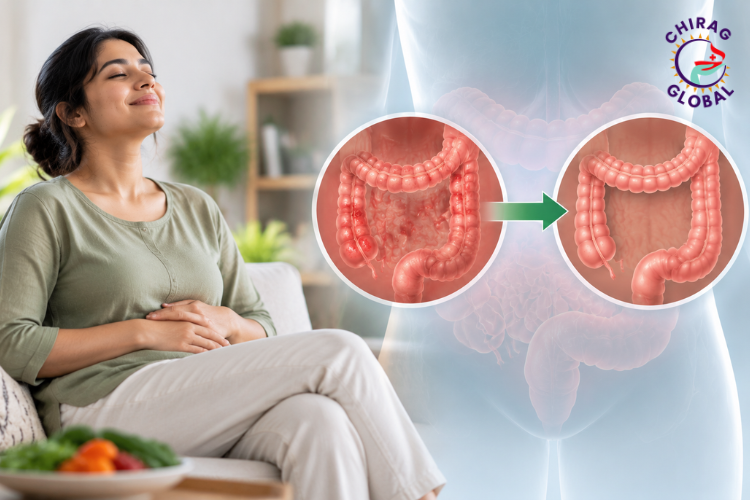

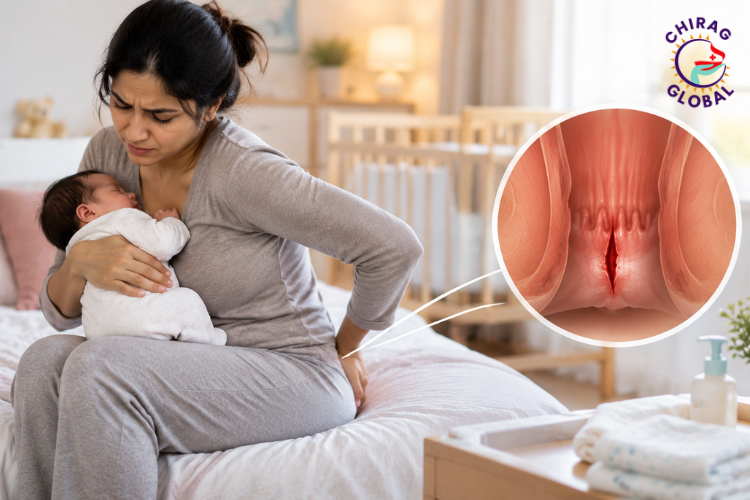
Experiencing pain around the anus after giving birth can be difficult to understand, especially while recovering from pregnancy, vaginal delivery, perineal stitches, or other postpartum changes.
One possible cause is an anal fissure after childbirth, which is a small tear in the lining of the anal canal.
Anal fissures can occur during the postpartum period, although hemorrhoids are generally more common. Constipation and hard stools are important factors that can contribute to fissure development after delivery.
Postpartum anal pain can also have other causes, including hemorrhoids, perineal injury, constipation, or pelvic floor-related discomfort. Therefore, persistent or severe symptoms should not automatically be assumed to be a fissure.
At Chirag Global Hospitals, postpartum anal pain can be evaluated to help determine its underlying cause and guide appropriate treatment.
Book a Consultation | Call 08065903127
Why Can an Anal Fissure Develop After Childbirth?
Childbirth itself is not necessarily the direct cause of a fissure. Instead, several changes during pregnancy and the postpartum period can contribute to its development.
Postpartum Constipation
Constipation is an important factor because stools may become hard and difficult to pass after delivery.
Changes in routine, reduced physical activity, inadequate fluid intake, dietary changes, certain medications, and iron supplements can contribute to constipation after childbirth.
Passing a hard stool can create or reopen a small tear in the anal lining.
Straining During Bowel Movements
Straining increases pressure on the anal canal.
If bowel movements are already painful because of a fissure, a person may begin delaying bowel movements. This can allow stool to become harder and make the next bowel movement more difficult.
This can create a cycle:
Pain → avoiding bowel movements → harder stool → more straining → further irritation
Breaking this cycle is an important part of fissure care.
Changes During Pregnancy and After Delivery
Pregnancy and childbirth involve significant changes to the pelvic floor and anorectal region.
Changes in bowel habits, activity, hydration, and pelvic floor function during the postpartum period may contribute to anal discomfort and constipation, which can increase the risk of fissure symptoms.
Pain and Discomfort After Vaginal Delivery
After a vaginal birth, soreness around the perineum can make sitting, walking, and using the toilet uncomfortable.
This discomfort can sometimes make it difficult to identify the exact source of anal pain. A fissure may therefore be mistaken for general postpartum soreness or hemorrhoids.
Does Vaginal Delivery Cause Anal Fissures?
Vaginal delivery can be associated with anal fissures, but it is not accurate to say that every fissure after childbirth is directly caused by the delivery itself.
Constipation and hard stools can be important contributing factors, and postpartum anal pain can have several possible causes.
After vaginal delivery, a woman may experience:
- Hemorrhoids
- Anal fissure
- Perineal tear or episiotomy-related discomfort
- Constipation
- Pelvic floor discomfort
- Anal sphincter injury in some cases
Because these conditions can have overlapping symptoms, persistent or severe pain should not automatically be attributed to childbirth.
What Does a Postpartum Anal Fissure Feel Like?
The pattern of pain can provide a useful clue.
A postpartum anal fissure often causes sharp, cutting, or burning pain during a bowel movement. The discomfort may continue for some time afterward.
Some women may also notice a small amount of bright red blood when wiping.
Hemorrhoids may instead cause symptoms such as:
- Itching
- Swelling
- Bleeding
- A lump around the anus
- Pain, particularly when a hemorrhoid becomes thrombosed
Perineal injuries may cause pain closer to the vaginal opening, stitches, or the area affected during delivery.
Because symptoms can overlap, an examination may be necessary when the cause is uncertain.
How Common Is an Anal Fissure After Childbirth?
There is no single percentage that applies to every postpartum woman because studies have examined different populations and used different methods of identifying fissures.
Some research has reported that a meaningful minority of women develop anal fissures during the postpartum period, while other studies have found hemorrhoids to be considerably more common.
Constipation appears to be an important factor associated with postpartum fissure development.
Therefore, an anal fissure after childbirth is a recognized postpartum problem, but it is not something that every new mother will develop.
When Do Postpartum Fissures Usually Appear?
An anal fissure can develop at different points during the postpartum period.
Some women notice symptoms during the first few bowel movements after delivery. Others may develop symptoms later, particularly if constipation or hard stools continue.
This means that developing anal pain several days or weeks after childbirth does not necessarily rule out a fissure.
The timing alone cannot confirm the diagnosis, particularly because other postpartum conditions can cause similar symptoms.
How Can You Reduce the Risk of a Fissure After Delivery?
The main goal is to keep bowel movements soft and avoid unnecessary straining.
Keep Stools Soft
Include fiber-rich foods that suit your diet, such as:
- Fruits
- Vegetables
- Whole grains
- Beans and lentils
- Other high-fiber foods
Drink adequate fluids, particularly if you are breastfeeding or experiencing constipation.
If dietary changes are not enough, speak with your healthcare professional about appropriate treatment for constipation.
Do Not Ignore the Urge to Pass Stool
Delaying bowel movements can allow stool to become harder and more difficult to pass.
Responding to the natural urge to use the toilet can help reduce unnecessary stool retention.
Avoid Excessive Straining
Try to allow bowel movements to happen naturally rather than repeatedly pushing or spending long periods on the toilet.
Stay Gently Active
Once your obstetric or maternity care team says it is appropriate, gentle walking and gradual activity can help support normal bowel function.
Address Constipation Early
If constipation continues after childbirth, discuss it with your doctor, midwife, or another qualified healthcare professional.
A suitable stool softener or laxative may sometimes be recommended depending on your individual circumstances.
What Can Help an Anal Fissure After Childbirth?
Treatment depends on the severity and duration of symptoms and whether the fissure is acute or persistent.
Initial management commonly focuses on:
- Keeping stools soft
- Increasing dietary fiber when appropriate
- Drinking adequate fluids
- Avoiding straining
- Managing constipation
- Reducing irritation
- Using appropriate pain-relief measures
- Warm water baths for comfort when suitable
A healthcare professional may also prescribe medication to help a persistent fissure heal.
Some acute fissures heal with conservative care. If a fissure becomes chronic or repeatedly returns, additional medical treatment may be considered.
Can You Treat a Postpartum Fissure at Home?
Mild symptoms may improve when constipation and straining are addressed.
However, postpartum women should be cautious about using medicines, creams, or other treatments without checking whether they are appropriate for them, particularly while breastfeeding.
Do not assume that every painful bowel movement is caused by an anal fissure.
Medical assessment is advisable if:
- Pain is severe
- Bleeding is persistent
- Symptoms are worsening
- There is significant swelling
- You develop fever
- You notice pus or unusual discharge
- You are unsure whether the problem is a fissure, hemorrhoid, or another postpartum condition
Anal Fissure vs Piles After Childbirth
Anal fissures and hemorrhoids can both occur during or after pregnancy and childbirth, but their symptoms can differ.
| Feature | Anal Fissure | Piles/Hemorrhoids |
| Main problem | Small tear in the anal lining | Swollen veins in or around the anus |
| Pain | Often sharp or burning during and after stool | May cause discomfort or pain, particularly when thrombosed |
| Bleeding | Usually a small amount of bright red blood | Bright red bleeding can also occur |
| Lump | Usually not the main symptom | A lump may be present |
| Constipation | Can contribute to development or worsening | Can worsen symptoms |
| Postpartum occurrence | Can occur after delivery | Common during pregnancy and after childbirth |
Because both conditions can cause bleeding and discomfort, an examination may be necessary when symptoms are persistent, severe, or unusual.
When Should You See a Doctor for Postpartum Anal Pain?
Postpartum recovery involves many expected changes, but significant or persistent anal pain should not simply be ignored.
Seek medical advice if:
- Pain is severe or getting worse
- Bleeding continues or becomes heavier
- You develop fever or feel unwell
- There is significant swelling around the anus
- You notice pus or unusual discharge
- Constipation persists despite dietary and lifestyle measures
- Pain continues for several weeks
- Fissure-like symptoms repeatedly return
- You have difficulty controlling stool
- You experience accidental stool leakage
Persistent perineal or anal pain after childbirth can have several causes, so an appropriate evaluation can help identify the underlying problem.
Does an Anal Fissure Affect Breastfeeding?
Having an anal fissure itself does not generally prevent breastfeeding.
However, treatment should be selected carefully because not every medication is appropriate for every breastfeeding mother.
If medication is needed, tell your doctor that you are breastfeeding. This allows the healthcare professional to consider an appropriate treatment option.
Can an Anal Fissure Become Chronic After Childbirth?
Yes. A fissure that does not heal can become chronic.
Repeated trauma from hard stools and continued constipation can interfere with healing. Pain can also cause someone to avoid bowel movements, which may worsen constipation and prolong symptoms.
For this reason, addressing constipation early is an important part of postpartum fissure care.
Persistent fissures may require medical treatment aimed at helping the fissure heal and reducing excessive anal muscle tension.
What Is the Treatment for a Chronic Anal Fissure?
If conservative measures do not resolve the fissure, a doctor may recommend additional treatment.
Depending on the individual situation, treatment may include:
- Prescription topical medication
- Treatment to reduce anal muscle spasm
- Other non-surgical approaches
- Procedures or surgery for selected persistent cases
The appropriate option depends on factors such as symptom duration, severity, previous treatment, and the patient’s overall health.
Conclusion
An anal fissure after childbirth is a recognized postpartum problem, although hemorrhoids are generally more common.
Constipation, hard stools, and straining can contribute to fissure development or prevent an existing fissure from healing.
The main priorities are to keep stools soft, drink adequate fluids, consume sufficient fiber, avoid excessive straining, and address constipation early.
Not every type of postpartum anal pain is caused by a fissure. If pain or bleeding is severe, persistent, recurrent, or difficult to explain, medical evaluation can help distinguish an anal fissure from hemorrhoids, perineal injury, or other postpartum conditions.
Visit Chirag Global Hospitals Today!
Frequently Asked Questions
How common is an anal fissure after childbirth?
Anal fissures can occur after childbirth, although they are generally less common than hemorrhoids. Research suggests that postpartum fissures affect a meaningful minority of women, but the reported frequency varies between studies.
Can constipation after delivery cause an anal fissure?
Yes. Passing hard stools and straining can injure the delicate anal lining and may cause or worsen an anal fissure.
Is an anal fissure more common after vaginal delivery?
Anal fissures can occur after vaginal delivery, but vaginal delivery alone does not explain every postpartum fissure. Constipation and bowel changes can also play an important role.
How do I know if postpartum pain is from a fissure or piles?
A fissure typically causes sharp or burning pain during and after passing stool, while hemorrhoids may cause swelling, itching, a lump, or bleeding. Since symptoms can overlap, persistent symptoms should be assessed by a healthcare professional.
Can a postpartum anal fissure heal without surgery?
Yes. Some acute fissures improve with conservative care, particularly when constipation and straining are addressed. Persistent or recurrent fissures may require prescription treatment or a procedure.
Can I use fissure medicine while breastfeeding?
Some treatments may be suitable during breastfeeding, while others may require caution. Tell your doctor that you are breastfeeding before using prescription or over-the-counter medicines for an anal fissure.
When should I get medical help for an anal fissure after childbirth?
Seek medical advice if pain is severe, symptoms are worsening, bleeding is persistent or increasing, you develop fever or significant swelling, or symptoms do not improve with basic bowel-care measures.