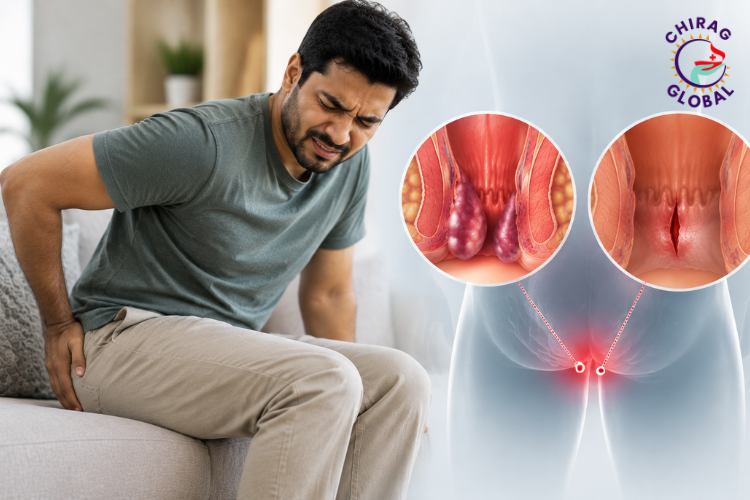

An anal fistula can cause persistent discomfort, irritation, swelling, and drainage around the anus. Because these symptoms can be uncomfortable, many people look for simple home measures that may provide temporary relief.
A warm compress for anal fistula may help soothe soreness and irritation in some people. A warm-water soak or sitz bath may also provide temporary comfort, particularly after bowel movements.
However, it is important to understand the limitation: warmth may relieve symptoms, but it does not close or cure the fistula tract.
An anal fistula is an abnormal tunnel between the anal canal or rectum and the skin near the anus. Many develop after an anal abscess and may require specialist treatment.
Therefore, warm compresses should be considered supportive care rather than a replacement for medical treatment.
Book a Consultation | Call 08065903127
Does a Warm Compress Help an Anal Fistula?
Yes, a comfortably warm compress may temporarily ease pain, soreness, and irritation associated with an anal fistula.
Warmth may provide comfort by soothing the surrounding tissues and helping the area feel less tense.
However, a warm compress does not eliminate the abnormal tunnel that forms the fistula.
It is useful to think of it this way:
Warm compress = temporary symptom relief
Definitive fistula treatment = treatment directed at the underlying fistula tract
If symptoms repeatedly return, a specialist assessment is important.
What Is an Anal Fistula?
An anal fistula is an abnormal connection or tunnel between the inside of the anus or rectum and the skin near the anus.
It commonly develops after an anal abscess. When an abscess drains, either naturally or after treatment, a persistent tract may remain between the infected cavity and the skin.
Common symptoms can include:
- Persistent or throbbing anal pain
- Recurrent swelling
- A small opening near the anus
- Pus or other drainage
- Blood-stained discharge
- Skin irritation
- Pain while sitting
- Repeated episodes of swelling followed by drainage
Fever, increasing pain, or rapidly worsening swelling can indicate an active infection or abscess and require prompt medical attention.
Why Does an Anal Fistula Cause Pain?
Pain can occur because of inflammation, infection, swelling, or pressure around the fistula.
Discomfort may become more noticeable:
- During bowel movements
- After bowel movements
- While sitting
- During physical activity
- When swelling develops
- When an abscess forms
The severity of pain can vary depending on whether the fistula is actively draining, blocked, infected, or associated with an abscess.
How Can a Warm Compress Help?
The potential benefit of a warm compress is mainly symptom relief.
It May Soothe Sore Tissue
Comfortable warmth may help soothe irritated skin and tissues around the anus.
It May Reduce the Feeling of Tightness
Warmth can feel relaxing around the anal region and may temporarily reduce the sensation of muscle tightness.
It May Provide Temporary Pain Relief
Some people find warm water or a warm compress soothing when the area is painful, particularly after bowel movements.
It Can Support Gentle Cleaning
Warm water can help clean drainage from the surrounding skin without aggressive rubbing.
These benefits are supportive. They do not mean that the fistula itself is healing.
Warm Compress vs Sitz Bath for Anal Fistula
A warm compress and a sitz bath provide warmth in different ways.
Warm Compress
A warm compress involves placing a clean, warm, damp cloth gently against the affected area.
It may be useful when:
- You want localized warmth
- You do not want to sit in water
- The affected area is small and accessible
Warm Sitz Bath
A sitz bath involves sitting in comfortably warm water so that the anal and surrounding area is immersed.
It may provide more widespread soothing warmth and can also help gently clean the area.
If you have recently undergone fistula surgery, follow your surgeon’s specific instructions about bathing and wound care.
How to Use a Warm Compress Safely
If a healthcare professional has advised that warmth is appropriate for you, keep the process simple.
Step 1: Use Comfortably Warm Water
The water should be warm and comfortable, not very hot.
Excessive heat can damage sensitive skin.
Step 2: Use a Clean Cloth
Soak a clean cloth in warm water and gently squeeze out excess water.
Step 3: Apply the Compress Gently
Place the warm cloth against the affected area without pressing firmly.
Avoid squeezing or manipulating a swollen area.
Step 4: Remove It if It Causes Irritation
Stop if the skin becomes more painful, excessively red, irritated, or uncomfortable.
Step 5: Gently Dry the Area
After using the compress, gently pat the area dry.
Avoid vigorous rubbing.
Can You Use Hot Water for an Anal Fistula?
Very hot water should be avoided.
The skin around the anus is sensitive, and excessive heat can cause burns or worsen irritation.
If you use warmth for comfort, it should be comfortably warm rather than hot.
Extra caution is needed if:
- You have reduced sensation in the area
- You have a recent surgical wound
- The skin is severely irritated
- You have been advised to avoid heat by your healthcare provider
Can Warm Water Drain an Anal Fistula?
Warm water should not be expected to drain or eliminate an anal fistula.
An anal fistula is a persistent tract rather than simply a pocket of fluid beneath the skin.
If a fistula drains after becoming swollen, the pressure and pain may temporarily decrease. However, the underlying tract may still be present.
Therefore, drainage does not necessarily mean that the fistula has healed.
Does a Warm Compress Cure an Anal Fistula?
No.
This is the most important limitation of using a warm compress for anal fistula symptoms.
A warm compress may provide temporary comfort, but it cannot remove or permanently close the fistula tract.
Anal fistulas often require specialist evaluation and, depending on their anatomy and complexity, definitive treatment.
The appropriate treatment may involve:
- Fistulotomy
- Seton placement
- Sphincter-preserving procedures
- Other surgical or minimally invasive approaches
The treatment depends on factors such as the location and pathway of the fistula and its relationship with the anal sphincter.
What If the Fistula Feels Better After a Warm Compress?
Temporary symptom improvement does not necessarily mean the fistula is healing.
Warmth may make the area feel more comfortable without changing the underlying fistula tract.
Similarly, if swelling decreases after the fistula drains, the underlying problem may still be present.
If symptoms repeatedly return, specialist evaluation is recommended.
Can a Warm Compress Help After Fistula Surgery?
Warm-water bathing may be recommended after some fistula procedures to support comfort and local hygiene.
However, post-operative instructions depend on the type of procedure and the condition of the wound.
Your surgeon may provide specific instructions about:
- Bathing
- Wound cleaning
- Dressings
- Pain medication
- Bowel movements
- Physical activity
- Seton care
- Follow-up appointments
Always follow the instructions provided by your surgical team rather than relying solely on general home-care advice.
Can You Use Salt in Warm Water?
Plain warm water is generally sufficient unless your healthcare professional recommends otherwise.
Adding salt, antiseptics, essential oils, or herbal ingredients is not automatically beneficial and may irritate sensitive skin.
Avoid adding:
- Strong antiseptics
- Perfumes
- Essential oils
- Harsh soaps
- Unrecommended herbal products
If you have a healing surgical wound, follow the specific wound-care instructions provided by your surgeon.
What Other Home Measures May Help With Fistula Discomfort?
A warm compress is only a supportive measure.
Other practical steps may include:
Keep the Area Gently Clean
Clean the area without aggressive scrubbing or excessive wiping.
Maintain Softer Stools
Adequate dietary fiber and fluid intake can help support easier bowel movements when appropriate.
Avoid Excessive Straining
Repeated straining can increase discomfort around the anal area.
Follow Prescribed Treatment
If your doctor has prescribed pain medication, antibiotics, or another treatment, take it exactly as directed.
Protect the Surrounding Skin
If there is ongoing drainage, your healthcare team may recommend an appropriate dressing or absorbent pad to protect the surrounding skin.
These measures may improve comfort but do not replace definitive fistula treatment when it is required.
What Should You Avoid Doing to an Anal Fistula?
Trying to manipulate or force a fistula to drain can worsen irritation or injury.
Avoid:
- Squeezing the swelling
- Puncturing the skin
- Inserting objects into the opening
- Applying very hot substances
- Using harsh chemicals
- Taking antibiotics without medical advice
- Applying unverified products
- Assuming that repeated drainage means the fistula is cured
If the area becomes increasingly swollen or painful, medical assessment is more appropriate than attempting to drain it yourself.
When Is a Warm Compress Not Enough?
A warm compress is not enough when symptoms suggest an active infection, abscess, or worsening fistula.
Seek medical evaluation if you develop:
- Increasing anal pain
- A growing lump
- Increasing redness or swelling
- Pus or foul-smelling drainage
- Fever
- Chills
- Repeated swelling and drainage
- Increasing difficulty sitting or walking
- Persistent or worsening symptoms
An abscess can cause significant pain and swelling and may require medical drainage.
Can an Anal Fistula Go Away Without Surgery?
Some anal conditions may improve without surgery, but a persistent anal fistula often does not heal permanently on its own.
The appropriate treatment depends on the anatomy and complexity of the fistula.
Possible treatments may include:
Fistulotomy
A fistulotomy involves opening the fistula tract so that it can heal from the inside outward.
It may be appropriate for selected fistulas where the amount of sphincter muscle involved is acceptable.
Seton Placement
A seton is a surgical material placed through the fistula tract in selected cases.
It may be used to allow drainage or as part of staged treatment.
Sphincter-Preserving Procedures
Certain procedures are designed to treat the fistula while minimizing disruption to the anal sphincter.
The appropriate option depends on the individual fistula.
Other Minimally Invasive Treatments
Selected fistulas may be suitable for other techniques depending on their anatomy and the specialist’s assessment.
No single procedure is appropriate for every anal fistula.
Why Does Fistula Type Matter?
Anal fistulas can follow different pathways and may involve different amounts of the anal sphincter.
This is important because treatment needs to balance two goals:
- Treating the fistula
- Protecting bowel control
Simple and complex fistulas may therefore require different treatment strategies.
For suspected complex fistulas, imaging such as MRI may sometimes be recommended to understand the anatomy before treatment.
Warm Compress for Anal Fistula: When Should You See a Specialist?
You should consider specialist evaluation if you have:
- Recurrent anal swelling
- Persistent drainage
- A visible opening near the anus
- Repeated episodes of pain
- Pus or blood-stained discharge
- A lump that repeatedly appears and drains
- Symptoms that do not resolve
- A previous anal abscess that continues to drain
Early evaluation can help determine whether the problem is an anal fistula, abscess, hemorrhoid, fissure, or another condition.
When Is Urgent Medical Attention Needed?
Seek urgent medical attention if you experience:
- Severe or rapidly increasing anal pain
- Rapidly increasing swelling
- Fever or chills
- Significant redness around the area
- Heavy bleeding
- Severe weakness or fainting
- Severe abdominal pain
- Other signs of serious infection
An abscess can become increasingly painful as pressure and infection build, so worsening symptoms should not be managed only with home remedies.
Anal Fistula Care at Chirag Global Hospitals
At Chirag Global Hospitals, Bangalore, patients with anal pain, recurrent swelling, drainage, or a suspected anal fistula can receive specialist colorectal and proctology evaluation.
The assessment may focus on determining:
- Whether a fistula is present
- Whether an abscess is present
- The location and pathway of the fistula
- Whether the sphincter muscles are involved
- Whether imaging is required
- Which treatment approach is most appropriate
Treatment is individualized because anal fistulas can differ considerably in their anatomy and complexity.
Conclusion
A warm compress for anal fistula can provide temporary relief from soreness, irritation, and discomfort. A warm sitz bath may also be soothing and can help with gentle local hygiene.
However, warmth is supportive care, not a cure. It does not close the abnormal fistula tract or eliminate the underlying cause.
If you have recurrent swelling, persistent drainage, anal pain, a visible opening near the anus, or symptoms that repeatedly return, seek evaluation from a colorectal or proctology specialist.
The earlier the fistula is properly assessed, the sooner an appropriate treatment plan can be considered while taking the anal sphincter and bowel control into account.
Visit Chirag Global Hospitals Today!
Frequently Asked Questions
Can a warm compress help an anal fistula?
A comfortably warm compress may temporarily relieve pain, soreness, and irritation. However, it does not close or cure the fistula tract.
Is hot water good for an anal fistula?
Very hot water should be avoided because it can burn or irritate the sensitive skin around the anus. If warmth is used, it should be comfortably warm.
Can I take a warm bath for an anal fistula?
A warm bath or sitz bath may provide temporary comfort and help with gentle cleaning. If you have had fistula surgery, follow your surgeon’s bathing instructions.
How often can I use a warm compress for fistula pain?
There is no single schedule suitable for everyone. Use gentle warmth for comfort and follow any instructions provided by your healthcare professional.
Can warm water make an anal fistula drain?
Warm water should not be expected to force an anal fistula to drain. Do not squeeze or puncture the area to make it drain.
Does fistula drainage mean it is healing?
Not necessarily. A fistula may drain intermittently while the underlying tract remains. Repeated drainage should be evaluated by a healthcare professional.
Can a warm compress cure an anal fistula?
No. A warm compress may provide temporary symptom relief but does not eliminate the underlying fistula tract.
Should I add salt to a sitz bath for an anal fistula?
Plain warm water is generally sufficient unless your healthcare provider specifically recommends another approach. Avoid substances that may irritate the skin or a healing wound.
Can I use a warm compress after fistula surgery?
Warm-water bathing may be recommended after some procedures, but post-operative care varies. Follow the specific instructions provided by your surgeon.
Should I squeeze an anal fistula to release pus?
No. Do not squeeze, puncture, or manipulate the fistula. If swelling or pain increases, seek medical evaluation.
What is the definitive treatment for an anal fistula?
Treatment depends on the fistula’s location, complexity, and relationship with the anal sphincter. Options may include fistulotomy, seton placement, sphincter-preserving procedures, or selected minimally invasive techniques.
Can an anal fistula heal without surgery?
A persistent anal fistula often does not heal permanently without appropriate treatment. A specialist can determine whether treatment is required and which option is safest.