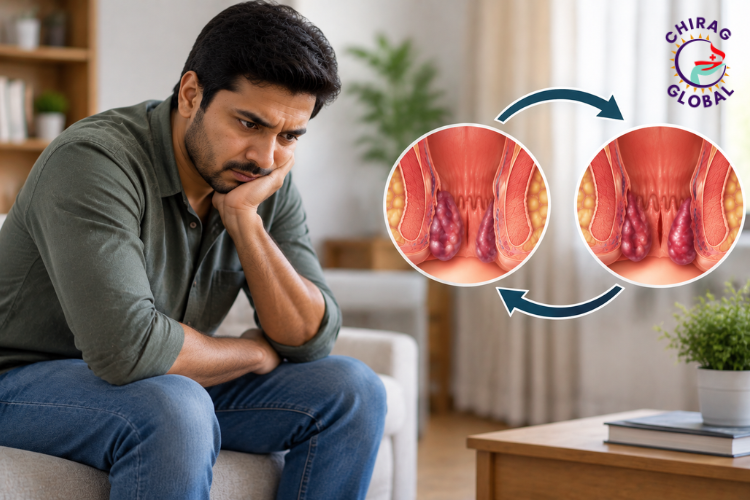


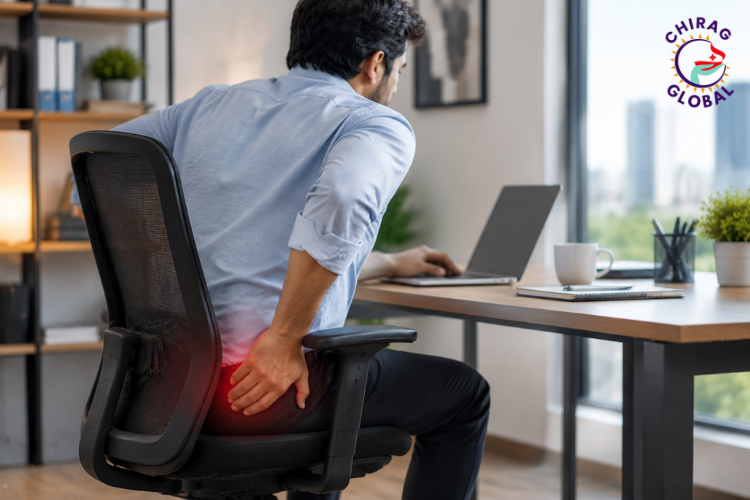
If you spend most of your working day sitting at a desk, you may wonder, “Can sitting for long hours cause piles?” The answer is that prolonged sitting can be one of several factors associated with hemorrhoids, but sitting alone does not necessarily mean you will develop piles.
Hemorrhoids, commonly called piles, are swollen veins around the anus or in the lower rectum. Factors such as constipation, straining during bowel movements, prolonged toilet sitting, low physical activity, pregnancy, excess weight and aging can contribute to their development.
For people with desk jobs, the bigger concern is often the combination of long sitting hours, limited movement, constipation and poor toilet habits rather than sitting at a desk by itself.
Book a Consultation | Call 08065903127
Can Sitting for Long Hours Cause Piles?
Prolonged sitting may contribute to the risk or aggravation of hemorrhoids, but it is usually not the only factor involved.
Hemorrhoids develop when pressure affects the blood vessels and supporting tissues around the anus and lower rectum. Sitting for long periods may increase pressure in the pelvic and anal region, while prolonged inactivity can also contribute to constipation in some people.
Medical sources identify prolonged sitting, particularly sitting on the toilet for long periods, as a factor associated with hemorrhoids.
This distinction is important:
Sitting at your desk for several hours is different from sitting on the toilet for several hours.
Both involve prolonged sitting, but toilet sitting is more directly associated with increased pressure and hemorrhoid symptoms.
Why Can a Desk Job Increase the Risk?
A sedentary work routine can create several conditions that may indirectly contribute to piles.
1. Less Physical Movement
When you remain seated for most of the day, you may get less physical activity overall.
Regular movement can support normal bowel function and help prevent constipation. Physical activity is therefore an important part of maintaining healthy bowel habits.
2. Constipation May Become More Common
People who sit for long periods may also have routines that involve little physical activity, irregular meals, inadequate fluid intake or delaying bathroom visits.
Constipation and straining are established factors associated with hemorrhoids.
If sitting all day contributes to a pattern of constipation and straining, the bowel habit rather than the chair itself may be an important part of the problem.
3. You May Ignore the Urge to Use the Toilet
Busy work schedules can make people postpone bowel movements.
Repeatedly delaying the urge can contribute to an unhealthy bowel routine. When you need to use the toilet, it is generally better to respond to the urge rather than repeatedly postponing it.
4. You May Spend Too Much Time on the Toilet
This is one of the more important sitting-related habits to address.
Some people take their phones into the bathroom and remain seated long after they have finished passing stool. Prolonged toilet sitting can increase pressure around the anal area and is recognized as a hemorrhoid risk factor.
In other words, sitting on the toilet for a long time can be more directly relevant to piles than simply sitting at your work desk.
Sitting All Day vs Sitting on the Toilet: Is There a Difference?
Yes.
| Sitting habit | Possible effect |
| Sitting at a desk for long hours | May contribute indirectly through inactivity and constipation |
| Sitting continuously without movement | Can contribute to a sedentary lifestyle |
| Sitting on the toilet for a long time | Can increase pressure around the anal region |
| Sitting and straining to pass stool | Increases pressure on hemorrhoidal veins |
| Sitting followed by regular movement breaks | Supports a more active routine |
The goal is not to avoid sitting completely. Instead, it is useful to reduce unnecessary prolonged sitting, stay physically active and maintain healthy bowel habits.
How Do You Know If Sitting Is Aggravating Your Piles?
If you already have hemorrhoids, prolonged sitting may make discomfort more noticeable.
Possible symptoms include:
- Anal discomfort
- Itching around the anus
- Pain or tenderness, particularly with external hemorrhoids
- A lump near the anus
- Bright-red bleeding during or after a bowel movement
- Discomfort while sitting
External hemorrhoids can cause anal pain or discomfort, especially when sitting.
However, symptoms should not automatically be blamed on piles. Rectal bleeding can have other causes, so persistent or unexplained bleeding deserves medical assessment.
How to Prevent Piles If You Sit at a Desk All Day
You do not necessarily need to leave your desk job to reduce the factors associated with piles. Small changes to your daily routine can help.
Take Regular Movement Breaks
Avoid remaining seated continuously for the entire workday.
Stand up periodically, walk around your workspace or take short walking breaks between tasks.
Regular physical activity can also help support bowel regularity and prevent constipation.
Keep Your Stools Soft
Hard stools can increase straining during bowel movements.
A diet containing adequate fiber, along with appropriate fluid intake, can help support softer stools. If constipation persists despite these measures, speak with a healthcare professional rather than continuously increasing fiber without identifying the cause.
Do Not Strain
Straining during bowel movements increases pressure in the veins of the lower rectum and is an important factor associated with hemorrhoids.
Try not to force a bowel movement when there is no natural urge.
Avoid Prolonged Toilet Sitting
Use the toilet for its intended purpose rather than turning it into a place to scroll through your phone, read or work.
The National Institute of Diabetes and Digestive and Kidney Diseases recommends avoiding prolonged sitting on the toilet as part of hemorrhoid prevention and management.
Do Not Ignore the Urge to Pass Stool
When you need to use the toilet, try not to repeatedly postpone it because of meetings, work or travel.
A regular bowel routine can make bowel movements easier and may reduce the need for excessive straining.
Stay Adequately Hydrated
Adequate fluid intake can help support softer stools, particularly when your diet contains sufficient fiber. Individual fluid requirements vary, so there is no single amount that is appropriate for everyone.
Can Changing Your Chair Prevent Piles?
A special chair or cushion is not a guaranteed way to prevent hemorrhoids.
If prolonged sitting is part of your daily routine, the more useful approach is to focus on:
- Regular movement
- A healthy bowel routine
- Avoiding excessive straining
- Adequate fiber
- Appropriate fluid intake
- Avoiding prolonged toilet sitting
- Addressing constipation
A comfortable workstation can certainly make sitting easier, but changing the chair alone does not address the major bowel and lifestyle factors associated with piles.
Does Walking Help With Piles?
Walking and regular physical activity can be useful as part of a healthy routine, particularly when constipation is contributing to hemorrhoid symptoms.
Physical activity can help support bowel movement and reduce the effects of a sedentary lifestyle.
The goal does not have to be intense exercise. Short, regular periods of movement throughout the day can be a practical starting point for someone who spends many hours working at a desk.
When Should You See a Doctor for Piles?
Occasional mild hemorrhoid symptoms may improve with changes to bowel and toilet habits. However, persistent or recurrent symptoms should not simply be attributed to sitting.
Consider medical evaluation if you have:
- Repeated rectal bleeding
- Persistent anal pain
- A lump that does not improve
- Recurrent swelling around the anus
- Symptoms that continue despite home measures
- A significant change in bowel habits
- Unexplained weight loss
- Severe abdominal symptoms along with rectal bleeding
The NIDDK recommends seeking medical help for rectal bleeding or symptoms that continue after a period of home treatment.
Severe pain with significant bleeding, dizziness, faintness or large amounts of blood requires urgent medical attention.
How Are Piles Diagnosed?
A doctor may begin with your symptoms and medical history and examine the area around the anus.
Depending on your symptoms, the evaluation may include a digital rectal examination or examination of the anus and rectum with an appropriate instrument. Additional investigations may sometimes be required, particularly when bleeding or bowel changes need another cause to be ruled out.
This is important because rectal bleeding should not automatically be assumed to be caused by hemorrhoids.
Do All Piles Need Surgery?
No.
Treatment depends on the type and severity of hemorrhoids and how troublesome the symptoms are.
Mild cases may improve with changes such as increasing dietary fiber, maintaining adequate fluid intake, avoiding straining and limiting time on the toilet. When symptoms persist, doctors may consider treatments such as rubber band ligation, sclerotherapy, infrared treatment or other procedures. Larger or persistent hemorrhoids may sometimes require surgery.
The appropriate treatment should be decided after an evaluation rather than based only on the number of hours someone spends sitting.
Conclusion
So, can sitting for long hours cause piles? Prolonged sitting can be one contributing factor, but it is usually more useful to look at the complete pattern.
For desk workers, the combination of long periods of inactivity, constipation, straining and prolonged toilet sitting may be more important than simply the number of hours spent in a chair.
Taking regular movement breaks, maintaining healthy bowel habits, drinking adequate fluids, eating enough fiber, avoiding straining and keeping toilet time short can all support better colorectal health.
If you continue to experience bleeding, pain, swelling or recurrent piles despite these changes, consult a qualified colorectal or proctology specialist to determine the underlying cause and appropriate treatment.
At Chirag Global Hospitals, persistent piles and other colorectal symptoms can be evaluated by a specialist to determine whether conservative care, an outpatient procedure or another treatment approach is appropriate.
Visit Chirag Global Hospitals Today!
Frequently Asked Questions
Can Sitting for 8 Hours a Day Cause Piles?
Long periods of sitting may contribute to factors associated with hemorrhoids, particularly when combined with inactivity and constipation. However, sitting at a desk alone does not mean that you will develop piles.
Is Sitting on the Toilet Worse Than Sitting on a Chair?
Prolonged toilet sitting is a more clearly recognized hemorrhoid risk factor. Spending a long time on the toilet can increase pressure around the anal region, especially when combined with straining.
Can a Sedentary Lifestyle Cause Hemorrhoids?
A sedentary lifestyle may contribute indirectly by reducing physical activity and potentially worsening constipation. Constipation and straining are established factors associated with hemorrhoids.
How Often Should I Get Up If I Sit All Day?
Rather than focusing on one strict time interval, aim to avoid sitting continuously for long stretches. Stand, walk or change position regularly throughout your workday.
Can Walking Reduce Piles?
Regular physical activity can help support bowel regularity and reduce constipation, which may help reduce factors that contribute to hemorrhoids. It is not, however, a guaranteed treatment for existing piles.
Should I Avoid Sitting Completely If I Have Piles?
No. The goal is not to eliminate sitting. Instead, avoid unnecessary prolonged sitting, particularly prolonged toilet sitting, stay active and prevent constipation and straining.
When Should I See a Piles Specialist?
If bleeding, pain, swelling, prolapse or other anal symptoms persist or repeatedly return, a colorectal or proctology evaluation can help determine whether the symptoms are actually caused by hemorrhoids and whether treatment is needed.