

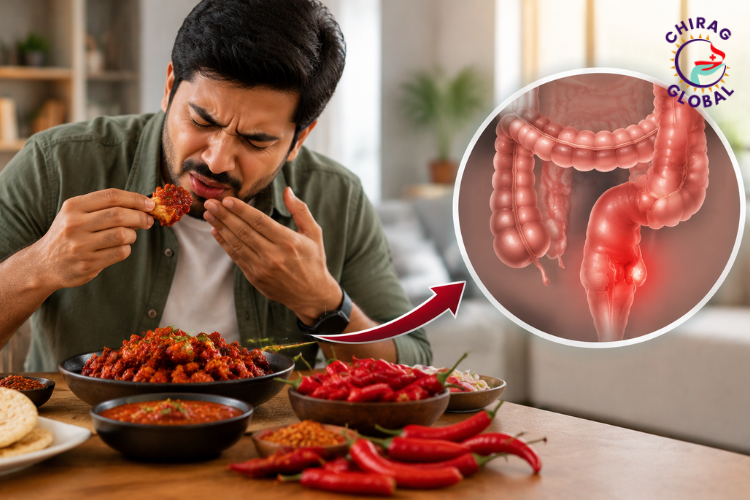
Spicy food does not directly cause hemorrhoids, commonly called piles. However, for some people who already have piles, very spicy meals may make symptoms such as burning, irritation or discomfort around the anus feel worse.
The relationship between spicy food and piles is therefore more complicated than simply saying that spicy foods cause hemorrhoids.
At Chirag Global Hospitals, patients with piles are often advised to look beyond individual foods and consider the bigger picture: stool consistency, constipation, straining, diarrhea, hydration and overall bowel habits.
Understanding this distinction can help you decide whether spicy foods actually affect your symptoms and what dietary changes may be useful.
Book a Consultation | Call 08065903127
What Are Piles?
Piles, or hemorrhoids, are swollen veins in the lower rectum or around the anus.
They can be:
- Internal hemorrhoids, which develop inside the rectum
- External hemorrhoids, which develop beneath the skin around the anus
Common symptoms can include:
- Rectal bleeding
- Itching
- Irritation
- Anal discomfort
- Swelling
- A lump around the anus
- Pain, particularly with some external hemorrhoids
Hemorrhoids are associated with factors that increase pressure in the veins around the anus, including constipation, straining during bowel movements and prolonged sitting on the toilet.
Food itself is not generally considered a direct cause of hemorrhoids.
So, What Is the Connection Between Spicy Food and Piles?
The connection is mainly about how spicy foods may affect digestive and anal symptoms in some individuals.
Capsaicin is the compound responsible for the heat in chilli peppers. It can create a burning sensation in the mouth and digestive tract.
If you already have irritated tissues around the anus, passing stool after eating a particularly spicy meal may sometimes feel more uncomfortable.
This does not necessarily mean the spicy food has damaged the hemorrhoid or caused it to grow.
In simple terms:
Spicy food → digestive or bowel changes in some people → increased irritation during bowel movements → piles symptoms may feel worse.
But this response is not the same for everyone.
Can Spicy Food Make Piles Burn?
It can make the area feel more irritated or burning in some people, particularly when hemorrhoids or the surrounding skin are already sensitive.
However, experiencing burning after eating chilli does not automatically mean that your piles are becoming more severe.
The sensation may be temporary and related to irritation during or after bowel movements.
If the burning is persistent, severe or accompanied by bleeding or significant pain, it is better to have the symptoms evaluated rather than assuming spicy food is the only cause.
Does Spicy Food Cause Bleeding in Piles?
Spicy food itself should not be considered a direct cause of hemorrhoidal bleeding.
Bleeding from hemorrhoids is more closely related to the irritated or damaged blood vessels and tissues associated with hemorrhoids.
If you notice blood after eating spicy food, the timing does not necessarily prove that the food caused the bleeding.
Repeated rectal bleeding should be medically evaluated, because bleeding can have causes other than hemorrhoids.
What Happens When You Eat Very Spicy Food With Piles?
The effect varies from person to person.
Some people can eat spicy foods without noticing any change in their hemorrhoid symptoms.
Others may experience:
- More anal burning
- Increased irritation after bowel movements
- Loose stools
- Diarrhea
- Increased urgency
- Temporary discomfort around the anus
The key factor is often your individual digestive response.
If a particular spicy meal consistently triggers diarrhea or anal burning, reducing that food may make you more comfortable.
Can Spicy Food Cause Diarrhea and Make Piles Feel Worse?
For some people, very spicy foods can contribute to loose stools or diarrhea.
Frequent diarrhea can irritate the skin around the anus. Repeated bowel movements may also make an already sensitive area feel more uncomfortable.
This creates another indirect connection between spicy foods and piles.
It is not necessarily the chilli itself worsening the hemorrhoid. Instead, the resulting bowel changes may increase irritation.
What About Spicy Food and Constipation?
Spicy foods are not generally considered a primary cause of constipation.
However, what accompanies the spicy food can matter.
For example, a meal that is:
- Low in fiber
- High in processed foods
- Low in fluids
- Heavy and difficult to digest
may contribute to less favorable bowel habits in some people.
Constipation can result in hard stools and straining, both of which can aggravate hemorrhoid symptoms.
So, when managing piles, it is better to focus on your overall dietary pattern rather than blaming one ingredient.
Should You Completely Stop Eating Spicy Food If You Have Piles?
Not necessarily.
If spicy food does not cause you any digestive or anal symptoms, there may be no reason to completely eliminate it solely because you have hemorrhoids.
However, if you consistently notice:
- Burning after bowel movements
- Increased anal irritation
- Diarrhea
- Loose stools
- Greater discomfort after spicy meals
you may want to reduce the amount or frequency of spicy foods.
A simple approach is to observe your symptoms and identify personal triggers.
Foods That May Be More Helpful During Piles
When dealing with hemorrhoids, dietary choices should generally support soft, regular stools and easier bowel movements.
Fiber-rich foods
Depending on your individual dietary needs, fiber-rich foods can include:
- Fruits
- Vegetables
- Whole grains
- Oats
- Beans
- Lentils
- Legumes
- Nuts and seeds
Increasing fiber gradually may be easier for the digestive system than making a sudden large increase.
Adequate fluids
Drinking enough fluids can support softer stools, particularly when dietary fiber intake increases.
Your individual fluid requirements can vary based on age, activity, climate and medical conditions.
Balanced meals
A varied diet containing vegetables, fruits, whole grains and other nutritious foods can help support regular bowel habits.
The objective is not simply to find a list of “piles-friendly foods.” It is to create eating habits that reduce constipation and avoid digestive triggers.
Foods You May Want to Limit During a Piles Flare
There is no universal “banned food” list for hemorrhoids.
However, if certain foods clearly trigger diarrhea, irritation or discomfort for you, temporarily reducing them may help.
You may want to limit:
- Extremely spicy meals if they trigger burning
- Foods that repeatedly cause diarrhea
- Highly processed foods when they displace fiber-rich foods
- Large meals that worsen digestive discomfort
The right diet depends on your symptoms and overall health.
Does Spicy Food Affect Internal and External Piles Differently?
The basic relationship with spicy food is not necessarily determined by whether hemorrhoids are internal or external.
However, symptoms can differ.
Internal hemorrhoids
Internal hemorrhoids may cause painless bleeding, particularly during bowel movements. More advanced internal hemorrhoids can protrude outside the anus.
External hemorrhoids
External hemorrhoids can cause a noticeable lump, swelling or pain, particularly when a blood clot develops within the hemorrhoid.
If spicy food causes anal burning, the sensation may be particularly noticeable when the skin around the anus is already irritated.
What Should You Eat During a Piles Flare?
Instead of focusing only on what to remove, think about what supports comfortable bowel movements.
A practical meal pattern may include:
Breakfast: Oats with fruit
Lunch: Whole grains with vegetables and dal
Snack: Fruit or another fiber-containing option
Dinner: Vegetables with a suitable whole-grain or other balanced carbohydrate source
This is only a general example. People with specific digestive conditions may require individualized dietary advice.
Does Drinking Water Help With Piles?
Adequate hydration can help support softer stools, especially alongside sufficient dietary fiber.
However, drinking excessive amounts of water is not a treatment for hemorrhoids.
If you frequently have hard stools despite adequate fluids and fiber, the underlying cause of constipation should be addressed.
Can Coffee and Tea Also Irritate Piles?
Some people notice that caffeinated beverages affect their bowel habits.
Coffee or tea may stimulate bowel movements in some individuals, while others tolerate them without problems.
There is no need to automatically eliminate coffee or tea simply because you have piles.
Instead, pay attention to whether a particular drink consistently causes diarrhea, urgency or irritation.
What Matters More Than Spicy Food?
If your goal is to prevent piles from becoming troublesome, bowel habits are generally more important than avoiding chilli altogether.
Pay attention to:
Avoiding excessive straining
Try not to force bowel movements.
Spending less time on the toilet
Long periods sitting on the toilet can increase pressure around the anal area.
Preventing constipation
Soft, regular stools can reduce the need for straining.
Maintaining fiber intake
Gradually increasing dietary fiber can help support regular bowel movements.
Staying physically active
Regular activity can support overall bowel function.
When Should You See a Doctor for Piles?
Dietary changes may help manage mild symptoms, but they should not replace medical evaluation when symptoms persist.
See a healthcare professional if you experience:
- Recurrent rectal bleeding
- Persistent anal pain
- A painful or rapidly enlarging lump
- Hemorrhoids that repeatedly prolapse
- Symptoms that do not improve
- Changes in bowel habits
- Unexplained weight loss
- Black or tarry stools
- Significant or heavy bleeding
Rectal bleeding should not automatically be attributed to piles.
Conclusion
The relationship between spicy food and piles is often misunderstood.
Spicy food does not directly cause hemorrhoids. However, very spicy meals may trigger burning, diarrhea or bowel irritation in some people, which can make existing piles feel more uncomfortable.
Rather than completely eliminating chilli, focus on maintaining soft and regular stools, eating enough fiber, drinking adequate fluids and avoiding excessive straining.
And if you have persistent bleeding, significant pain, a new lump or symptoms that keep returning, don’t assume food is the explanation. A proper medical evaluation can identify the actual cause and guide appropriate treatment.
Visit Chirag Global Hospitals Today!
Frequently Asked Questions
Can spicy food cause piles?
No. Spicy food is not considered a direct cause of hemorrhoids. However, it may aggravate burning or digestive symptoms in some people who already have piles.
Should I avoid chilli if I have hemorrhoids?
Not necessarily. If chilli does not trigger symptoms, you may not need to eliminate it. If spicy meals repeatedly cause burning, diarrhea or irritation, reducing them may improve comfort.
Why does my anus burn after eating spicy food?
Spicy foods contain capsaicin, which produces a burning sensation. In some people, this sensation can also be noticeable during or after bowel movements, particularly when the anal area is already irritated.
Is spicy food bad for bleeding piles?
Spicy food is not considered a direct cause of hemorrhoidal bleeding. However, if it triggers diarrhea or irritation, symptoms may feel worse. Recurrent rectal bleeding should be assessed by a healthcare professional.
What foods are good for piles?
Foods that provide dietary fiber, such as fruits, vegetables, whole grains, beans and lentils, can support softer and more regular stools. Adequate fluid intake is also important.
Can spicy food worsen constipation?
Spicy food is not a typical direct cause of constipation. However, the overall composition of a meal and your individual digestive response can influence bowel habits.
Can I eat spicy food after piles treatment?
Your diet after treatment depends on the procedure and your recovery. Follow your treating surgeon’s instructions. If spicy foods cause burning or diarrhea, temporarily reducing them may make recovery more comfortable.
Is it necessary to stop eating spicy food permanently?
No. There is generally no reason to permanently eliminate spicy food solely because you have hemorrhoids. Your own symptoms and digestive tolerance are more relevant.