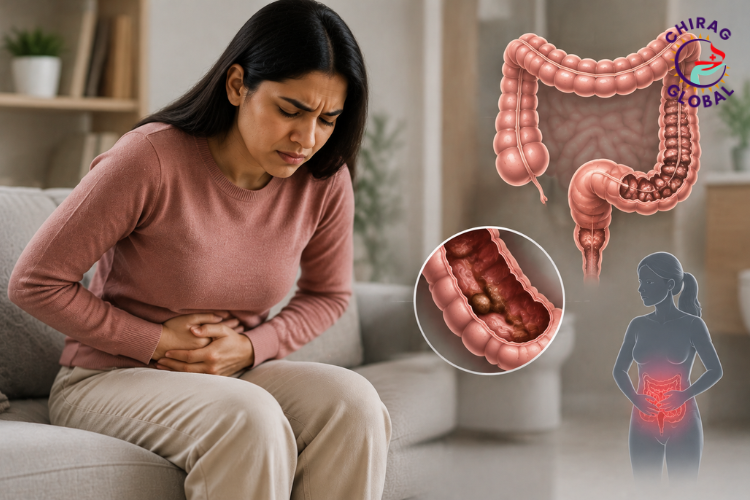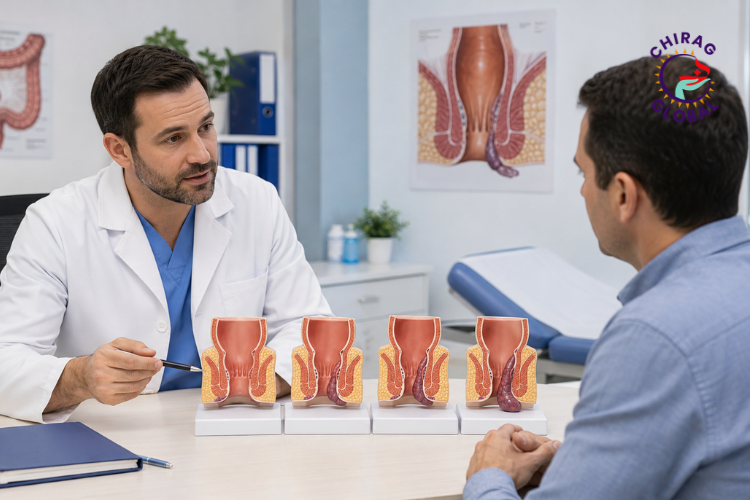

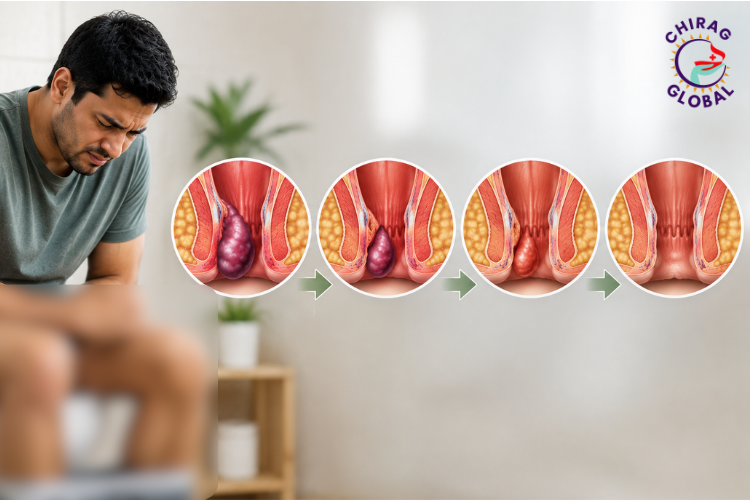
Hemorrhoids can cause pain, itching, swelling, irritation, and rectal bleeding, making everyday activities and bowel movements uncomfortable. Once treatment and healthier bowel habits begin, many people want to know how long recovery may take and what signs indicate that the condition is improving.
Understanding the hemorrhoid healing stages can help you recognize common changes during recovery. However, healing does not follow exactly the same timeline for everyone. The duration and pattern of recovery can depend on whether the hemorrhoid is internal or external, how severe the symptoms are, whether constipation or straining is present, and what treatment is being used.
At Chirag Global Hospitals, Bangalore, persistent or recurrent hemorrhoid symptoms can be evaluated to determine the underlying cause and the most appropriate treatment approach.
Book a Consultation | Call 0806590312
What Happens When a Hemorrhoid Starts Healing?
When an irritated hemorrhoid begins to settle, inflammation and swelling may gradually decrease. Pain and itching can become less noticeable, and bowel movements may become more comfortable.
However, symptom improvement does not always mean the hemorrhoid has completely disappeared.
For example, pain may improve before swelling completely settles. Similarly, a small lump or skin fold may remain even after the active inflammation has resolved.
This is why hemorrhoid recovery should be viewed as a gradual process rather than a single moment when symptoms suddenly disappear.
Hemorrhoid Healing Stages
There is no officially defined medical sequence that every hemorrhoid follows. The following stages are a practical way to understand how symptoms may change as the condition improves.
Stage 1: Pain, Swelling, or Irritation Is Most Noticeable
During an active flare, symptoms may be more noticeable.
Depending on the type and severity of the hemorrhoid, you may experience:
- Pain or discomfort
- Itching
- Burning or irritation
- Swelling
- A tender lump
- Bright-red bleeding
- Discomfort while sitting
- Irritation after bowel movements
External hemorrhoids may produce a noticeable lump, while internal hemorrhoids may be more likely to cause bleeding or a feeling of pressure.
A particularly painful external hemorrhoid may sometimes be associated with a blood clot, known as a thrombosed external hemorrhoid.
Stage 2: Pain and Irritation Begin to Decrease
One of the first signs of improvement may be reduced pain or irritation.
You may notice that:
- Bowel movements feel more comfortable
- Sitting becomes easier
- Itching decreases
- Burning becomes less noticeable
- Tenderness starts to settle
If constipation and straining contributed to the problem, improving bowel habits can reduce repeated irritation.
Even when pain improves, it is important to continue addressing the factors that may have contributed to the hemorrhoid.
Stage 3: Swelling Gradually Reduces
As inflammation settles, swelling may become less noticeable.
An external hemorrhoid that previously felt like a painful lump may gradually become smaller and less tender.
A small soft fold of skin may remain after the swelling has resolved. This can sometimes be a residual skin tag rather than an active hemorrhoid.
However, not every anal lump is a hemorrhoid. A new, persistent, painful, enlarging, or changing lump should be evaluated by a healthcare professional.
Stage 4: Bleeding and Itching Improve
If hemorrhoids were responsible for rectal bleeding, the bleeding may decrease as the irritated tissue settles.
Itching and irritation may also become less frequent.
However, rectal bleeding should not automatically be attributed to hemorrhoids. Other conditions affecting the digestive or colorectal system can also cause bleeding.
Persistent, recurrent, heavy, or unexplained bleeding should therefore be medically evaluated.
Stage 5: Bowel Movements Become More Comfortable
A major part of hemorrhoid recovery involves reducing repeated pressure on the anorectal area.
Improvement may include:
- Less straining
- Softer and easier-to-pass stools
- Less pain during bowel movements
- Less time spent on the toilet
- Less irritation afterward
- More regular bowel habits
Preventing hard stools is particularly important because repeated straining and passage of hard stool can continue irritating the area.
Stage 6: Symptoms Become Minimal or Resolve
In uncomplicated cases, symptoms may eventually become minimal or disappear.
At this stage, recovery is not only about feeling better. It is also important to reduce the factors that contributed to the problem.
Maintaining healthy bowel habits, avoiding excessive straining, staying physically active, and maintaining an appropriate fiber and fluid intake can support long-term bowel health.
How Long Does Hemorrhoid Recovery Take?
There is no single recovery time for all hemorrhoids.
The duration can depend on:
- Type of hemorrhoid
- Severity of symptoms
- Whether a blood clot is present
- Constipation
- Straining during bowel movements
- Treatment used
- Previous episodes
- Individual healing
- Whether contributing factors continue
Some mild symptoms may improve within a relatively short period, while more significant hemorrhoidal disease may take longer to settle.
A thrombosed external hemorrhoid can be especially painful. The pain may gradually improve as the condition settles, but the lump can take longer to decrease.
If symptoms are not improving or continue to return, medical evaluation can help determine whether additional treatment is needed.
Signs That a Hemorrhoid May Be Healing
Several changes may suggest that symptoms are improving.
Less Pain
Pain becomes less intense or occurs less frequently.
Reduced Swelling
The swollen area gradually becomes smaller or less noticeable.
Less Itching and Irritation
Persistent itching, burning, or irritation begins to settle.
Less Bleeding
Bleeding decreases or stops.
Easier Bowel Movements
Passing stool becomes more comfortable with less straining.
Reduced Tenderness
An external lump may become less sensitive or painful.
These signs can indicate improvement, but they do not rule out other causes of persistent symptoms.
Can Hemorrhoid Symptoms Fluctuate During Recovery?
Yes. Symptoms may sometimes fluctuate during recovery.
For example, passing hard stool or straining during a bowel movement may temporarily increase irritation, pain, or swelling.
However, rapidly worsening symptoms should not simply be considered a normal part of healing.
Contact a healthcare professional if symptoms suddenly become significantly worse, bleeding increases, swelling becomes pronounced, or you develop fever or severe pain.
What Can Slow Down Hemorrhoid Healing?
Several factors can continue irritating hemorrhoidal tissue or contribute to recurrence.
Constipation
Hard stools can increase pressure and irritation during bowel movements.
Excessive Straining
Repeated forceful pushing can increase pressure around the rectum and anus.
Spending Too Long on the Toilet
Prolonged toilet sitting may increase pressure around the anorectal area.
Low Fiber Intake
Insufficient dietary fiber can contribute to harder or less regular stools.
Inadequate Fluid Intake
Not drinking enough fluids can contribute to harder stools, particularly when fiber intake is increased.
Repeated Diarrhea
Frequent loose stools can also irritate the anal area.
Heavy Physical Straining
Repeated activities involving significant physical straining may aggravate symptoms in some individuals.
Ignoring the Urge to Have a Bowel Movement
Regularly delaying bowel movements can contribute to constipation and harder stools.
How Can You Support Hemorrhoid Recovery?
Healthy bowel habits are an important part of managing hemorrhoid symptoms and reducing repeated irritation.
Eat Enough Fiber
Fiber from foods such as vegetables, fruits, whole grains, legumes, nuts, and seeds can support regular bowel movements.
If your current fiber intake is low, increase it gradually and ensure adequate fluid intake.
Drink Adequate Fluids
Adequate hydration can support softer stools and help maintain healthy bowel habits.
Avoid Straining
Allow bowel movements to happen naturally rather than repeatedly pushing forcefully.
Limit Toilet Time
Avoid sitting on the toilet for unnecessarily long periods.
Stay Physically Active
Regular physical activity can support bowel regularity and help reduce constipation.
Clean the Area Gently
Gentle cleaning is generally preferable to aggressive rubbing or repeated use of products that may irritate sensitive skin.
Follow Your Doctor’s Instructions
If a healthcare professional has recommended medication, dietary changes, topical treatment, or a procedure, follow the instructions provided.
Can a Warm Sitz Bath Help During Hemorrhoid Recovery?
A warm sitz bath may provide temporary relief from discomfort and irritation for some people.
It may be particularly soothing when the area feels sore after a bowel movement.
However, a sitz bath primarily provides symptom relief and does not address every possible cause of hemorrhoids. Persistent, recurrent, or severe symptoms still require appropriate medical evaluation.
Do Hemorrhoid Creams Help During Recovery?
Some over-the-counter products may temporarily relieve symptoms such as itching, irritation, or discomfort.
However, the appropriate product depends on the individual’s symptoms and circumstances.
Topical treatments should generally be used according to their instructions. If symptoms continue despite self-care, repeatedly using different creams without determining the underlying cause may not be helpful.
A healthcare professional can recommend an appropriate treatment based on the type and severity of the hemorrhoid.
What Happens After Hemorrhoid Treatment or Surgery?
Recovery after a medical procedure is different from the natural improvement of a mild hemorrhoid.
Depending on the procedure, temporary symptoms may include:
- Pain or discomfort
- Swelling
- Mild bleeding
- Changes in bowel comfort
- Temporary irritation
Recovery time varies depending on the procedure performed, the severity of the hemorrhoidal disease, and the individual’s healing response.
Post-treatment recovery should be guided by the treating healthcare professional. Patients should follow their specific instructions rather than comparing their recovery with someone else’s experience.
Can Hemorrhoids Come Back After Healing?
Yes. Hemorrhoids can recur even after symptoms have resolved or treatment has been completed.
Recurrence may be associated with factors such as:
- Chronic constipation
- Repeated straining
- Low fiber intake
- Prolonged toilet sitting
- Frequent diarrhea
- Pregnancy
- Other bowel or lifestyle factors
For this reason, long-term hemorrhoid management involves more than treating the symptoms of the current episode.
Maintaining healthy bowel habits can help reduce repeated irritation.
When Is an Anal Lump Not Simply a Healing Hemorrhoid?
A lump around the anus can have several possible causes.
It may be related to a hemorrhoid, skin tag, abscess, cyst, or another anorectal condition.
Medical evaluation is particularly important if a lump:
- Increases in size
- Becomes extremely painful
- Is associated with fever
- Produces pus or drainage
- Does not improve
- Is associated with significant bleeding
- Changes in appearance
It is best not to assume that every lump around the anus is a hemorrhoid.
When Should You See a Doctor for Hemorrhoid Symptoms?
Consider medical evaluation if hemorrhoid symptoms:
- Keep returning
- Do not improve with appropriate self-care
- Cause significant pain
- Cause recurrent bleeding
- Interfere with daily activities
- Are associated with a persistent lump
- Become progressively worse
When to Seek Urgent Medical Attention
Seek urgent medical care for:
- Heavy or uncontrolled rectal bleeding
- Fainting or severe weakness associated with bleeding
- Severe or rapidly worsening pain
- Fever with significant anal pain or swelling
- Pus or significant drainage from a painful swelling
- Severe abdominal pain
- Other rapidly worsening symptoms
Prompt evaluation can help determine whether the symptoms are caused by hemorrhoids or another condition requiring treatment.
Key Takeaway
Hemorrhoid healing stages generally involve a gradual reduction in pain, swelling, itching, bleeding, and discomfort during bowel movements. The recovery timeline varies because hemorrhoids differ in type, severity, and underlying causes.
Supporting hemorrhoid recovery involves maintaining healthy bowel habits, eating adequate fiber, drinking enough fluids, avoiding excessive straining, staying physically active, and following recommended treatment.
Most importantly, persistent or worsening symptoms should not automatically be considered part of normal healing. Recurrent bleeding, severe pain, significant swelling, fever, heavy bleeding, or a persistent anal lump should be evaluated by a healthcare professional.
Visit Chirag Global Hospitals Today!
Frequently Asked Questions About Hemorrhoid Healing Stages
What are the stages of hemorrhoid healing?
Hemorrhoid recovery may involve gradual reduction in pain and irritation, followed by decreased swelling, less bleeding or itching, more comfortable bowel movements, and eventual resolution or minimal symptoms. The exact pattern varies between individuals.
How do I know if my hemorrhoid is healing?
Reduced pain, swelling, itching, bleeding, and tenderness may indicate improvement. More comfortable bowel movements with less straining are also positive signs.
How long does it take for a hemorrhoid to heal?
There is no fixed healing time. Recovery depends on the type and severity of the hemorrhoid, contributing factors such as constipation and straining, and the treatment being used.
Can a hemorrhoid leave a lump after healing?
Yes. A small residual skin fold or skin tag may remain after an external hemorrhoid or swelling settles. However, a persistent, painful, enlarging, or changing lump should be examined.
Is bleeding normal while a hemorrhoid is healing?
Hemorrhoids can cause bright-red rectal bleeding, particularly during bowel movements. However, recurrent, heavy, persistent, or unexplained bleeding should be evaluated because hemorrhoids are not the only possible cause of rectal bleeding.
Can constipation delay hemorrhoid recovery?
Constipation can contribute to ongoing irritation because hard stools and straining may put additional pressure on hemorrhoidal tissue.
Can hemorrhoids come back after healing?
Yes. Hemorrhoids can recur if contributing factors such as constipation, repeated straining, prolonged toilet sitting, or other bowel problems continue.
Can a thrombosed hemorrhoid heal on its own?
Some thrombosed external hemorrhoids improve as the body gradually absorbs the clot, and pain may decrease over time. However, severe pain or a rapidly developing painful lump should be assessed by a healthcare professional to determine the appropriate treatment.
When should I see a doctor for a hemorrhoid that is not healing?
See a healthcare professional if symptoms persist, repeatedly return, become more painful, cause recurrent bleeding, or are associated with a persistent or unusual lump.