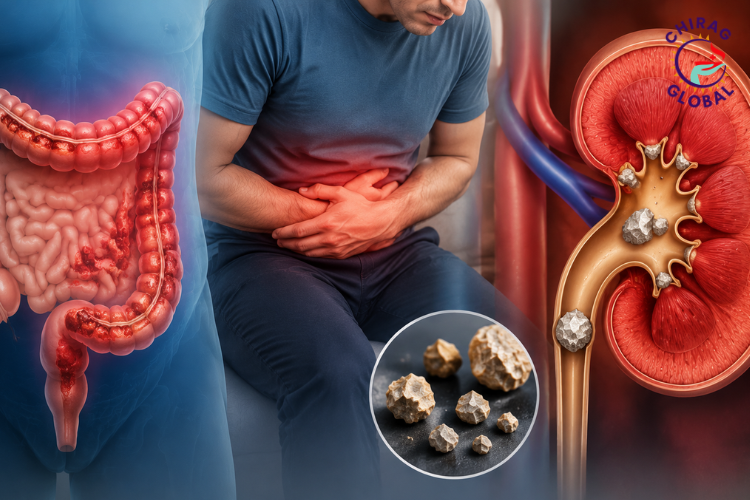


Ulcerative colitis can usually be managed with medicines, regular monitoring, and lifestyle adjustments. However, a severe flare can sometimes progress into a rare but potentially life-threatening complication called toxic megacolon. This condition causes the colon to become severely inflamed, enlarged, and less able to move its contents normally.
Toxic megacolon is not simply another episode of diarrhea or abdominal discomfort. It requires urgent hospital assessment and treatment because severe colon inflammation and dilation can increase the risk of perforation, infection, dehydration, and other serious complications.
For people living with ulcerative colitis, understanding the warning signs can help them recognize when symptoms have moved beyond a typical flare and require emergency medical attention.
Book a Consultation | Call 08065903127
What Is Toxic Megacolon?
Toxic megacolon is a severe complication of inflammatory bowel disease in which intense inflammation affects the deeper layers of the colon. The inflammation can cause the colon to become markedly dilated and temporarily lose its normal ability to move stool and gas.
In ulcerative colitis, toxic megacolon is generally associated with severe or fulminant inflammation. The condition can also occur with certain intestinal infections and other forms of severe colitis.
Unlike ordinary bloating, the enlargement of the colon in toxic megacolon occurs in the setting of significant illness and systemic toxicity. The colon may become dangerously stretched, creating the possibility of bowel perforation.
How Can Ulcerative Colitis Lead to Toxic Megacolon?
During an intense ulcerative colitis flare, inflammation can become extensive enough to affect the deeper muscle layers of the colon.
As inflammation worsens:
- The colon wall becomes severely inflamed.
- Normal muscular contractions can become impaired.
- Gas and intestinal contents may accumulate.
- The colon becomes increasingly distended.
- The patient’s overall condition may begin to deteriorate.
This is why toxic megacolon is considered a complication of severe colitis rather than simply a more uncomfortable form of ulcerative colitis.
People experiencing severe UC may have frequent bloody stools, abdominal pain, fever, rapid heart rate, dehydration, anemia, and other signs of systemic illness. Severe inflammation increases the risk of complications such as toxic megacolon and perforation.
Toxic Megacolon Symptoms to Watch For
Symptoms can develop quickly, particularly during a severe ulcerative colitis flare.
Important warning signs include:
1. Severe abdominal swelling
The abdomen may become noticeably distended as the colon becomes enlarged.
A rapidly increasing abdominal size, particularly when accompanied by pain or severe illness, should not be ignored.
2. Significant abdominal pain
Pain may become more intense than the person’s usual ulcerative colitis symptoms.
Severe or worsening abdominal pain is an important reason to seek urgent medical assessment.
3. Fever
Fever may indicate significant inflammation or infection and can occur with severe colitis.
4. Rapid heartbeat
A faster-than-normal heart rate can accompany severe inflammation, dehydration, blood loss, or systemic toxicity.
5. Severe diarrhea or bloody stools
A serious UC flare may involve frequent bloody bowel movements. Fulminant ulcerative colitis can involve very frequent stools along with fever, tachycardia, anemia, and abdominal symptoms.
6. Dehydration and weakness
Persistent diarrhea can result in substantial fluid and electrolyte loss. A person may experience weakness, dizziness, thirst, reduced urination, or significant fatigue.
7. Nausea or vomiting
As intestinal function becomes severely impaired, nausea and vomiting may occur.
8. Increasing abdominal tenderness
Marked tenderness or a change from the patient’s usual abdominal symptoms can signal worsening disease and requires prompt evaluation.
When Does a UC Flare Become an Emergency?
Not every ulcerative colitis flare leads to toxic megacolon. However, some symptoms should never be managed at home without medical assessment.
Seek urgent medical care if a person with ulcerative colitis develops:
- Severe or rapidly worsening abdominal pain
- Significant abdominal swelling or distension
- Fever with severe bowel symptoms
- Rapid heartbeat or marked weakness
- Frequent bloody diarrhea with signs of dehydration
- Persistent vomiting
- Fainting, confusion, or severe dizziness
- Large amounts of rectal bleeding
- A sudden deterioration in overall condition
Severe abdominal pain, persistent bleeding, dehydration, and fever can indicate a serious complication of inflammatory bowel disease and warrant prompt medical attention.
Why Is Toxic Megacolon Dangerous?
The major concern is that an inflamed and severely distended colon can become structurally compromised.
One of the most serious complications is colonic perforation, meaning a hole develops in the bowel wall. If intestinal contents and bacteria escape through a perforation, a severe abdominal infection called peritonitis can develop.
Toxic megacolon can therefore progress from severe intestinal inflammation to a life-threatening abdominal and systemic emergency.
The longer severe complications remain untreated, the greater the potential risk of deterioration. This is why suspected toxic megacolon requires hospital-based management rather than observation at home.
How Is Toxic Megacolon Diagnosed?
Doctors generally combine the patient’s symptoms, physical examination, laboratory testing, and imaging.
Medical history and examination
The healthcare team may ask about:
- Frequency of bowel movements
- Amount of blood in the stool
- Abdominal pain
- Abdominal swelling
- Fever
- Vomiting
- Previous ulcerative colitis flares
- Current UC medicines
- Recent infections or antibiotic use
The abdomen is examined for distension, tenderness, and other signs of serious illness.
Blood tests
Blood tests can help assess the severity of inflammation and identify problems such as:
- Anemia
- Infection or inflammatory response
- Dehydration
- Electrolyte abnormalities
- Changes suggesting organ stress
Abdominal imaging
Imaging is particularly important when toxic megacolon is suspected.
An abdominal X-ray can help identify significant colonic dilation. CT imaging may provide additional information about inflammation and complications such as perforation or other causes of severe abdominal symptoms.
Doctors generally avoid unnecessary invasive procedures when the colon is severely inflamed because of the potential risk of worsening an already fragile bowel.
What Happens During Hospital Treatment?
Toxic megacolon requires close monitoring, usually in a hospital setting.
Treatment depends on the person’s condition and the underlying cause.
IV fluids and electrolyte replacement
Severe diarrhea, vomiting, and poor intake can cause dehydration and electrolyte abnormalities. Intravenous fluids may be required to stabilize the patient.
Treatment of severe inflammation
When toxic megacolon is associated with severe ulcerative colitis, doctors may use intensive medical treatment to control the inflammation.
The exact medicines depend on the clinical situation, previous treatments, infection testing, and the patient’s overall condition.
Antibiotics when indicated
Antibiotics may be used when infection is suspected or when complications create a risk of serious bacterial infection.
Close monitoring
The medical team may repeatedly monitor:
- Heart rate
- Blood pressure
- Temperature
- Abdominal findings
- Blood tests
- Fluid and electrolyte balance
- Signs of worsening inflammation
- Signs of perforation or systemic infection
Can Surgery Be Necessary?
Yes.
Although doctors may initially attempt intensive medical treatment in appropriate patients, surgery may become necessary when toxic megacolon does not respond adequately to medical management or when complications such as perforation develop.
For severe medically refractory ulcerative colitis, fulminant colitis, toxic megacolon, or colonic perforation, guidelines from the American Society of Colon and Rectal Surgeons recommend timely surgical management, with total abdominal colectomy and end ileostomy typically used in the emergency setting.
NIDDK also identifies toxic megacolon and bowel perforation among life-threatening ulcerative colitis complications for which surgery may be required.
The surgical approach is individualized according to the patient’s condition, disease severity, previous treatment, and presence or absence of complications.
Can Toxic Megacolon Be Prevented?
There is no guaranteed way to prevent every case, but effective ulcerative colitis management can help reduce the likelihood of severe uncontrolled inflammation.
Important steps include:
Follow the prescribed UC treatment
Do not stop maintenance medication simply because symptoms improve unless your treating doctor recommends a change.
Recognize severe flares early
A sudden increase in diarrhea, bleeding, abdominal pain, fever, or weakness should prompt communication with the treating healthcare team.
Avoid self-treating severe diarrhea
Certain anti-diarrheal medicines can be unsafe in severe inflammatory bowel disease. Mayo Clinic specifically advises that antidiarrheal medicines should be used cautiously and only after discussion with a healthcare professional because they may increase the risk of toxic megacolon in some circumstances.
Stay alert to dehydration
Persistent diarrhea can cause significant fluid and electrolyte loss. Severe dehydration may itself require hospital treatment.
Investigate sudden changes in symptoms
A sudden deterioration should not automatically be assumed to be an ordinary UC flare. Infection and other complications can produce similar symptoms and may require different treatment.
Toxic Megacolon vs a Severe UC Flare
These conditions can overlap, but they are not identical.
| Severe UC flare | Toxic megacolon |
| Intense intestinal inflammation | Severe inflammation with marked colon dilation and systemic toxicity |
| Diarrhea and rectal bleeding may be prominent | Abdominal distension and systemic illness may become prominent |
| Can sometimes be managed with intensive medical treatment | Requires urgent hospital assessment |
| Severity varies | Potentially life-threatening complication |
| May precede toxic megacolon | Can increase risk of perforation |
A person cannot reliably determine from symptoms alone whether toxic megacolon has developed. Medical examination and appropriate imaging are needed when the complication is suspected.
Who Is at Greater Risk?
Toxic megacolon is uncommon, but the risk is particularly relevant during severe or uncontrolled inflammatory bowel disease.
People may be at increased concern when they have:
- Severe ulcerative colitis
- Fulminant colitis
- A rapidly worsening flare
- Significant intestinal infection
- Severe dehydration
- Previous serious UC complications
Certain infections, including Clostridioides difficile, can also cause severe colitis and toxic megacolon, which is why doctors may investigate infection when someone with UC suddenly deteriorates.
What Should You Do If Toxic Megacolon Is Suspected?
Do not wait for the symptoms to resolve on their own.
If someone with ulcerative colitis develops severe abdominal pain, pronounced abdominal swelling, fever, rapid heartbeat, persistent bloody diarrhea, vomiting, severe weakness, or signs of dehydration, they should receive urgent medical assessment.
Toxic megacolon can progress to perforation and severe infection, so early recognition is extremely important.
Ulcerative Colitis Care at Chirag Global Hospitals, Bangalore
Chirag Global Hospitals provides colorectal and proctology care for conditions involving the colon and rectum.
Patients with ulcerative colitis who develop severe or rapidly changing symptoms should seek appropriate medical evaluation rather than attempting to manage potentially serious complications at home.
For information about colorectal services and specialist care, visit Chirag Global Hospitals.
Frequently Asked Questions
1. What is toxic megacolon in ulcerative colitis?
Toxic megacolon is a rare but serious complication in which severe inflammation causes the colon to become significantly dilated and associated with systemic illness. It can become life-threatening if complications such as perforation occur.
2. Is toxic megacolon an emergency?
Yes. Suspected toxic megacolon requires urgent medical assessment and usually hospital-based treatment because the condition can progress to perforation, severe infection, dehydration, and other complications.
3. What are the main symptoms of toxic megacolon?
Important symptoms include severe abdominal pain, abdominal distension, fever, rapid heartbeat, severe diarrhea or bloody stools, weakness, dehydration, nausea, and vomiting.
4. Can toxic megacolon happen during a UC flare?
Yes. Toxic megacolon can develop during severe or fulminant ulcerative colitis. It represents a serious complication rather than an ordinary UC flare.
5. Does toxic megacolon always require surgery?
Not necessarily, but surgery may be required if intensive medical treatment fails or if complications such as perforation develop. Emergency surgical management is an important part of treatment for severe toxic megacolon in appropriate cases.
6. Can ulcerative colitis patients prevent toxic megacolon?
There is no guaranteed prevention method, but controlling UC, following prescribed treatment, addressing severe flares promptly, and avoiding inappropriate self-treatment of severe diarrhea may help reduce the risk of serious complications.
Key Takeaway
Toxic megacolon is one of the most serious complications associated with severe ulcerative colitis. The combination of severe colon inflammation, abdominal distension, systemic illness, and worsening bowel symptoms should never be dismissed as an ordinary flare.
Prompt hospital evaluation can allow doctors to assess the colon, correct dehydration and electrolyte problems, control severe inflammation, monitor for complications, and determine whether surgery is necessary.
For anyone living with ulcerative colitis, knowing the warning signs—especially severe abdominal pain, marked abdominal swelling, fever, rapid heartbeat, heavy bleeding, vomiting, or significant weakness—can make a critical difference.