
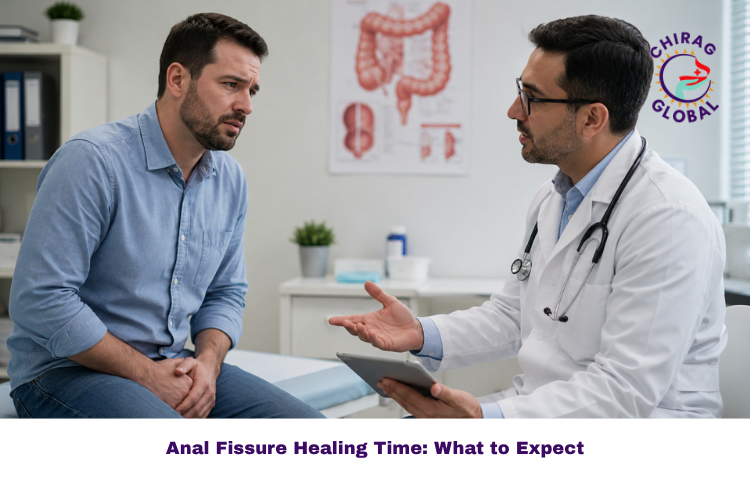
An anal fissure may be a small tear in the lining of the anal canal, but it can cause significant pain, especially during and after bowel movements. One of the most common questions patients ask is, “How long does an anal fissure take to heal?” The answer depends on several factors, including whether the fissure is acute or chronic, its underlying cause, and how soon appropriate treatment begins.
At Chirag Global Hospitals, Bangalore, colorectal specialists regularly evaluate patients with anal fissures and provide personalized treatment plans based on the severity of the condition. While many acute fissures heal within a few weeks, delayed treatment or ongoing constipation can prolong recovery and increase the risk of chronic fissures.
This guide explains anal fissure healing time, the different stages of recovery, factors that influence healing, treatment options, and signs that indicate it’s time to seek medical attention.
Book a Consultation | Call 08065903127
How Long Does an Anal Fissure Take to Heal?
The anal fissure healing time varies depending on whether the fissure is acute or chronic.
Acute Anal Fissure
An acute fissure is a recent tear that has been present for less than six weeks.
With appropriate treatment and healthy bowel habits, many acute fissures heal within:
2 to 6 weeks
Early treatment significantly improves healing and reduces the risk of recurrence.
Chronic Anal Fissure
A fissure that persists beyond six weeks is generally considered chronic.
Chronic fissures often develop scar tissue and may be associated with a small skin tag (sentinel pile), making spontaneous healing less likely.
Healing may take:
- Several weeks to months
- Longer if underlying causes remain untreated
- Surgical intervention in selected cases
Stages of Anal Fissure Healing
Understanding the healing process helps patients know what to expect.
Stage 1: First Few Days
During the initial phase, symptoms are usually at their worst.
You may experience:
- Sharp pain during bowel movements
- Burning sensation afterward
- Mild bleeding
- Muscle spasm around the anus
The primary goal during this stage is to prevent further injury while allowing the tear to begin repairing itself.
Stage 2: First Two Weeks
As healing progresses:
- Pain gradually becomes less severe
- Bleeding becomes less frequent
- Bowel movements become more comfortable
- The tear begins to close
Patients who maintain soft stools often notice significant improvement during this period.
Stage 3: Two to Six Weeks
Most uncomplicated acute fissures continue healing during this stage.
Many patients report:
- Minimal discomfort
- Little or no bleeding
- Improved bowel habits
- Return to normal daily activities
Although symptoms improve, continuing treatment remains important to prevent recurrence.
Stage 4: Chronic Healing Phase
If symptoms continue beyond six weeks, the fissure may become chronic.
Signs include:
- Persistent pain
- Recurrent bleeding
- Visible skin tag
- Repeated tearing after bowel movements
At this stage, specialist evaluation becomes increasingly important.
What Affects Anal Fissure Healing Time?
Several factors influence how quickly an anal fissure heals.
Constipation
Repeated passage of hard stools is one of the biggest reasons healing is delayed.
Every bowel movement may reopen the tear before it has time to heal.
Chronic Diarrhea
Frequent loose stools can also irritate the anal canal and slow tissue repair.
Delayed Treatment
Ignoring symptoms for weeks or months increases the likelihood that an acute fissure will become chronic.
Muscle Spasm
Anal fissures often trigger spasm of the internal anal sphincter.
Reduced blood flow caused by this spasm may slow healing.
Poor Dietary Habits
Low fibre intake and inadequate hydration contribute to constipation and repeated trauma.
Underlying Medical Conditions
Conditions such as Crohn’s disease or inflammatory bowel disease may delay healing and require specialized treatment.
How Can You Speed Up Anal Fissure Healing?
Although healing takes time, several measures can support recovery.
Eat a High-Fibre Diet
Foods rich in fibre help produce softer stools that pass more easily.
Include:
- Fruits
- Vegetables
- Whole grains
- Legumes
Drink Plenty of Water
Adequate hydration helps prevent constipation and reduces strain during bowel movements.
Avoid Straining
Excessive pushing places pressure on the healing tissue and may reopen the fissure.
Respond Promptly to the Urge to Pass Stool
Delaying bowel movements can lead to harder stools and increase pain.
Maintain Good Anal Hygiene
Keeping the area clean and dry may reduce irritation during healing.
Follow Your Doctor’s Treatment Plan
Your doctor may recommend medications or other treatments depending on the severity of the fissure.
Signs Your Anal Fissure Is Healing
Positive signs include:
- Less pain during bowel movements
- Shorter duration of discomfort afterward
- No further bleeding
- Softer stools
- Reduced burning sensation
- Improved confidence while passing stool
Healing is usually gradual rather than immediate.
Signs Healing Is Delayed
Consult a colorectal specialist if you notice:
- Persistent severe pain
- Bleeding that continues for weeks
- Repeated tearing
- Visible skin tag
- Ongoing constipation
- Symptoms lasting beyond six weeks
These findings may indicate a chronic fissure that requires additional treatment.
Can an Anal Fissure Come Back?
Yes.
Even after complete healing, fissures may recur if the underlying causes remain.
Recurrence becomes more likely when patients continue to experience:
- Chronic constipation
- Frequent diarrhea
- Repeated straining
- Poor dietary habits
- Inadequate hydration
Maintaining healthy bowel habits is essential for long-term prevention.
Conclusion
Understanding anal fissure healing time helps set realistic expectations and encourages timely treatment. While most acute anal fissures heal within 2 to 6 weeks, recovery depends on maintaining soft bowel movements, avoiding straining, and addressing the underlying cause. Chronic fissures often require additional medical or surgical management to achieve complete healing.
If you continue to experience persistent pain, bleeding, or delayed healing, consulting the colorectal specialists at Chirag Global Hospitals, Bangalore, can help identify the reason for slow recovery and provide the most appropriate treatment to promote healing and prevent recurrence.
Visit Chirag Global Hospitals Today!
Frequently Asked Questions
How long does an anal fissure usually take to heal?
Most acute anal fissures heal within 2 to 6 weeks with appropriate treatment and healthy bowel habits.
Why is my fissure not healing?
Persistent constipation, chronic diarrhea, delayed treatment, muscle spasm, or underlying bowel disease can delay healing.
Can a chronic anal fissure heal without surgery?
Some chronic fissures improve with medications and other non-surgical treatments, but others may require procedures such as Lateral Internal Sphincterotomy.
Does pain continue even while healing?
Yes. Pain usually decreases gradually over several weeks as the fissure heals.
Can an anal fissure return after healing?
Yes. Recurrence is possible if constipation, straining, or other contributing factors are not addressed.