
Hearing that you may need a proctocolectomy can feel overwhelming, especially if you’re unfamiliar with the procedure. A proctocolectomy is a major colorectal surgery that involves removing the entire colon (large intestine) and rectum. While this operation is typically recommended only when other treatments are no longer effective or appropriate, it can significantly improve quality of life for patients with certain serious colorectal diseases.
At Chirag Global Hospitals, Bangalore, experienced colorectal surgeons perform comprehensive evaluations to determine whether a proctocolectomy is the most suitable treatment based on each patient’s condition. Understanding why the surgery is recommended, how it is performed, and what recovery involves can help patients and their families feel more informed and prepared.
This article explains everything you need to know about proctocolectomy, including its purpose, conditions treated, surgical procedure, recovery, possible risks, and life after surgery.
Book a Consultation | Call 08065903127
What Is a Proctocolectomy?
A proctocolectomy is a surgical procedure in which both the colon (large intestine) and the rectum are removed.
The digestive system consists of several parts, and the colon and rectum play important roles in:
- Absorbing water
- Storing stool
- Passing waste out of the body
When these organs are severely damaged by disease, removing them may become the safest and most effective treatment option.
Depending on the underlying condition, additional reconstructive procedures may be performed to restore bowel function.
Why Is a Proctocolectomy Performed?
A proctocolectomy is generally recommended when medical treatments, lifestyle modifications, or less invasive procedures are no longer effective.
Common conditions that may require this surgery include:
Ulcerative Colitis
Patients with severe ulcerative colitis who do not respond to medication may require surgical removal of the colon and rectum.
Familial Adenomatous Polyposis (FAP)
FAP is an inherited condition that causes hundreds to thousands of colon polyps, greatly increasing the risk of colorectal cancer.
A proctocolectomy may be recommended to reduce that risk.
Colorectal Cancer
When cancer affects large portions of the colon and rectum, removing both organs may provide the best chance of treating the disease.
Certain Cases of Crohn’s Disease
Although surgery is not a cure for Crohn’s disease, some patients with severe disease affecting the colon and rectum may require a proctocolectomy.
Multiple Precancerous Polyps
Some patients develop numerous high-risk polyps that cannot be safely managed through repeated colonoscopies.
Severe Colorectal Injury
Rarely, major trauma or extensive damage to the colon and rectum may require surgical removal.
Is the Entire Colon Always Removed?
Yes. In a proctocolectomy, the entire colon and rectum are removed.
However, what happens afterward depends on the patient’s condition.
The surgeon may create:
- An ileostomy
- An ileal pouch-anal anastomosis (IPAA or J-pouch)
- Another reconstructive approach when appropriate
The surgical plan is individualized based on the underlying disease and the patient’s overall health.
Types of Proctocolectomy
Total Proctocolectomy with Ileostomy
After removing the colon and rectum, the end of the small intestine (ileum) is brought through the abdominal wall to create an opening called a stoma.
Waste passes into a specially designed ostomy bag attached to the skin.
Total Proctocolectomy with Ileal Pouch-Anal Anastomosis (J-Pouch)
For selected patients, the surgeon creates a pouch from the small intestine and connects it to the anus.
This allows stool to pass through the normal route without a permanent external bag.
Not every patient is a suitable candidate for this procedure.
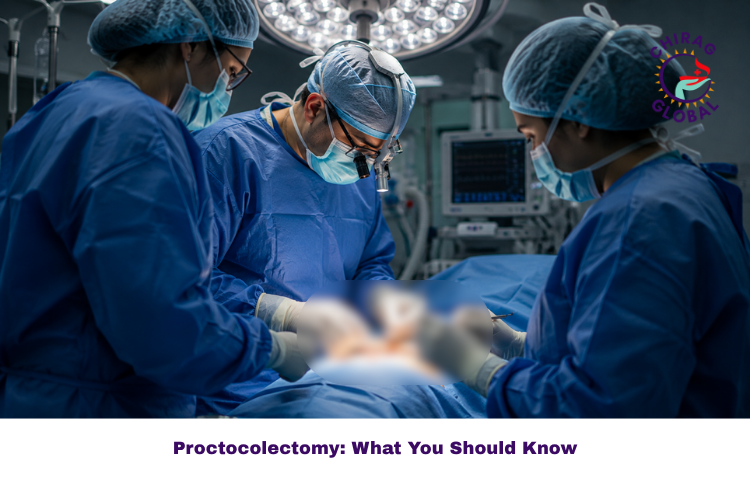
How Is a Proctocolectomy Performed?
The exact surgical approach depends on the patient’s condition and overall health.
The procedure may be performed using:
Open Surgery
A larger abdominal incision allows direct access to the colon and rectum.
Minimally Invasive (Laparoscopic) Surgery
Several small incisions are used with specialized instruments and a camera.
Potential advantages may include:
- Smaller incisions
- Reduced postoperative discomfort
- Faster recovery for suitable patients
Robotic-Assisted Surgery
In selected cases, robotic technology may assist the surgeon in performing precise movements during complex colorectal procedures.
The most appropriate technique is determined after a detailed evaluation.
What Is Recovery Like After Proctocolectomy?
Recovery varies depending on the type of surgery performed and the patient’s overall health.
During the initial recovery period, patients can expect:
- Hospital monitoring
- Pain management
- Gradual return to eating
- Early walking to reduce complications
- Regular wound assessment
Recovery continues after discharge, with follow-up appointments to monitor healing and bowel function.
How Long Does Recovery Take?
Although every patient heals differently:
- Hospital stay typically ranges from several days to about a week, depending on recovery and the complexity of the surgery.
- Many patients gradually resume light daily activities within 4 to 6 weeks.
- Complete recovery may take 2 to 3 months or longer, depending on the surgical approach, any complications, and individual healing.
Your surgeon will provide guidance on returning to work, exercise, and other activities.
What Are the Possible Risks of Proctocolectomy?
As with any major surgery, proctocolectomy carries certain risks.
Possible complications include:
- Bleeding
- Infection
- Blood clots
- Leakage at surgical connections
- Bowel obstruction
- Delayed wound healing
- Temporary bowel function changes
- Stoma-related complications (when applicable)
The surgical team carefully monitors patients to reduce these risks.
Diet After Proctocolectomy
Your healthcare team may recommend dietary adjustments during recovery.
General advice often includes:
- Eating smaller, more frequent meals
- Staying well hydrated
- Introducing high-fibre foods gradually if advised
- Avoiding foods that cause discomfort during early recovery
- Following personalized nutritional recommendations
Dietary advice varies depending on the type of surgery and individual needs.
Visit Chirag Global Hospitals Today!
Conclusion
A proctocolectomy is a major colorectal surgery performed to treat serious conditions such as ulcerative colitis, familial adenomatous polyposis, certain colorectal cancers, and selected cases of Crohn’s disease. Although the procedure involves removing the colon and rectum, advances in surgical techniques and postoperative care have helped many patients achieve good long-term outcomes and an improved quality of life.
If you have been advised to undergo a proctocolectomy or would like to understand your treatment options, the experienced colorectal specialists at Chirag Global Hospitals, Bangalore, can provide a thorough evaluation, answer your questions, and develop a personalized treatment plan tailored to your medical needs.
Frequently Asked Questions
Is a proctocolectomy the same as a colectomy?
No. A colectomy removes part or all of the colon, whereas a proctocolectomy removes both the colon and the rectum.
Will I always need a permanent stoma after a proctocolectomy?
Not always. Some patients are candidates for procedures such as an ileal pouch-anal anastomosis (J-pouch), while others may require a permanent ileostomy. The decision depends on the underlying condition and individual factors.
Can I live a normal life after a proctocolectomy?
Many people return to work, travel, exercise, and other everyday activities after recovery. Some lifestyle adjustments may be needed, particularly if an ileostomy is present.
How painful is recovery?
Some discomfort is expected after surgery, but pain is managed with medications and typically improves as healing progresses.
How long will I stay in the hospital?
The length of stay varies depending on the type of surgery, your overall health, and how quickly you recover. Your surgical team will determine when it is safe for you to return home.