

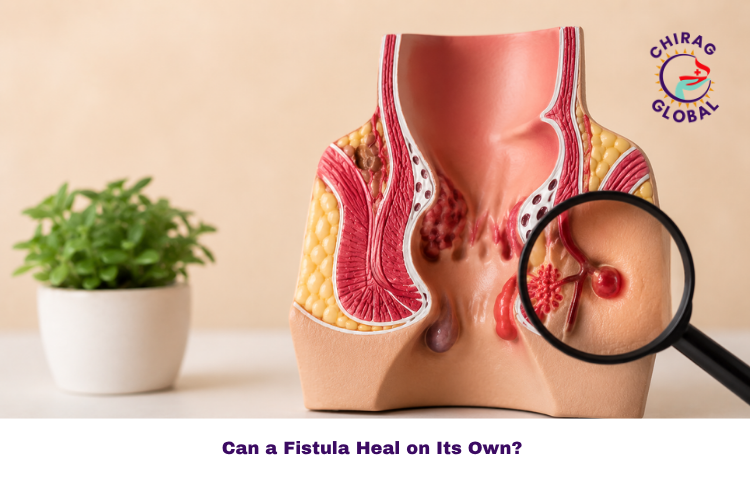
Many people with anal fistula want to avoid surgery and first look for medicines, home care, antibiotics, or non-surgical options. One of the most common questions patients ask is: can fistula heal without surgery?
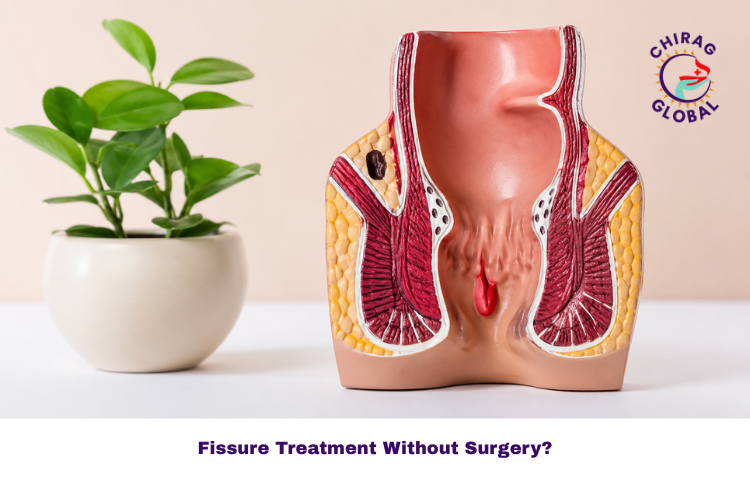
The honest answer is that many anal fistulas do not close on their own because a fistula is not just a surface wound. It is an abnormal tunnel or tract that forms between the anal canal and the skin near the anus. Medicines may help control infection, pain, swelling, or discharge in selected cases, but they usually do not close the fistula tract completely.
At Chirag Global Hospitals, Bangalore, fistula treatment is planned after identifying the fistula tract, internal opening, external opening, infection, abscess history, sphincter involvement, and whether the fistula is simple or complex. Depending on the diagnosis, treatment may include infection control, abscess drainage, fistulotomy, seton placement, laser treatment, or surgery where suitable.
Want to Avoid Fistula Surgery?
If you have pus discharge, swelling, pain while sitting, or a small opening near the anus, a consultation can help identify whether medicines are enough or whether procedure-based treatment is needed.
Book a Consultation | Call 08065903127
Can Fistula Heal Without Surgery?
In most cases, an anal fistula does not heal reliably without medical or procedure-based treatment. This is because the fistula tract remains open between the anal canal and the nearby skin. As long as the tract remains, pus discharge, infection, swelling, or abscess may keep returning.
A fistula may temporarily feel better when pus drains out or infection reduces, but that does not always mean the tract has healed. Symptoms can settle for a few days or weeks and then return again.
Whether a fistula can be managed without surgery depends on:
- Type of fistula
- Simple or complex tract
- Internal opening
- External opening
- Active infection or abscess
- Sphincter muscle involvement
- Previous treatment history
- Recurrence pattern
- Overall health condition
A doctor can confirm the right approach only after examination and imaging if required.
Why Fistula Usually Does Not Close on Its Own
A fistula is different from a small cut, rash, or skin infection. It is a tract that often develops after an anal abscess or infection. If the tract remains after the abscess drains, it can continue to collect and discharge infected fluid.
A fistula may not close on its own because:
- The internal opening may remain active
- Infection may continue inside the tract
- Pus may keep draining through the external opening
- The tract may have branches
- An abscess may form again
- The tract may pass through deeper tissues
- Incomplete healing may cause recurrence
This is why repeated discharge or swelling near the anus should not be ignored.
Can Medicines Cure Anal Fistula?
Medicines may help manage infection, pain, swelling, or inflammation in selected cases. Antibiotics or pain-relief medicines may be prescribed when there is active infection or abscess-related concern.
However, medicines alone usually do not close the fistula tract.
Medicines may help with:
- Reducing infection temporarily
- Controlling pain
- Reducing swelling
- Managing inflammation
- Supporting care before or after a procedure
- Treating associated infection if present
But if the fistula tract remains, symptoms may return. This is why proper diagnosis is important before relying only on medicines.
Can Antibiotics Close a Fistula?
Antibiotics may control infection in selected cases, but they usually do not close the fistula tract permanently. A fistula has an internal pathway, and unless the tract and opening are treated appropriately, discharge or abscess may return.
Antibiotics may be useful when:
- Infection is active
- There is fever or swelling
- Abscess-related infection needs control
- The doctor wants to reduce infection before a procedure
- The patient has specific medical conditions requiring infection control
Antibiotics should be taken only under medical guidance. Repeated antibiotic use without treating the fistula tract may delay proper care.
Can Abscess Drainage Cure Fistula?
Abscess drainage can relieve pain and remove pus when an abscess is present. It may be necessary to prevent the infection from worsening.
However, drainage alone may not cure fistula if a persistent tract remains. Some patients feel better after pus drains, but symptoms may return later if the internal opening or tract continues.
Abscess drainage may help:
- Reduce pus collection
- Relieve pressure and pain
- Control active infection
- Prevent worsening swelling
- Allow further evaluation after infection settles
If discharge or swelling returns after drainage, a fistula should be suspected and evaluated.
When Non-Surgical Care May Be Used
Non-surgical care may be used to control symptoms, reduce infection, or prepare the patient for further treatment. It may also be advised when there is active infection that needs control before procedure-based treatment.
Non-surgical care may include:
- Medicines for pain or inflammation
- Antibiotics in selected infection cases
- Sitz bath if advised
- Hygiene care
- Abscess drainage when required
- Follow-up monitoring
- Imaging if the tract is complex
- Planning the right procedure based on diagnosis
Non-surgical care may support treatment, but it should not be confused with complete fistula closure.
When Procedure-Based Treatment Is Needed
Many anal fistulas need procedure-based treatment because the tract does not close reliably on its own. The treatment approach depends on the fistula type and complexity.
Procedure-based treatment may be needed if there is:
- Repeated pus discharge
- Recurrent abscess
- Persistent external opening
- Pain while sitting
- Bad-smelling leakage
- Blood-tinged discharge
- Complex fistula tract
- Multiple openings
- Previous fistula recurrence
- Ongoing infection despite medicines
If these symptoms are present, proper evaluation for fistula treatment in Bangalore is important.
Can Fistula Come Back After Treatment?
Yes, fistula can recur in some cases. Recurrence depends on the fistula type, tract complexity, infection control, internal opening, secondary branches, and follow-up care.
Common reasons for recurrence include:
- Complex fistula anatomy
- Missed internal opening
- Secondary branches
- Ongoing infection
- Recurrent abscess
- Previous fistula treatment
- Poor wound care or follow-up
- Inflammatory bowel disease in selected cases
Accurate diagnosis and proper tract mapping help reduce avoidable recurrence risk.
Final Thoughts
So, can fistula heal without surgery? Many anal fistulas do not close on their own because the tract remains between the anal canal and the skin near the anus. Medicines may reduce infection or symptoms in selected cases, but they usually do not close the tract completely.
The right treatment depends on diagnosis, fistula type, tract complexity, infection, abscess history, and sphincter involvement. At Chirag Global Hospitals, fistula care is planned after proper evaluation and tract assessment.
If you have pus discharge, recurring swelling, pain while sitting, or a small opening near the anus, do not rely only on temporary medicines. Get evaluated and choose treatment based on the actual condition.
FAQs on Can Fistula Heal Without Surgery?
1. Can fistula heal without surgery?
Many anal fistulas do not close on their own because the tract remains open between the anal canal and skin. Medicines may help symptoms, but procedure-based treatment is often needed.
2. Can antibiotics cure fistula?
Antibiotics may help control infection in selected cases, but they usually do not close the fistula tract completely.
3. Can abscess drainage cure fistula?
Abscess drainage can remove pus and reduce infection, but if a fistula tract remains, further treatment may be needed.
4. When is surgery needed for fistula?
Surgery or procedure-based treatment may be needed when there is persistent discharge, recurrent abscess, complex tract, multiple openings, or recurrence after previous treatment.
5. Is laser treatment an option for fistula?
Laser treatment may be considered for selected fistula cases. Suitability depends on tract complexity, infection, internal opening, abscess, and sphincter involvement.
6. What happens if fistula is not treated?
Untreated fistula may cause repeated discharge, recurrent abscess, chronic pain, multiple openings, and more complex infection.
7. Can fistula come back after treatment?
Yes, fistula can recur if the tract is complex, internal opening is missed, infection persists, or secondary branches are present.