
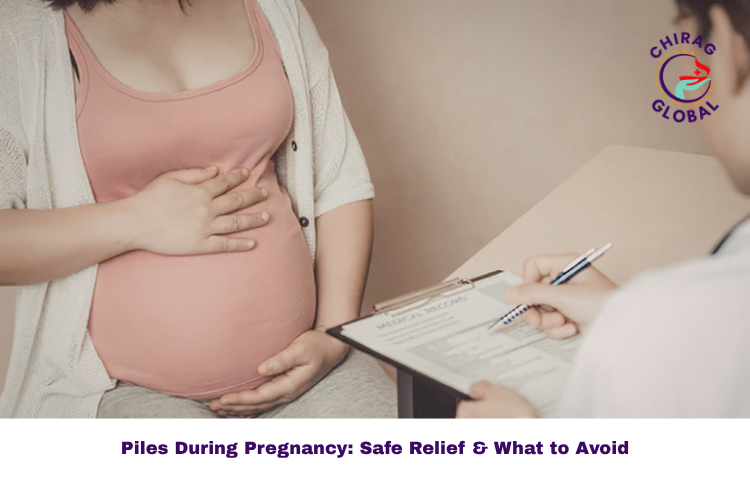
Piles during pregnancy are far more common than most women realise — and far more manageable than most women fear. Studies suggest that up to 35 to 40% of women develop haemorrhoids during pregnancy or in the immediate postpartum period. If you’re experiencing itching, bleeding, a feeling of fullness near the anus, or discomfort during bowel movements while pregnant, you are not alone — and this is very much a normal conversation to have with your doctor.
At Chirag Global Hospital in Bangalore, we regularly advise pregnant and postpartum women on managing piles during pregnancy safely and effectively.
Experiencing piles during pregnancy? Our specialists can advise you on safe, pregnancy-appropriate management.
Why Piles During Pregnancy Are So Common
Pregnancy creates a perfect storm of factors that contribute to hemorrhoidal development:
Increased blood volume: The 40 to 50% increase in circulatory blood volume during pregnancy increases venous pressure throughout the body, including the rectal veins.
Uterine pressure: As the uterus grows — particularly in the third trimester — it compresses the inferior vena cava, impairing venous drainage from the lower body and further congesting the rectal venous plexus.
Progesterone: This pregnancy hormone relaxes smooth muscle throughout the body, including the walls of blood vessels. This makes veins more prone to enlargement, and also slows gut motility — contributing to constipation.
Constipation: A near-universal companion to pregnancy, directly caused by slowed gut motility, iron supplementation, and sometimes inadequate fibre and water intake. Constipation leads to straining, which is the primary mechanical trigger for piles.
Pushing during labour: The sustained bearing-down effort of vaginal delivery can significantly worsen existing haemorrhoids or trigger new ones in the immediate postpartum period.
Symptoms to Recognise
Piles during pregnancy typically present as:
• Bright red blood on toilet paper or in the bowl after a bowel movement
• Itching, burning, or soreness around the anus
• A feeling of something protruding after a bowel movement (which may reduce spontaneously)
• Mucus discharge
• Discomfort or pain during and after bowel movements
Important: Any rectal bleeding during pregnancy must be reported to your obstetrician and/or proctologist. While haemorrhoids are the most common cause, bleeding should always be properly assessed.
Safe Relief for Piles During Pregnancy
1. Dietary Management — The Foundation
A high-fibre diet is the safest and most effective primary intervention for piles during pregnancy. Aim for 25 to 30 grams of fibre daily from whole grains, fresh fruits with skin, vegetables, and legumes. Increase water intake to at least 2.5 to 3 litres daily — this activates the softening effect of fibre.
2. Sitz Baths
Warm (not hot) sitz baths for 15 minutes, 1 to 2 times daily, significantly reduce anal discomfort and sphincter spasm during pregnancy. This is entirely safe throughout pregnancy and postpartum.
3. Avoid Prolonged Sitting and Straining
Use a footstool under your feet on the toilet — this reduces straining effort significantly.
What Is NOT Safe to Do for Piles During Pregnancy
• Avoid undergoing piles procedures such as laser treatment, rubber band ligation, or sclerotherapy during pregnancy, as doctors usually defer these until after delivery.
• Specialist supervision is essential before using long-term oral steroid medications.
• Due to uncertain pregnancy safety data and possible skin absorption, potassium permanganate should not be added to sitz baths.
• Herbal and “natural” products may appear safe, but many have not undergone adequate testing during pregnancy.
Postpartum Piles — What to Expect
Piles that develop or worsen during labour often improve significantly within 2 to 4 weeks postpartum as the uterine pressure on pelvic veins resolves, hormonal changes normalise, and bowel habits return to baseline. Continue the high-fibre diet, sitz baths, and adequate hydration throughout this period.
If piles during pregnancy have not resolved 6 to 8 weeks after delivery, or if symptoms are significantly affecting your quality of life, this is the appropriate time for a specialist consultation and consideration of minimally invasive treatment.
| Ready to Get Relief? We’re Here for You. |
| Visit Chirag Global Hospital |
Frequently Asked Questions
No. Haemorrhoids are a maternal condition and do not affect the foetus or the pregnancy itself. However, significant rectal bleeding should always be reported to your obstetrician to ensure the correct cause is identified.
Piles themselves do not complicate labour mechanics. However, existing haemorrhoids can worsen significantly during the pushing stage of vaginal delivery. Your midwife or obstetrician will be aware of this and manage accordingly.
Most procedures (laser, rubber band ligation) are appropriate from 6 to 8 weeks after delivery, once postpartum healing has occurred and the uterus has returned to its pre-pregnancy size. For breastfeeding mothers, your specialist will choose anaesthetic and medication options that are safe during lactation.
Yes — piles after caesarean section occur due to the same hormonal, dietary, and venous pressure factors present during pregnancy. They are not caused by the C-section itself. Management is the same as for piles in any postpartum patient.
Gentle exercise (prenatal yoga, walking) is beneficial and safe. Avoid exercises involving prolonged squatting, heavy lifting, or significant intra-abdominal pressure. Some prenatal yoga poses specifically promote pelvic circulation and gentle bowel stimulation.