

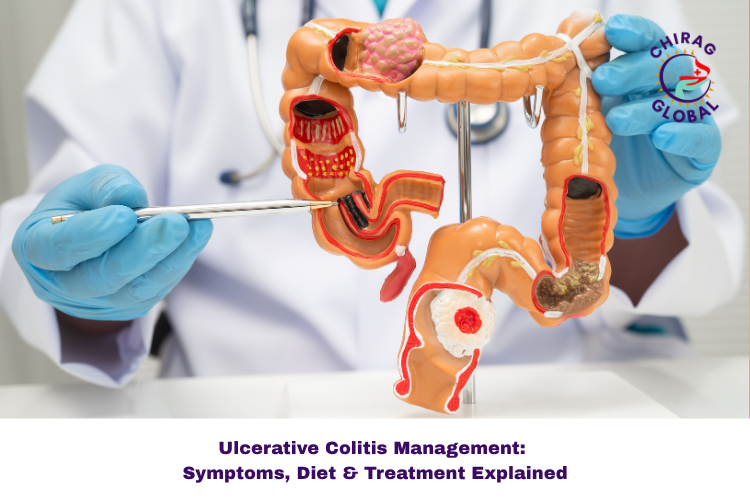
A diagnosis of ulcerative colitis can feel overwhelming. One day you’re noticing blood in your stool or rushing to the bathroom urgently several times a day — and the next, a specialist is explaining a chronic inflammatory condition that requires long-term care. If you’re at that point, take a breath. Ulcerative colitis management has improved dramatically over the past decade, and most patients lead full, normal lives with the right approach.
At Chirag Global Hospital in Bangalore, our colorectal team supports patients with ulcerative colitis management at every stage — from first diagnosis through flare-up control, surgical assessment, and long-term monitoring. This guide covers what you need to know.
Living with ulcerative colitis? Effective management starts with the right specialist. Our colorectal team at Chirag Global Hospital can review your current treatment and help optimize your plan.
What Is Ulcerative Colitis?
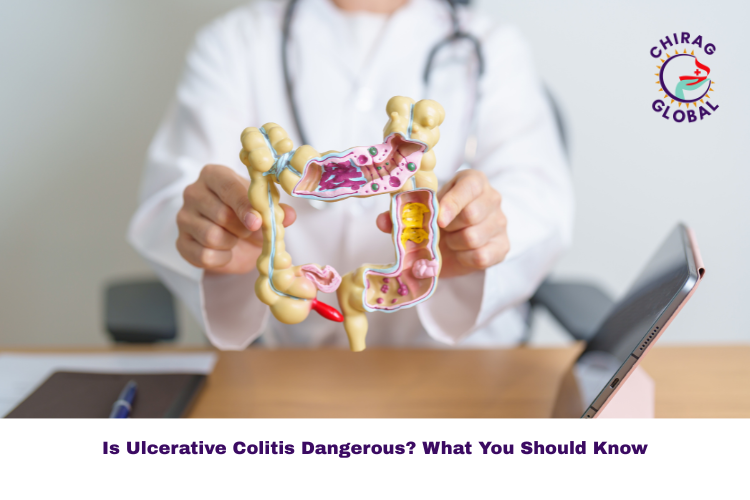
Ulcerative colitis (UC) is a chronic inflammatory condition of the large intestine (colon) and rectum. Unlike Crohn’s disease, which can affect any part of the digestive tract, UC affects only the colon — and the inflammation is continuous, starting from the rectum and extending upward in varying degrees.
Researchers still do not fully understand the exact cause of UC, but they believe an abnormal immune response develops from a combination of genetic susceptibility, gut microbiome imbalance, and environmental factors. Diet alone and stress do not cause UC, though both can significantly worsen symptoms during active disease.
UC alternates between periods of active disease (flare-ups) and remission.Effective ulcerative colitis management means minimizing flare-up frequency, controlling symptoms when they occur, and protecting long-term colon health.
Recognising the Symptoms
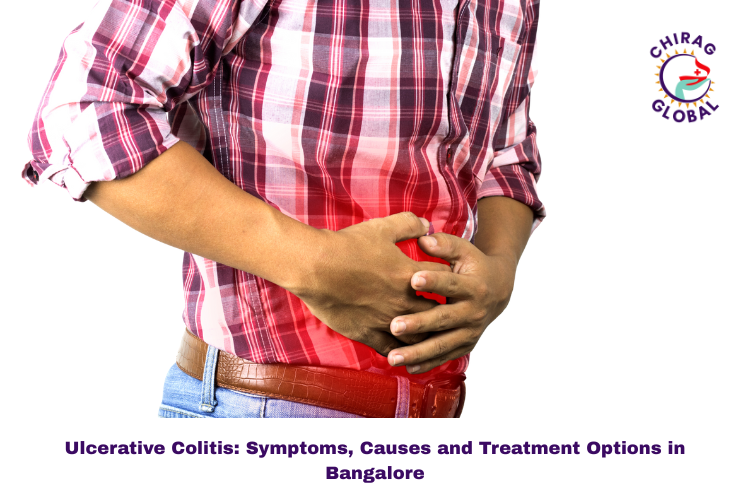
The most common symptoms of ulcerative colitis include:
Bloody diarrhoea — It is the hallmark symptom; blood may mix into stool or passed separately
Urgency — the sudden, intense need to defecate, often with very little warning
Frequent bowel movements — ranging from 3 to 4 per day in mild disease to 10 or more in severe cases
Abdominal cramping and pain — typically in the lower left abdomen
Tenesmus — a persistent feeling of needing to pass stool even when the bowel is empty
Fatigue and unintentional weight loss — particularly during prolonged or severe flare-ups
Anaemia — from chronic blood loss, common in moderate to severe UC
Symptoms vary in severity. The Montreal Classification grades UC as mild, moderate, or severe based on stool frequency, bleeding, systemic features (fever, elevated heart rate), and inflammatory markers.
The Role of Diet in Ulcerative Colitis Management
No specific diet causes or cures UC, but dietary choices significantly influence symptom severity during flare-ups and quality of life during remission. Effective ulcerative colitis management includes understanding your individual food triggers.
During a Flare-Up — Low-Residue Diet
When the colon becomes inflamed and actively symptomatic, a low-residue (low-fibre) diet helps reduce stool volume and frequency while minimizing mechanical irritation to the inflamed intestinal lining:
• White rice, plain pasta, well-cooked vegetables without skin
• Steamed or baked fish and chicken — easy to digest, high protein
• Bananas, cooked or canned fruit without seeds or skin
• Plain yoghurt — provides protein and probiotics
• Avoid: raw vegetables, whole grains, legumes, seeds, nuts, spicy food, caffeine, alcohol
During Remission — Gradual Reintroduction
Once symptoms come under control, gradually reintroducing fibre — beginning with soluble fibre sources like oats, bananas, and soft-cooked legumes — helps support gut bacteria diversity and maintain remission. Work with your specialist to personalize this approach.
When Surgery Becomes Part of Ulcerative Colitis Management
- Approximately 10 to 15% of UC patients eventually require surgery. The main indications are:
- Failure to respond to maximum medical therapy during a severe acute flare-up (toxic megacolon, perforation risk)
- Persistent symptoms that significantly reduce quality of life despite optimal medical treatment
- Detection of dysplasia (precancerous changes) during surveillance colonoscopy
- Development of colorectal cancer in long-standing UC
The most common surgical procedure for UC is total proctocolectomy with ileal pouch-anal anastomosis (IPAA), commonly known as a J-pouch procedure. During this surgery, surgeons remove the entire colon and rectum and construct an internal pouch from the small intestine, allowing most patients to avoid a permanent stoma.
At Chirag Global Hospital, our colorectal surgeons are experienced in managing surgical UC cases, including emergency presentations and elective pouch construction.
The Importance of Not Self-Medicating
This applies strongly to ulcerative colitis management. Stopping steroids or immunosuppressants abruptly, or self-adjusting doses, can trigger severe rebound flare-ups that require hospitalisation. Always make medication changes under specialist guidance.
Frequently Asked Questions
UC is a chronic condition — it cannot currently be permanently cured with medication. However, the vast majority of patients achieve sustained remission with appropriate treatment. Surgical removal of the colon and rectum (proctocolectomy) is technically curative, as it removes all affected tissue, but is reserved for cases where medical therapy has failed or complications arise.
Stress does not cause UC, but it is a well-documented trigger for flare-ups in susceptible patients. The gut-brain axis means that psychological stress directly influences gut motility and mucosal immune function. Managing stress through exercise, mindfulness, or counselling is a legitimate component of effective ulcerative colitis management.
Both are forms of inflammatory bowel disease (IBD), but they differ in location and pattern. UC affects only the colon and rectum, with continuous mucosal inflammation. Crohn’s can affect any part of the digestive tract from mouth to anus, involves transmural (full-thickness) inflammation, and often has skip lesions. Treatment approaches overlap but differ in some key ways.
Patients with proctitis (UC limited to the rectum) usually do not require routine surveillance colonoscopy. In left-sided UC, doctors typically begin surveillance after 15 to 20 years of disease duration. Extensive UC requires closer monitoring, with surveillance colonoscopy recommended every 1 to 3 years beginning 8 to 10 years after diagnosis to screen for dysplasia and colorectal cancer.
Yes — gentle to moderate exercise (walking, swimming, yoga) is beneficial and is associated with reduced flare-up frequency. During active flare-ups, reduce exercise intensity based on how you feel. High-intensity exercise during a severe flare can worsen symptoms.