

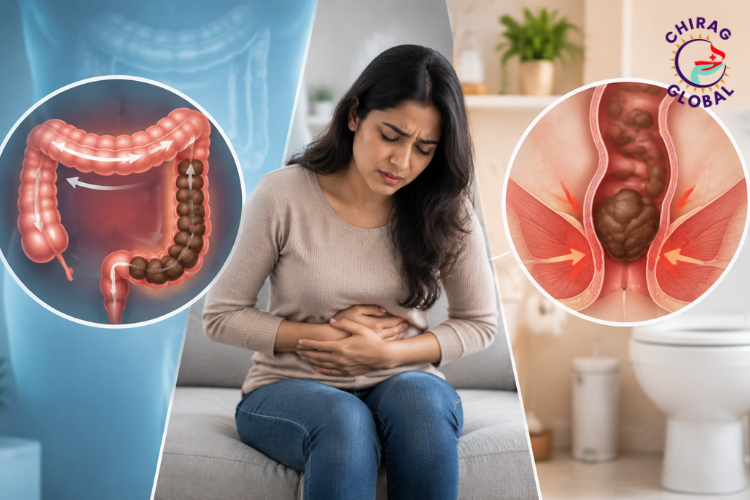
Constipation is a common digestive problem, but not all constipation happens for the same reason. Some people experience infrequent bowel movements because their colon moves stool too slowly, while others struggle because the stool cannot pass easily through the rectum and anal muscles.
Understanding the difference between slow transit constipation vs outlet obstruction is important because the treatment approach depends on the underlying cause. Managing both conditions in the same way may not provide long-term relief.
At Chirag Global Hospitals, Bangalore, specialists evaluate the cause behind chronic constipation through detailed assessment and appropriate diagnostic methods to recommend suitable treatment options.
If you experience persistent constipation, difficulty passing stool, or a feeling of incomplete bowel evacuation, consult a specialist to understand the underlying issue.
Book a Consultation | Call 08065903127
What Is Chronic Constipation?
Chronic constipation refers to ongoing difficulty with bowel movements that continues for several weeks or longer. It may involve:
- Passing stools fewer than three times a week
- Hard or dry stools
- Straining during bowel movements
- Feeling that the bowel has not completely emptied
- A sensation of blockage during stool passage
- Needing manual assistance to pass stool
While occasional constipation may occur due to diet changes, dehydration, stress, or lifestyle habits, persistent constipation can sometimes indicate an underlying bowel function problem.
Two important types of constipation related to bowel movement problems are:
- Slow transit constipation
- Outlet obstruction constipation
Although both can cause similar symptoms, the reason behind them is different.
What Is Slow Transit Constipation?
Slow transit constipation occurs when stool moves too slowly through the colon. The large intestine normally pushes waste forward through coordinated muscle contractions. When these movements become reduced or ineffective, stool remains in the colon for a longer time.
This delay allows more water to be absorbed from the stool, making it harder and more difficult to pass.
Common Causes of Slow Transit Constipation
Slow movement of stool through the colon may be associated with:
- Reduced colon muscle activity
- Nerve-related problems affecting bowel movement
- Hormonal conditions such as thyroid disorders
- Certain medications
- Low fibre intake
- Reduced physical activity
- Long-term bowel habit changes
In some cases, slow transit constipation may occur without an identifiable cause.
Symptoms of Slow Transit Constipation
People with slow transit constipation may experience:
- Infrequent bowel movements
- Hard stools
- Abdominal bloating
- Feeling full even after passing stool
- Reduced urge to have a bowel movement
- Abdominal discomfort
A key feature is that the problem occurs because the stool is moving slowly through the colon rather than being blocked at the exit point.
What Is Outlet Obstruction Constipation?
Outlet obstruction constipation occurs when stool reaches the rectum but has difficulty leaving the body. The colon may move stool normally, but problems with the pelvic floor muscles, rectum, or anal muscles can interfere with stool evacuation.
This condition is also linked with pelvic floor dysfunction, where the muscles responsible for controlling bowel movements do not relax properly during defecation.
Common Causes of Outlet Obstruction
Possible causes include:
- Poor coordination between pelvic floor muscles and rectum
- Tightening of anal muscles during attempted bowel movement
- Rectocele (a bulging of the rectal wall, commonly seen in some women)
- Structural changes affecting stool passage
- Previous pelvic surgery or injury
Symptoms of Outlet Obstruction Constipation
Common symptoms include:
- Feeling that stool is stuck near the anus
- Excessive straining during bowel movements
- Feeling of incomplete evacuation
- Spending a long time in the toilet
- Need for repeated attempts to pass stool
- Using fingers or other methods to help remove stool
Unlike slow transit constipation, the main issue is not stool movement through the colon but difficulty emptying it once it reaches the rectum.
Slow Transit Constipation vs Outlet Obstruction: Key Differences
| Feature | Slow Transit Constipation | Outlet Obstruction Constipation |
| Main problem | Stool moves slowly through the colon | Stool cannot exit the rectum easily |
| Location of issue | Large intestine (colon) | Rectum, anus, or pelvic floor muscles |
| Main symptom | Infrequent bowel movements | Difficulty passing stool |
| Urge to pass stool | Often reduced | Usually present but ineffective |
| Feeling of blockage | Less common | Common |
| Straining | May occur | Usually significant |
| Treatment focus | Improving bowel movement and transit | Improving evacuation function |
How Are These Types of Constipation Diagnosed?
Finding the exact cause of chronic constipation requires more than just reviewing symptoms. A specialist may recommend a combination of clinical evaluation and diagnostic tests.
Medical History and Physical Examination
A doctor may ask about:
- Frequency of bowel movements
- Stool consistency
- Diet and lifestyle habits
- Medication use
- Previous surgeries
- Duration of symptoms
A physical examination may help identify problems related to the rectum and pelvic floor muscles.
Diagnostic Tests for Chronic Constipation
Depending on symptoms, doctors may suggest:
Colonic Transit Study
This test helps measure how quickly stool moves through the colon. It can help identify slow transit constipation.
Anorectal Manometry
This evaluates how the rectum and anal muscles work together during bowel movements. It is useful for detecting pelvic floor-related problems.
Defecography
This imaging test examines how the rectum empties during bowel movement and can identify structural problems affecting stool passage.
Colonoscopy
In some cases, colonoscopy may be advised to examine the colon and rule out other conditions.
Why Correct Diagnosis Matters Before Treatment
Constipation treatment is not the same for everyone. The approach depends on whether the problem is slow movement of stool or difficulty with evacuation.
For example:
- Increasing fibre may help some people but may worsen bloating in certain cases of slow transit constipation.
- Laxatives may not fully solve constipation caused by pelvic floor coordination problems.
- Pelvic floor therapy may benefit outlet obstruction but may not address slow colon movement.
A proper diagnosis helps create a treatment plan focused on the actual cause rather than only managing symptoms.
If chronic constipation is affecting your daily life, consult the specialists at Chirag Global Hospitals, Bangalore, for evaluation and personalised treatment guidance.
Slow Transit Constipation vs Outlet Obstruction: Know the Difference (Continued)
Treatment Options for Slow Transit Constipation and Outlet Obstruction
Treatment for chronic constipation depends on the type of bowel dysfunction, severity of symptoms, and overall health condition of the patient. A specialist may recommend a combination of lifestyle changes, medications, therapies, or procedures based on the diagnosis.
Managing Slow Transit Constipation
The goal of treatment for slow transit constipation is to improve bowel movement and support healthy colon function.
Lifestyle and Dietary Changes
Some helpful measures include:
- Increasing fibre intake gradually through fruits, vegetables, whole grains, and other fibre-rich foods
- Drinking adequate fluids
- Maintaining regular physical activity
- Developing consistent bowel habits
- Avoiding prolonged delay when there is an urge to pass stool
However, dietary changes alone may not be enough for people with severe slow transit constipation, especially when colon movement is significantly reduced.
Medications
Doctors may recommend suitable medications that help:
- Increase stool softness
- Improve bowel movement frequency
- Stimulate intestinal movement when required
The choice of medication depends on individual symptoms and should be guided by a healthcare professional.
Managing Outlet Obstruction Constipation
Since outlet obstruction is often related to difficulty coordinating pelvic floor muscles, treatment focuses on improving the process of stool evacuation.
Pelvic Floor Therapy
Biofeedback therapy is one approach that may help some patients learn how to relax and coordinate pelvic floor muscles during bowel movements.
This therapy focuses on:
- Understanding pelvic muscle function
- Improving muscle coordination
- Training proper bowel movement techniques
Treating Structural Problems
If outlet obstruction is caused by structural changes such as rectal wall problems or other anatomical issues, treatment may focus on correcting the underlying condition.
A colorectal specialist can determine the most appropriate approach after evaluation.
When Should You See a Doctor for Constipation?
Occasional constipation is usually manageable with lifestyle changes. However, medical evaluation is recommended if you experience:
- Constipation lasting for several weeks
- Severe difficulty passing stools
- Blood in stools
- Unexplained weight loss
- Persistent abdominal pain
- Vomiting with constipation
- Sudden changes in bowel habits
- A feeling of incomplete bowel evacuation despite repeated attempts
Early evaluation can help identify the actual cause and prevent symptoms from becoming long-term problems.
How Chirag Global Hospitals Helps With Chronic Constipation Management in Bangalore
At Chirag Global Hospitals, Bangalore, patients with persistent constipation symptoms receive a structured evaluation to identify the underlying bowel problem.
The approach may include:
- Detailed symptom assessment
- Clinical examination
- Appropriate diagnostic investigations
- Individualised treatment planning
- Guidance for long-term bowel health management
Understanding whether constipation is caused by slow colon movement or difficulty with stool evacuation helps doctors recommend more targeted care.
Looking for expert constipation evaluation in Bangalore?
Visit Chirag Global Hospitals!
Tips to Support Better Bowel Health
Along with medical guidance, certain daily habits can support digestive health:
Maintain a Fibre-Rich Diet
Include:
- Vegetables and fruits
- Whole grains
- Legumes
- Fibre-rich foods based on your tolerance
Stay Hydrated
Adequate fluid intake helps maintain softer stool consistency and supports normal bowel function.
Stay Physically Active
Regular movement can encourage healthy intestinal activity.
Avoid Excessive Straining
Repeated straining may worsen discomfort and contribute to problems related to the pelvic floor.
Maintain Regular Toilet Habits
Responding to the natural urge to pass stool can help maintain healthy bowel patterns.
Frequently Asked Questions (FAQs)
What is the difference between slow transit constipation and outlet obstruction?
Slow transit constipation occurs when stool moves slowly through the colon, while outlet obstruction constipation happens when stool reaches the rectum but cannot be easily passed due to problems with the pelvic floor muscles or anal outlet.
Can slow transit constipation and outlet obstruction happen together?
Yes, some people may have both slow movement of stool through the colon and difficulty with evacuation. A detailed evaluation helps identify the contributing factors.
How is slow transit constipation diagnosed?
Doctors may use tests such as a colonic transit study to measure how quickly stool moves through the colon. Other evaluations may be recommended depending on symptoms.
What are the symptoms of outlet obstruction constipation?
Common symptoms include difficulty passing stool, excessive straining, feeling of incomplete evacuation, and a sensation that stool is blocked near the rectum.
Is constipation caused only by diet?
No. While diet plays an important role, constipation can also result from bowel movement disorders, pelvic floor problems, medications, hormonal conditions, or structural issues.
Can pelvic floor dysfunction cause constipation?
Yes. Pelvic floor dysfunction can prevent the muscles involved in bowel movements from relaxing properly, making stool evacuation difficult.
When should I consult a constipation specialist?
You should consider consulting a specialist if constipation is persistent, affecting daily activities, associated with warning signs, or not improving with basic lifestyle changes.
Can chronic constipation be treated permanently?
Treatment outcomes depend on the underlying cause. Identifying the specific type of constipation and following a personalised management plan can help improve symptoms and bowel function.