
Laser treatment for piles has become a commonly discussed option for patients who want a less invasive approach compared with conventional piles surgery. If you are searching for laser treatment for piles in Bangalore, it is important to understand one key point first: laser treatment is not required for every piles patient.
At Chirag Global Hospitals, Bangalore, laser treatment is considered only after a proper evaluation of the type, grade, symptoms, and severity of piles. Some patients may improve with medicines, diet correction, and constipation management. Others may need a procedure such as laser treatment, DG-HAL with RAR, or surgery depending on the condition.
For a broader overview of piles symptoms, causes, diagnosis, treatment options, and recovery, read our complete guide on piles treatment in Bangalore.
Considering Laser Treatment for Piles?
| Book a consultation at Chirag Global Hospital | Call/WhatsApp: 08065916422 |
What Is Laser Treatment for Piles?
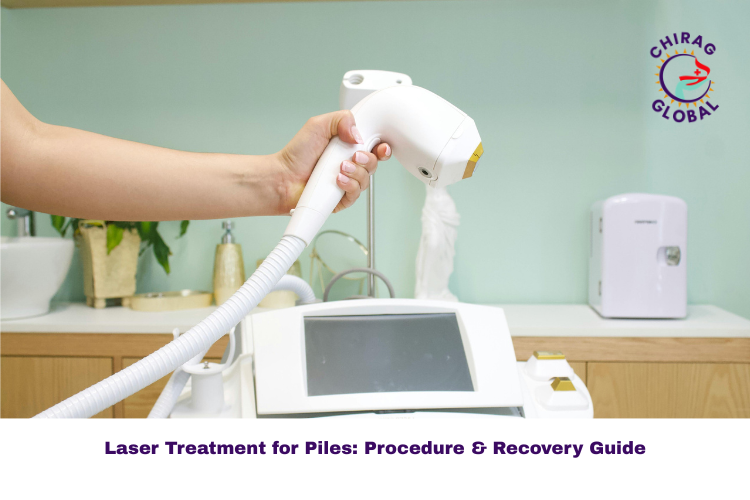
Laser treatment for piles is a minimally invasive procedure that uses controlled laser energy to treat haemorrhoidal tissue. The aim is to reduce the affected tissue, control symptoms, and support healing while minimising trauma to nearby tissue in suitable cases.
Unlike some conventional surgical methods, laser treatment may involve smaller wounds and less bleeding in selected patients. However, this does not mean it is painless, risk-free, or suitable for everyone. The treatment decision should always be made after examination by a qualified proctology specialist.
A consultation with a piles doctor in Bangalore can help determine whether laser treatment is suitable or whether another treatment option would be more appropriate.
When Is Laser Treatment Considered?
People may consider laser treatment when piles symptoms persist, recur, or do not improve with basic treatment.
A doctor may consider laser piles treatment for:
- Recurrent bleeding piles
- Internal piles in selected grades
- Piles associated with swelling or irritation
- Piles that return despite medicines
- Selected Grade 2 or Grade 3 piles
- Certain prolapsed piles after evaluation
- Patients who need a procedure but may not require conventional surgery
The final decision depends on clinical examination. Two patients may have similar symptoms, but their treatment plans may be different depending on the grade, tissue condition, pain level, and associated anorectal problems.
When Laser Treatment May Not Be the First Option
Laser treatment can help in selected cases, but people should not present it as the only or automatic choice.
Laser treatment may not be the first option if:
- Symptoms are very mild
- Piles are early-stage and manageable with lifestyle changes
- There is an active infection or abscess
- Symptoms are caused by fissure, fistula, or another condition
- The piles are highly complicated or severely prolapsed
- The patient has medical conditions that need special planning
This is why diagnosis matters. Treating piles without confirming the exact condition can lead to delayed recovery or recurrence.
How Doctors Check Suitability for Laser Piles Treatment
Before recommending laser treatment for piles in Bangalore, the doctor may evaluate several points.
1. Grade of Piles
Piles are usually graded based on whether they stay inside, come out during bowel movements, go back on their own, or remain outside.
- Grade 1: Bleeding may occur, but piles do not come out.
- Grade 2: Piles may come out during bowel movements and go back on their own.
- Grade 3: Piles may come out and need to be pushed back manually.
- Grade 4: Piles remain outside and may be painful, swollen, or complicated.
Doctors may consider laser treatment for selected grades, but advanced cases may need a different treatment plan.
2. Bleeding and Pain Pattern
The doctor will assess how often bleeding occurs, whether pain is present, whether swelling is sudden or recurring, and whether the symptoms affect daily routine.
3. Bowel Habits
Constipation, straining, low-fibre diet, dehydration, and long toilet sitting can worsen piles. Doctors must correct these factors even if they perform a procedure.
4. Previous Treatment History
If symptoms return after medicines, ointments, or previous treatment, the doctor may check whether the problem is truly piles or another anorectal condition.
5. Associated Conditions
Piles may occur along with fissure, fistula, constipation, skin tags, infection, or rectal prolapse. These need to be identified before choosing laser treatment.
Laser Treatment for Piles at Chirag Global Hospitals
At Chirag Global Hospitals, the laser treatment process starts with a detailed consultation and examination. The purpose is not to recommend laser treatment to every patient, but to identify the treatment that matches the patient’s condition.
The evaluation may include:
- Symptom review
- Bleeding and pain assessment
- Review of bowel habits
- Examination of the anal and rectal area
- Grading of piles
- Discussion of treatment options
- Recovery and recurrence-prevention guidance
If laser treatment is suitable, the doctor explains the procedure, preparation, expected recovery, precautions, and follow-up plan. If laser treatment is not needed, conservative care or another suitable option may be recommended.
Laser Treatment for Piles vs. Conventional Piles Surgery
Conventional surgery and Laser treatment for piles are both valid treatment options, but they are used in different situations.
| Factor | Laser Treatment for Piles | Conventional Piles Surgery |
|---|---|---|
| Treatment approach | Uses controlled laser energy | Uses surgical correction or removal |
| Best suited for | Selected piles cases after evaluation | Advanced, large, recurring, or complicated piles |
| Bleeding | May be less in suitable cases | Depends on the procedure |
| Recovery | May be faster for selected patients | May require longer recovery |
| Pain/discomfort | May be lower in some patients | May be higher depending on surgery |
| Hospital stay | May be short in suitable cases | Depends on condition and procedure |
| Recurrence | Depends on bowel habits and prevention | Depends on treatment and lifestyle correction |
Laser treatment is not automatically better for everyone. The better option is the one that suits the patient’s grade, symptoms, anatomy, and medical condition.
Recovery After Laser Treatment for Piles
Recovery after laser treatment varies. Some patients may return to routine earlier, while others may need more time depending on the grade of piles, procedure details, and healing response.
After treatment, the doctor may advise:
- Fibre-rich foods
- Adequate water intake
- Stool softeners if needed
- Warm sitz bath
- Avoiding straining
- Avoiding long toilet sitting
- Taking medicines as prescribed
- Maintaining local hygiene
- Avoiding heavy lifting for a short period
- Attending follow-up visits
Good recovery depends not only on the procedure but also on preventing constipation and following medical advice.
What Happens During Laser Treatment for Piles?
The exact procedure may vary depending on the patient’s condition and the doctor’s plan. In general, laser treatment uses a controlled laser device to treat the affected haemorrhoidal tissue.
The process may include:
- Pre-procedure evaluation
The doctor reviews the patient’s condition, medical history, medications, and procedure suitability. - Anaesthesia planning
Anaesthesia or pain-control support is planned based on the procedure and patient comfort. - Laser application
Controlled laser energy is used to treat the haemorrhoidal tissue. - Observation after the procedure
The patient may be observed for a short period based on the procedure, anaesthesia, and recovery response. - Discharge and recovery advice
The doctor provides medicines, diet advice, bowel care instructions, and follow-up guidance.
The doctor will explain the exact steps before treatment so the patient knows what to expect.
Possible Benefits of Laser Treatment for Piles
Laser treatment may offer certain advantages in suitable patients.
Possible benefits include:
- Less bleeding in selected cases
- Smaller wounds compared with some conventional procedures
- Reduced tissue trauma
- Shorter hospital stay in suitable patients
- Faster return to routine depending on recovery
- Less post-procedure discomfort in some cases
- Targeted treatment of affected tissue
These benefits can vary from patient to patient. Recovery depends on the grade of piles, procedure details, bowel habits, pain tolerance, and follow-up care.
Is Laser Treatment for Piles Painful?
Doctors usually perform laser treatment with anaesthesia or appropriate pain-control planning. Some patients may experience less discomfort compared with conventional procedures, but doctors should not describe it as completely painless for every patient.
Pain and recovery depend on:
- Grade of piles
- Type of procedure
- Individual pain tolerance
- Constipation after treatment
- Healing response
- Follow-up care
The doctor may prescribe medicines and recovery instructions to help manage discomfort.
Is Laser Treatment for Piles Safe?
Laser treatment is generally considered safe when performed for the right patient by an experienced doctor. However, every medical procedure has possible risks or limitations.
Possible concerns may include:
- Pain or discomfort
- Bleeding
- Swelling
- Infection risk
- Recurrence
- Need for additional treatment in some cases
A proper diagnosis helps reduce avoidable risks and ensures the treatment is suitable for the patient.
Cost of Laser Treatment for Piles in Bangalore
The cost of laser treatment for piles in Bangalore may vary depending on the patient’s condition and treatment requirements.
Cost factors may include:
- Grade of piles
- Severity of symptoms
- Number of haemorrhoids treated
- Procedure type
- Anaesthesia requirements
- Hospital stay if needed
- Associated fissure, fistula, or other conditions
- Medicines and follow-up care
- Insurance or self-pay status
Why Choose Chirag Global Hospitals for Laser Piles Treatment?
Patients looking for laser piles treatment in Bangalore may consider Chirag Global Hospitals because the hospital focuses on colorectal and proctology care.
The hospital’s approach includes:
- Diagnosis before treatment recommendation
- Evaluation by experienced colorectal and proctology doctors
- Treatment planning based on grade and symptoms
- Laser and advanced options where suitable
- Care for piles, fissure, fistula, constipation, and rectal concerns
- Recovery and recurrence-prevention guidance
The focus is to recommend the right treatment for the patient, not simply the most popular procedure.
Final Thoughts
Laser treatment for piles may be suitable for selected patients, especially when symptoms are recurring or not improving with medicines and lifestyle changes. However, not every piles patient needs laser treatment.
At Chirag Global Hospitals, piles treatment is planned after evaluating the patient’s symptoms, grade of piles, bowel habits, and overall condition. Depending on the diagnosis, the treatment plan may include lifestyle guidance, medicines, minimally invasive procedures, laser treatment, DG-HAL with RAR, or surgery.
If you are looking for laser treatment for piles in Bangalore, consult a specialist to understand whether it is the right option for your condition.
| Laser treatment for piles is a same-day procedure. Don’t delay treatment any longer. 👉 Visit Chirag Global Hospital today → |
Frequently Asked Questions
1. Is laser treatment good for piles?
Laser treatment may be suitable for selected piles patients. It may help reduce bleeding, tissue trauma, and recovery time in suitable cases. A doctor must examine the grade and type of piles before recommending it.
2. Who is suitable for laser treatment for piles?
Patients with recurring, bleeding, or symptomatic piles may be considered for laser treatment depending on the grade and diagnosis. Not every piles patient needs laser treatment.
3. Is laser treatment for piles painful?
Laser treatment may involve less discomfort than some conventional procedures in suitable cases, but it should not be described as completely painless for every patient.
4. How long does recovery take after laser piles treatment?
Recovery varies depending on the grade of piles, procedure details, bowel habits, and patient condition. Some patients may return to routine earlier, but follow-up and post-treatment care are important.
5. Can piles come back after laser treatment?
Yes, piles may recur if constipation, straining, low-fibre diet, dehydration, or long toilet sitting continues. Recurrence prevention is an important part of treatment.
6. Is laser treatment better than piles surgery?
Laser treatment may be suitable for selected cases, while surgery may be needed for advanced or complicated piles. The better option depends on diagnosis and doctor evaluation.
7. What is the cost of laser treatment for piles in Bangalore?
The cost may vary depending on the grade of piles, procedure type, hospital stay, anaesthesia, associated conditions, and follow-up care. A clear estimate is usually provided after consultation.
8. Does Chirag Global Hospitals provide laser treatment for piles?
Yes, Chirag Global Hospitals provides evaluation and treatment planning for piles, including laser treatment where suitable. The doctor decides the right option after examination.
9. Can I go home the same day after laser treatment for piles?
Some patients may be eligible for same-day discharge depending on the grade of piles, procedure type, anaesthesia, and doctor’s advice. This is decided after evaluation.
10. Do all piles patients need laser treatment?
No. Mild piles may improve with lifestyle changes, medicines, and constipation management. Laser treatment is considered only when suitable after diagnosis.