
Piles symptoms often begin quietly, but ignoring them can lead to severe pain, bleeding, and daily discomfort. Many people in Bangalore delay treatment due to embarrassment, busy work schedules, or assuming the problem will “go away on its own.” However, piles (also called hemorrhoids) are common—and with the right care, they are very treatable.
At Chirag Global Hospitals, patients receive compassionate evaluation and advanced treatment options designed for comfort, privacy, and long-term relief. As the Best Colo – Rectal Hospital of India, our team supports patients across Bangalore—from Whitefield and Indiranagar to Jayanagar, Koramangala, and Rajajinagar—helping them return to a normal, pain-free routine.
If you’re noticing discomfort, bleeding, or changes in bowel movements, don’t wait. Book a consultation at Chirag Global Hospitals in Bangalore and talk to a colorectal specialist to confirm the cause and start the right treatment early.
What Are Piles?
Piles are swollen veins in or around the anus and rectum. They can be:
- Internal piles (inside the rectum)
- External piles (under the skin around the anus)
In Bangalore’s fast-paced lifestyle, piles can develop due to long sitting hours, irregular meals, dehydration, and stress—especially among IT professionals, drivers, new mothers, and older adults.
Why Early Detection Matters in Bangalore
Many people in Bangalore ignore early signs of piles until the condition becomes painful or starts bleeding frequently. The earlier you identify the symptoms, the easier it is to manage with:
- Lifestyle changes
- Medicines and ointments
- Non-surgical procedures
- Minimally invasive options
Early care can prevent complications like thrombosed piles, severe swelling, chronic fissures, or persistent bleeding.
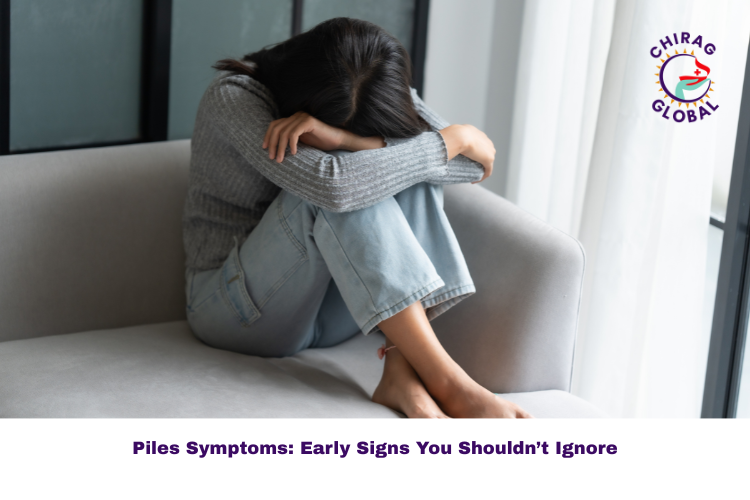
Early Signs of Piles You Shouldn’t Ignore
Below are the early signs of piles that deserve medical attention—especially if they repeat more than once in a week.
1. Bleeding During or After Passing Stool (H3)
One of the most common piles symptoms is seeing bright red blood:
- On toilet paper
- In the toilet bowl
- On the surface of stool
2. Itching or Irritation Around the Anus
Persistent itching is an early symptom that many people ignore. It may feel like:
- Mild irritation after bowel movements
- Burning sensation while sitting
- Discomfort after sweating or long travel
This happens because piles can cause mucus leakage and skin irritation.
3. Pain or Discomfort While Sitting
If you feel uncomfortable during:
- Long office hours
- Bike rides through Bangalore traffic
- Sitting in meetings or commuting
…it could be an early sign of external piles or swelling near the anus.
Pain may be mild initially, but it can worsen over time.
4. A Lump or Swelling Near the Anal Area
External piles may appear as a soft lump near the anus. Some people notice:
- A small bump while washing
- Swelling that comes and goes
- Tenderness during sitting
If the lump becomes hard and painful suddenly, it may be a thrombosed hemorrhoid and needs urgent attention.
5. Feeling of Incomplete Bowel Emptying
A less talked-about but important piles symptom is the sensation that stool is still left inside even after passing motion.
This may lead to:
- Repeated toilet visits
- Straining
- Anxiety about bowel habits
This symptom is common in internal piles and should not be ignored.
6. Mucus Discharge or Wetness
Some patients experience a sticky discharge or wet feeling. This can happen due to internal piles and may cause:
- Skin irritation
- Odour concerns
- Discomfort in tight clothing
In Bangalore’s warm climate, this can feel even more uncomfortable and lead to rashes.
7. Constipation and Straining
Constipation is one of the biggest triggers and warning signs. Straining increases pressure in the rectal veins and worsens piles.
Common Bangalore lifestyle causes include:
- Low-fiber diets
- Too much outside food
- Inadequate water intake
- Long sitting hours
- Skipping breakfast due to work
If constipation becomes frequent, it’s time to consult a specialist and not rely only on laxatives.
Common Causes of Piles
Piles can affect anyone, but these factors increase risk:
- Sitting for long hours (IT jobs, drivers, desk work)
- Low-fiber diet and irregular meals
- Dehydration (especially with high coffee/tea intake)
- Lack of physical activity
- Chronic constipation
- Pregnancy and post-delivery pressure
- Obesity
- Heavy lifting or gym strain
When Piles Symptoms Become Serious
You should seek medical help immediately if you experience:
- Heavy or repeated bleeding
- Severe pain or swelling
- Fever along with anal pain
- Black stools (can indicate other issues)
- Sudden worsening of symptoms
- Symptoms lasting more than 7–10 days
At Chirag Global Hospitals in Bangalore, evaluation is private, respectful, and focused on accurate diagnosis.
Diagnosis: What to Expect at Chirag Global Hospitals, Bangalore
Many patients worry the check-up will be painful or embarrassing. In reality, diagnosis is usually quick and comfortable.
Your consultation may include:
- Detailed symptom discussion
- Gentle physical examination
- Anoscopy/proctoscopy (if needed)
- Evaluation for fissures, fistula, or other rectal conditions
Our approach is patient-friendly, discreet, and guided by specialists trained in colorectal care.
Piles Treatment in Bangalore: Options Available
The right treatment depends on the grade and type of piles.
1. Lifestyle and Diet Changes
Early cases often improve with:
- More fiber (fruits, vegetables, whole grains)
- 2.5–3 litres water daily
- Avoiding long sitting on the toilet
- Regular walking (even 20–30 minutes daily)
- Reducing spicy and oily foods
2. Medicines and Local Ointments
Doctors may prescribe:
- Stool softeners
- Anti-inflammatory medicines
- Topical creams
- Sitz baths
This helps reduce pain and swelling.
3. Non-Surgical Procedures
If symptoms persist, minimally invasive options may be advised:
- Rubber band ligation
- Injection therapy
- Coagulation techniques
These are typically daycare procedures with quick recovery.
4. Advanced Surgical Treatment
For severe or recurring piles, surgery may be recommended.
At Chirag Global Hospitals, we focus on modern, safe approaches that minimize discomfort and downtime—especially important for working professionals in Bangalore who want to return to routine quickly.
How to Prevent Piles from Coming Back
Even after treatment, prevention is key.
Follow these simple habits:
- Don’t strain during bowel movements
- Maintain a consistent meal schedule
- Add fiber daily
- Stay hydrated
- Take movement breaks every hour
- Avoid delaying the urge to pass stool
- Manage weight and stress
These small steps can protect long-term colorectal health.
Final CTA: Don’t Ignore Early Signs—Get Expert Help in Bangalore
Piles may start as a minor discomfort, but untreated piles symptoms can affect your work, sleep, travel, and confidence. The good news is—early treatment is easier, faster, and more comfortable.
Visit the Best Colo – Rectal Hospital of India and take the first step toward a healthier, pain-free life.
FAQs: Early Signs and Piles Treatment in Bangalore
1. Are piles symptoms always painful?
Not always. Internal piles may cause bleeding without pain, while external piles can cause discomfort, itching, or swelling.
2. Can I ignore mild bleeding if it happens once?
It’s not recommended. Even mild bleeding should be evaluated by a specialist to confirm the cause and rule out other conditions.
3. Is consultation at Chirag Global Hospitals private and comfortable?
Yes. The team maintains strict patient privacy and ensures the consultation is respectful, gentle, and supportive.
4. What is the recovery time for piles treatment in Bangalore?
Recovery depends on the treatment type. Many non-surgical treatments allow patients to return to routine quickly, while surgery may take longer.
5. Will piles come back after treatment?
They can if constipation, straining, or poor diet continues. Follow-up guidance and lifestyle changes help reduce recurrence significantly.