


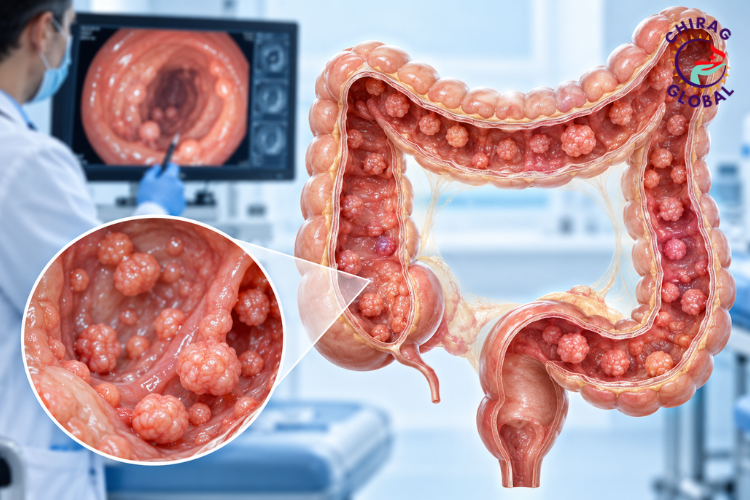
Familial adenomatous polyposis (FAP) is a rare inherited condition in which numerous adenomatous polyps develop in the colon and rectum. Although these polyps are not cancerous when they first appear, some can eventually become colorectal cancer if they are not identified and managed appropriately.
Because FAP is linked to an inherited change in the APC gene, understanding the condition is particularly important for people with a family history of FAP or colorectal cancer at a young age.
In this guide, Chirag Global Hospitals explains what FAP is, what causes it, the symptoms to watch for, how it is diagnosed, and why regular specialist surveillance is important.
If you or a close family member has been diagnosed with FAP, speak with a colorectal specialist about appropriate genetic evaluation and long-term surveillance.
Book a Consultation | Call 08065903127
What Is FAP?
FAP stands for familial adenomatous polyposis. It is an inherited condition characterised by the development of multiple adenomatous polyps in the large intestine.
In classic FAP, hundreds or even thousands of adenomatous polyps may develop in the colon and rectum, often beginning during childhood or adolescence. These polyps can increase the risk of colorectal cancer substantially over time.
FAP is caused by a disease-causing change, or pathogenic variant, in the APC gene, which normally helps regulate cell growth in the intestine.
FAP is uncommon, but recognising it early is important because surveillance and appropriate management can significantly change the course of the condition.
What Causes Familial Adenomatous Polyposis?
The main cause of FAP is an inherited pathogenic variant in the APC gene.
The APC gene plays an important role in controlling the growth and division of cells. When its normal function is disrupted, cells lining the intestine can grow abnormally and form adenomatous polyps.
Is FAP hereditary?
Yes. FAP is usually inherited in an autosomal dominant pattern.
This means that a person with an APC pathogenic variant has a 50% chance of passing the variant to each child.
However, not every person diagnosed with FAP necessarily has an affected parent. Some cases result from a new APC variant occurring in the affected individual.
Because of this inheritance pattern, genetic counselling and testing may be recommended for affected individuals and appropriate family members.
What Are the Symptoms of FAP?
FAP may not cause noticeable symptoms in its early stages. This is one reason why family history and planned surveillance are so important.
When symptoms occur, they may include:
- Blood in the stool
- Rectal bleeding
- Changes in bowel habits
- Abdominal discomfort or pain
- Diarrhoea or constipation
- Unexplained anaemia
- Unintentional weight loss
- Fatigue related to blood loss
These symptoms are not specific to FAP and can occur with several other gastrointestinal conditions. Having one of these symptoms does not mean a person has FAP.
However, persistent symptoms, particularly in someone with a relevant family history, should be evaluated by a healthcare professional.
What Does FAP Look Like in the Colon?
The characteristic feature of classic FAP is the presence of numerous adenomatous polyps throughout the colon and rectum.
A colonoscopy allows a specialist to examine the bowel lining and identify these growths.
The number, size, location and appearance of polyps can vary between individuals. Their development can also change over time, which is why ongoing surveillance is an important part of managing FAP.
FAP and Colorectal Cancer Risk
One of the most important concerns with FAP is its association with colorectal cancer.
Adenomatous polyps can undergo changes over time. In classic untreated FAP, the risk of colorectal cancer becomes very high, often at a much younger age than in people at average risk.
This does not mean that every individual polyp is cancerous. Rather, the large number of adenomas and their potential to progress over time make systematic surveillance and management essential.
Early recognition of FAP gives specialists an opportunity to monitor the bowel and determine appropriate treatment before cancer develops.
What Is Attenuated FAP?
Not everyone with an APC-related condition develops the classic form of FAP.
Attenuated familial adenomatous polyposis (AFAP) is a milder form in which people generally develop fewer colorectal adenomas and tend to develop them at a later age.
The cancer risk remains increased compared with the general population, although the pattern and timing can differ from classic FAP.
This distinction is important because surveillance strategies may vary depending on the person’s genetic findings, polyp burden, age and overall clinical picture.
Can FAP Affect Other Parts of the Body?
FAP is primarily known for its effects on the colon and rectum, but APC-related conditions can also be associated with findings outside the large intestine.
Depending on the individual, these may include:
- Adenomas in the duodenum or other parts of the upper gastrointestinal tract
- Desmoid tumours
- Certain thyroid abnormalities or cancers
- Gastric polyps
- Osteomas
- Dental abnormalities
- Epidermoid cysts
Not every person with FAP develops these conditions. Their presence and significance depend on the individual’s clinical and genetic profile.
This is why FAP management may involve more than just colorectal examinations.
How Is FAP Diagnosed?
Diagnosis usually involves a combination of medical history, family history, endoscopic assessment and genetic evaluation.
Colonoscopy and other examinations
A colonoscopy can identify and assess adenomatous polyps throughout the colon and rectum.
The number and characteristics of polyps can provide important information when determining whether an inherited polyposis syndrome should be considered.
Genetic testing
Genetic testing can identify pathogenic variants in genes associated with inherited polyposis conditions, particularly the APC gene in suspected FAP.
Genetic counselling is useful when interpreting test results and discussing what the findings may mean for relatives.
Family history assessment
A history of multiple colorectal polyps, colorectal cancer at a young age, or known FAP in close relatives can raise suspicion for the condition.
If FAP is confirmed in one family member, appropriate relatives may also be advised to undergo genetic counselling and testing.
How Is FAP Managed?
There is no single management plan that is suitable for everyone with FAP.
Management depends on factors such as:
- Age
- Number and size of polyps
- Polyp growth pattern
- Genetic findings
- Symptoms
- Presence of cancer or suspicious lesions
- Findings elsewhere in the gastrointestinal tract
- Overall health
Regular surveillance
Regular endoscopic surveillance is a central part of FAP management. Specialists may monitor the colon and, where appropriate, the upper gastrointestinal tract.
The timing and frequency of examinations depend on the individual’s risk profile and clinical findings.
Surgical management
Because the number of colorectal adenomas can become extensive in classic FAP, surgery to remove the colon may be considered as part of risk management.
The timing and type of surgery are individualised. Factors such as polyp burden, symptoms, cancer risk, age and patient preferences are considered by the treating team.
Management of upper gastrointestinal polyps
People with FAP may also require surveillance of the stomach and duodenum. Depending on the findings, doctors may recommend continued observation, endoscopic treatment or other management.
The goal is to identify concerning changes early and manage them according to their risk.
When Should You Consider Genetic Testing for FAP?
Genetic assessment may be appropriate when there is:
- A known APC pathogenic variant in the family
- Multiple colorectal adenomas
- Numerous polyps at a relatively young age
- A personal history suggestive of an inherited polyposis syndrome
- A family history of FAP or early colorectal cancer
A genetic test should be interpreted alongside clinical and family-history information. A specialist or genetic counsellor can explain what a positive, negative or uncertain result means.
What Should Family Members of Someone With FAP Do?
Because FAP can be inherited, family members may also need assessment.
If a pathogenic APC variant has been identified in a family, genetic counselling can help determine which relatives should be offered testing.
For relatives who are found to carry the relevant variant, appropriate surveillance can usually begin before symptoms develop.
This is particularly important because FAP can start affecting the colon during childhood or adolescence.
Can FAP Be Prevented?
The inherited genetic change that causes FAP cannot currently be prevented.
However, the consequences of FAP can often be managed through early diagnosis, genetic counselling, regular surveillance and appropriate treatment.
For families with known FAP, identifying at-risk relatives before significant symptoms develop can be an important part of long-term care.
If FAP has been diagnosed in your family, consider discussing genetic counselling and colorectal surveillance with a specialist at Chirag Global Hospitals in Bangalore.
FAP vs Ordinary Colon Polyps: What’s the Difference?
Occasional colorectal polyps are relatively common, particularly as people get older. FAP is different because it involves an inherited predisposition to developing numerous adenomatous polyps.
Some key differences include:
- Number of polyps: FAP can involve hundreds or thousands of adenomas.
- Age of onset: FAP often becomes apparent much earlier than sporadic polyps.
- Genetic cause: FAP is associated primarily with pathogenic variants in the APC gene.
- Family implications: FAP can be inherited and may affect multiple family members.
- Cancer risk: Classic untreated FAP carries a very high lifetime risk of colorectal cancer.
The distinction cannot be made from symptoms alone. Medical assessment and, when appropriate, genetic testing are important.
Why Early Specialist Evaluation Matters
FAP is a condition where waiting for symptoms may not be the best approach. Polyps can develop before a person notices any change in bowel function.
A specialist evaluation can help establish whether the clinical and family history suggests an inherited polyposis syndrome and whether genetic testing or endoscopic surveillance is appropriate.
At Chirag Global Hospitals, patients can discuss colorectal concerns, family history and diagnostic options with a specialist team.
If you have a family history of FAP, multiple colorectal polyps, or colorectal cancer at a young age, schedule a consultation to discuss appropriate evaluation and surveillance.
Visit Chirag Global Hospitals Today!
FAQs
What is FAP?
FAP, or familial adenomatous polyposis, is an inherited condition caused primarily by a pathogenic variant in the APC gene. It leads to the development of numerous adenomatous polyps in the colon and rectum and significantly increases colorectal cancer risk.
Is FAP a type of cancer?
No. FAP itself is an inherited condition, not cancer. However, the adenomatous polyps associated with classic FAP can develop into colorectal cancer if they are not appropriately monitored and managed.
What are the symptoms of FAP?
FAP may have no symptoms initially. Possible symptoms include rectal bleeding, blood in the stool, abdominal discomfort, changes in bowel habits, anaemia and unexplained weight loss.
Is familial adenomatous polyposis hereditary?
Yes. FAP is usually inherited in an autosomal dominant pattern. A person with an APC pathogenic variant has a 50% chance of passing that variant to each child.
Can FAP be detected with a genetic test?
Yes. Genetic testing can identify pathogenic variants in the APC gene and other genes associated with inherited polyposis syndromes. Genetic counselling can help interpret the results.
At what age does FAP develop?
Classic FAP often begins with colorectal adenomas during childhood or adolescence, although the exact age and severity vary. Attenuated FAP generally develops later and involves fewer polyps.
Can FAP be treated?
FAP can be managed through regular surveillance, endoscopic assessment, and, when appropriate, surgery and treatment of other associated findings. The management plan depends on the individual’s age, polyp burden, genetic findings and overall health.
Should family members of someone with FAP get tested?
Family members may benefit from genetic counselling and, where appropriate, genetic testing. If a family-specific APC pathogenic variant is known, testing can help identify relatives who may require specialised surveillance.