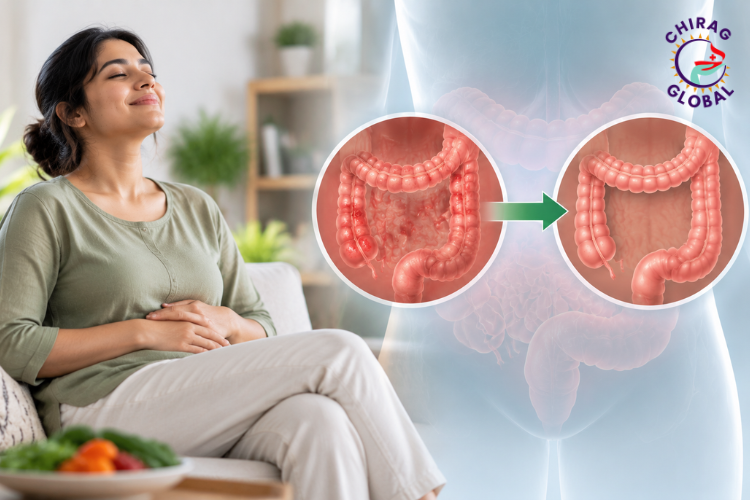


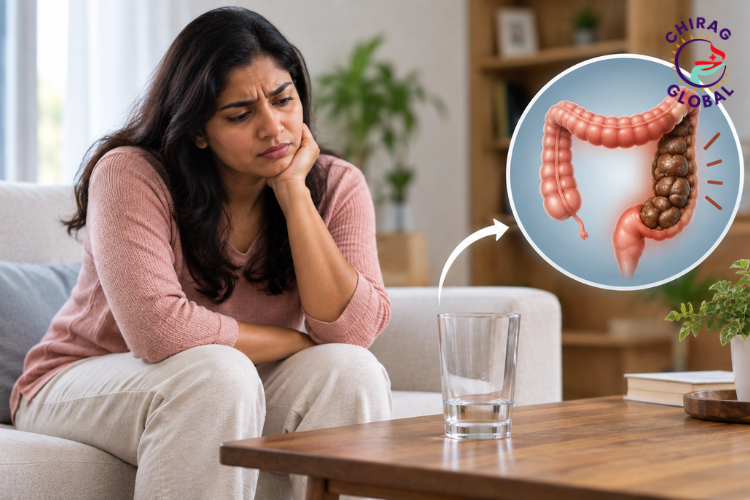
Yes, constipation from not drinking enough water can occur because inadequate fluid intake may contribute to harder, drier stools that are more difficult to pass.
However, dehydration is only one possible factor. Constipation can also be associated with low fiber intake, limited physical activity, regularly ignoring the urge to have a bowel movement, certain medications, changes in routine, and some medical conditions.
When you do not consume enough fluids, your body has less available water overall, which can contribute to firmer stools. Adequate fluid intake is also particularly important when increasing dietary fiber because fluids help fiber function properly.
At Chirag Global Hospitals, persistent or recurring constipation can be evaluated to determine whether inadequate hydration is contributing or whether another digestive or colorectal problem may be involved.
Book a Consultation | Call 08065903127
How Does Dehydration Lead to Constipation?
The digestive system needs an appropriate amount of fluid to help maintain stool consistency.
When fluid intake is consistently inadequate, stools may become:
- Hard
- Dry
- Lumpy
- Difficult to pass
- Painful to pass
You may also experience increased straining or a feeling that your bowel has not completely emptied.
These can be common features of constipation.
However, constipation should not be viewed as simply the result of the colon becoming “dry” after missing a few glasses of water. It usually develops through a combination of factors rather than from one isolated day of low fluid intake.
How Much Water Should You Drink for Constipation?
There is no single water target that is appropriate for everyone with constipation.
Your fluid requirements can vary depending on:
- Body size
- Physical activity
- Weather and temperature
- Sweating
- Diet
- Pregnancy or breastfeeding
- Illness
- Medications
- Kidney or heart conditions
- Other individual health factors
General NHS guidance suggests that many people can aim for around 6 to 8 cups or glasses of fluid per day, although individual requirements can be higher in hot weather, during prolonged physical activity, or during pregnancy or breastfeeding.
This is a general hydration guide, not a specific prescription for treating constipation.
If you have kidney disease, heart failure, or another condition requiring fluid restriction, do not increase your water intake simply because you are constipated. Follow your healthcare professional’s advice about how much fluid is appropriate for you.
Is 2 Litres of Water a Day Necessary?
You may often hear that everyone should drink exactly 2 litres of water every day. This is an oversimplification.
Your total fluid intake can come from plain water as well as other drinks and water-containing foods. Your needs can also change depending on physical activity, temperature, sweating, diet, and health conditions.
For constipation, the more useful question is not:
“Have I reached exactly 2 litres?”
Instead, consider:
“Am I regularly getting enough fluid for my body and circumstances, and are my stools still hard or difficult to pass?”
If constipation continues despite adequate hydration, another contributing factor may need attention.
Can Urine Color Tell You If You Are Drinking Enough?
Urine color can provide a useful everyday indication of hydration.
In general, pale yellow urine is consistent with adequate hydration, while darker yellow urine can occur when you need more fluids. Other possible signs of dehydration include thirst, dry mouth, tiredness, dizziness, and urinating less often.
However, urine color is not a diagnostic test for constipation or a precise measurement of your fluid requirements.
Certain foods, medications, supplements, and medical conditions can affect urine color. Consider it alongside other signs of hydration rather than relying on it alone.
Does Drinking More Water Immediately Relieve Constipation?
Not necessarily.
If inadequate fluid intake is contributing to hard stools, improving your hydration may help support softer stools. However, drinking a large amount of water all at once is not a reliable way to make constipation disappear immediately.
Constipation can have several contributing factors.
For example, a person may drink plenty of water but still become constipated if their diet is low in fiber and they are physically inactive. Similarly, someone who suddenly increases fiber without consuming adequate fluids may continue to have difficulty passing stool.
A better approach is to consider hydration, fiber, physical activity, and bowel habits together.
Why Does Water Matter When You Increase Fiber?
Fiber is an important part of maintaining healthy bowel movements and managing constipation.
Adults generally need around 22 to 34 grams of fiber per day, depending on age and sex, according to NIDDK guidance.
However, suddenly increasing fiber while continuing to drink very little fluid may make bowel symptoms uncomfortable for some people.
A practical way to think about it is:
Adequate fiber + adequate fluids = better stool consistency
This does not mean that drinking excessive amounts of water can compensate for a very low-fiber diet. Both adequate fiber and appropriate hydration are important.
If you are increasing fiber, do so gradually and maintain adequate fluid intake.
What Should You Drink If You Are Constipated?
Plain water is a simple option, but it is not the only source of fluid.
Depending on your health, diet, and preferences, fluids can include:
- Water
- Milk
- Unsweetened or lower-sugar beverages
- Soups
- Other suitable fluids
Water is particularly useful because it provides hydration without adding sugar or significant calories.
The important consideration is your overall fluid intake rather than relying on one particular drink.
Is Warm Water Better for Constipation?
Many people prefer warm water in the morning or throughout the day because it can be comforting and easy to include in a daily routine.
However, there is no need to assume that warm water has a special ability to “flush out” the colon.
For constipation, maintaining adequate overall hydration is more important than choosing a particular water temperature.
If warm water helps you drink fluids more consistently, it can be a reasonable part of your routine.
How Can You Drink More Water Without Forcing Yourself?
If you regularly forget to drink, small changes to your routine may be easier to maintain than trying to consume a large amount at once.
Keep Water Nearby
Keep a bottle or glass within reach while working, studying, or travelling.
Drink With Meals
Having a glass of water with meals can make fluid intake more consistent.
Spread Fluids Throughout the Day
Instead of waiting until you are extremely thirsty, drink fluids regularly throughout the day.
Increase Fluids During Heat or Exercise
Hot weather and physical activity can increase fluid losses through sweating. You may therefore need additional fluids in these situations.
Include Water-Rich Foods
Fruits, vegetables, soups, and other foods with high water content can contribute to your overall fluid intake.
What Other Habits Can Help Constipation?
If inadequate fluid intake is contributing to constipation, improving hydration can help, but it should not necessarily be the only change.
Eat Enough Fiber
Good sources include fruits, vegetables, whole grains, oats, legumes, nuts, and other fiber-rich foods.
Increase fiber gradually rather than making a sudden major dietary change.
Stay Physically Active
Regular physical activity may help support more regular bowel movements.
Do Not Ignore the Urge
Repeatedly delaying a bowel movement may contribute to constipation in some people.
Allow Enough Toilet Time
Avoid rushing when you need to have a bowel movement.
Using a small footstool to raise your feet may also help create a more comfortable position while passing stool.
How Do You Know If Constipation Is From Dehydration?
It can be difficult to determine whether dehydration is the only cause of constipation.
Inadequate fluid intake may be contributing if you:
- Frequently drink very little
- Often have dark yellow urine
- Feel unusually thirsty
- Have a dry mouth
- Sweat heavily without adequately replacing fluids
- Regularly pass hard or dry stools
- Notice improvement after correcting hydration and other lifestyle factors
However, constipation may continue even after your fluid intake improves.
If it does, another cause should be considered.
Certain medications and supplements, including iron supplements and some pain medicines, can contribute to constipation. Medical conditions can also affect bowel function.
Can Drinking Too Much Water Be Harmful?
Yes. More water is not automatically better.
Excessive fluid intake can be inappropriate or unsafe for some people, particularly those with certain kidney, heart, or other medical conditions.
Even healthy people do not need to force excessive quantities of water simply because they are constipated.
The goal is adequate hydration, not maximum hydration.
If you have been advised to restrict fluids because of a medical condition, follow your healthcare professional’s instructions rather than increasing your water intake for constipation.
What If Water Does Not Relieve Your Constipation?
If you have improved your fluid intake appropriately but constipation continues, it is important to look beyond hydration.
Persistent constipation may be associated with:
- Low dietary fiber
- Limited physical activity
- Medication side effects
- Changes in routine
- Pelvic floor problems
- Irritable bowel syndrome
- Other gastrointestinal conditions
A healthcare professional can review your symptoms, diet, medications, and medical history to help identify possible causes.
Do not repeatedly increase your water intake as a substitute for finding the underlying reason for persistent constipation.
When Should You See a Doctor for Constipation?
Occasional constipation is common, but persistent or recurring symptoms deserve medical attention.
Speak with a healthcare professional if:
- Constipation does not improve with self-care
- You are regularly constipated
- Your bowel habits suddenly change
- You have persistent abdominal pain
- You experience ongoing or significant bloating
- You have unexplained weight loss
- You notice blood in your stool
- You are unusually tired
- Constipation is affecting your daily life
Seek prompt medical attention if constipation occurs with rectal bleeding, blood in the stool, constant abdominal pain, inability to pass gas, vomiting, fever, or unexplained weight loss.
These symptoms should not simply be attributed to not drinking enough water.
Can Dehydration Cause Constipation in Hot Weather?
Yes, inadequate fluid replacement can become more relevant during hot weather.
When you sweat more, your body loses additional fluid. If you do not replace enough of that fluid, dehydration can develop.
This can be particularly relevant in hot climates or during prolonged outdoor activity.
Rather than following exactly the same fluid intake every day, consider factors such as thirst, sweating, physical activity, environmental temperature, and your individual health needs.
People who work outdoors or exercise for long periods may have greater fluid requirements than someone who spends most of the day in a cool indoor environment.
A Simple Daily Hydration Approach for Constipation
Instead of trying to drink a large amount of water at one time, build hydration into your daily routine.
A simple approach could be:
Morning: Start the day with a suitable drink.
Breakfast: Include water or another appropriate fluid.
During work or study: Keep water accessible and drink regularly.
With meals: Include fluids instead of waiting until you become very thirsty.
During exercise or hot weather: Replace additional fluid losses appropriately.
Throughout the day: Use thirst and urine color as practical clues while considering your individual health needs.
This approach may be easier to maintain than setting an unrealistic target and trying to drink most of your daily fluids late at night.
Conclusion
Constipation from not drinking enough water is possible because inadequate fluid intake can contribute to hard, dry stools. However, dehydration is only one possible cause of constipation.
For many people, a better approach is to maintain regular fluid intake, consume enough fiber, stay physically active, and respond to the urge to have a bowel movement. General guidance suggests around 6 to 8 cups or glasses of fluid per day for many adults, but individual requirements vary.
If constipation continues despite adequate hydration, do not assume that you simply need to drink more water. Persistent symptoms may require medical evaluation to identify another contributing factor.
At Chirag Global Hospitals, people experiencing recurring constipation, difficult bowel movements, rectal bleeding, or persistent abdominal symptoms can seek appropriate evaluation to understand the possible underlying cause.
Visit Chirag Global Hospitals Today!
Frequently Asked Questions
Can not drinking enough water cause constipation?
Yes. Inadequate fluid intake or dehydration can contribute to constipation and harder, drier stools. However, constipation can have multiple causes.
How much water should I drink for constipation?
There is no single amount that applies to everyone. A general guide is around 6 to 8 cups or glasses of fluid per day for many adults, although individual requirements may be higher depending on factors such as weather, physical activity, pregnancy, breastfeeding, and health conditions.
Does drinking 2 litres of water cure constipation?
Not necessarily. Adequate hydration can support normal stool consistency, but constipation may also be related to low fiber intake, inactivity, medications, bowel habits, or an underlying medical condition.
What color should urine be if I am hydrated?
Pale yellow urine is generally consistent with adequate hydration. Darker yellow urine can occur when you need more fluids, although urine color can be affected by other factors.
Should I drink more water when increasing fiber?
Adequate fluid intake is important when increasing fiber because fluids help fiber work effectively and support softer, easier-to-pass stools.
Is warm water good for constipation?
Warm water can be a comfortable way to increase fluid intake, but there is no need to rely on a particular water temperature. Overall adequate hydration is more important.
What if I drink enough water but remain constipated?
Constipation may have another cause, such as insufficient fiber, limited physical activity, medication side effects, changes in routine, pelvic floor problems, or another gastrointestinal condition. Persistent constipation should be evaluated rather than treated by continually increasing water intake.
Can drinking too much water be harmful?
Yes. People with certain kidney, heart, or other medical conditions may need to restrict fluids. If you have been given fluid restrictions, follow your healthcare professional’s advice.