

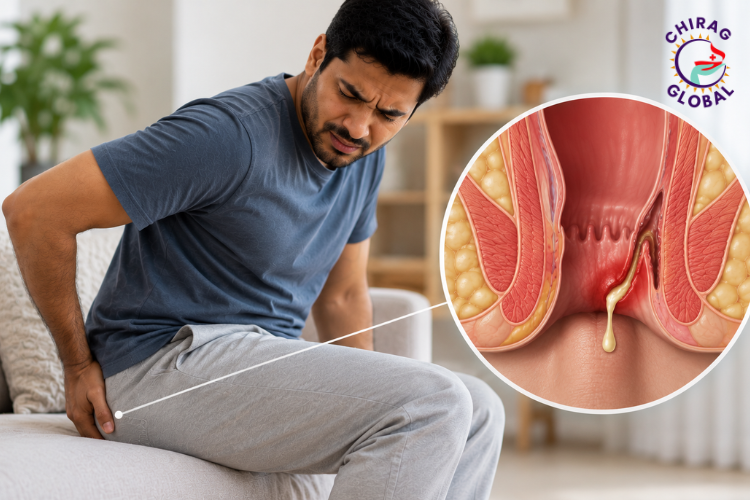
Anal fistula discharge is a common symptom of a fistula-in-ano. It may appear as pus, blood-stained fluid, mucus-like material, or foul-smelling drainage from a small opening in the skin near the anus.
An anal fistula is an abnormal tunnel connecting the inside of the anal canal or rectum with the skin around the anus. Many anal fistulas develop after an anal abscess drains, leaving a persistent tract between the inside and outside.
The discharge may not occur continuously. It can disappear for a period and then return, particularly if the external opening temporarily closes while the underlying tract remains.
This means that less discharge or temporarily having no discharge does not necessarily mean the fistula has healed.
At Chirag Global Hospitals, persistent or recurring discharge around the anus can be evaluated to determine whether it is related to an anal fistula, a recurrent abscess, or another anorectal condition.
Book a Consultation | Call 08065903127
What Does Anal Fistula Discharge Look Like?
The appearance of discharge can vary depending on the fistula and whether there is an associated infection or abscess.
It may be:
- Yellow or cream-colored
- Greenish in some infections
- Thick and pus-like
- Thin or watery
- Blood-stained
- Mucus-like
- Foul-smelling
Some people notice only a small spot of fluid on their underwear or toilet paper, while others may experience more noticeable drainage.
However, the appearance of discharge alone cannot confirm an anal fistula. A physical examination is needed to determine the underlying cause.
Why Does an Anal Fistula Produce Discharge?
An anal fistula creates an abnormal pathway between the anal canal and the surrounding skin.
When the tract remains open, fluid or infected material can drain through the external opening. This is often related to the infection that originally caused the fistula.
An anal abscess is a collection of infected fluid or pus. When an abscess drains, either spontaneously or after treatment, a tunnel may remain between the anal canal and the skin. This persistent tract can continue to produce intermittent drainage.
Some people may notice a pattern such as:
Swelling → pain → discharge → temporary relief → discharge stops → swelling or pain returns
This cycle does not necessarily mean that the condition is resolving.
Is Pus Discharge From the Anus Always a Fistula?
No.
Pus or unusual discharge around the anus can have several possible causes, including:
- Anal fistula
- Perianal abscess
- Infected wound
- Hidradenitis suppurativa
- Certain inflammatory bowel conditions
- Other skin or anorectal infections
An anal fistula may be suspected when a small external opening repeatedly drains pus or blood, particularly in someone with a previous anal abscess.
However, the color or consistency of the discharge cannot reliably establish the diagnosis. Medical examination is important when drainage persists or repeatedly returns.
Why Does Fistula Discharge Smell Bad?
Foul-smelling discharge can occur because an anal fistula may connect with the anal canal, where bacteria and intestinal contents are naturally present.
Some fistulas can produce an unpleasant odor, particularly when there is infected material or ongoing drainage.
However, odor alone does not indicate how severe or complex a fistula is. A relatively small fistula may produce unpleasant-smelling drainage, while a more complex fistula may sometimes produce little visible discharge.
What Does Blood in Fistula Discharge Mean?
An anal fistula can sometimes produce blood-stained discharge.
A small amount of blood may result from irritation of the fistula tract or surrounding skin. However, bleeding around the anus has many possible causes, including hemorrhoids, anal fissures, infections, and other conditions.
Persistent, recurrent, or heavy bleeding should therefore be medically assessed rather than automatically attributed to a fistula.
Why Does Fistula Discharge Come and Go?
Intermittent discharge is a feature of some anal fistulas.
The external opening may remain open for a period, allowing fluid to drain. It may then temporarily close.
When this happens, fluid or infected material can accumulate within the tract, potentially resulting in renewed swelling, pressure, pain, or an abscess.
You may notice a pattern such as:
Discharge → reduced pressure and pain → opening closes → swelling or pain → discharge returns
This cycle can repeat.
Therefore, a period without discharge should not automatically be taken as proof that the fistula has healed.
Is It Normal for Discharge to Stop After an Anal Fistula?
It can happen, but it should not automatically be considered a sign of recovery.
If drainage stops because the fistula has genuinely healed, symptoms should not continue to recur. However, if the external opening closes while the tract remains, fluid can become trapped and contribute to recurrent swelling, pressure, pain, or abscess formation.
If you previously had regular discharge and then develop increasing pain or swelling after the discharge stops, seek medical assessment.
The combination of increasing pain, swelling, and fever may indicate an abscess or infection requiring prompt evaluation.
Does More Discharge Mean a More Serious Fistula?
Not necessarily.
The amount of discharge does not reliably indicate the complexity or severity of an anal fistula.
Treatment depends on factors such as:
- Location of the internal opening
- Path of the fistula tract
- Relationship of the tract to the anal sphincter muscles
- Presence of multiple branches
- Presence of an abscess
- Previous fistula treatment or recurrence
- Underlying conditions such as Crohn’s disease
MRI or other imaging may be considered when a fistula is complex, recurrent, hidden, or difficult to identify clinically.
Therefore, a small amount of discharge does not necessarily indicate a simple fistula, and heavy drainage does not automatically mean the fistula is complex.
Can Fistula Discharge Cause Skin Irritation?
Yes.
Repeated moisture and drainage can irritate the skin surrounding the external opening.
You may experience:
- Itching
- Burning
- Redness
- Soreness
- Moisture around the anus
- Skin irritation
Keeping the area gently clean and dry can help reduce discomfort.
Avoid repeatedly scrubbing the area or applying strongly fragranced soaps, antiseptics, or other irritating products unless specifically recommended by your healthcare professional.
What Can You Do About Fistula Discharge at Home?
Home care may help with comfort and skin hygiene, but it does not eliminate an established anal fistula.
Keep the Area Clean
Gently clean the area after bowel movements and avoid aggressive rubbing.
Keep the Skin Dry
If there is regular drainage, a clean absorbent pad or gauze may help protect clothing and reduce prolonged moisture against the skin.
Wear Comfortable Clothing
Loose, breathable underwear and clothing may reduce friction and moisture.
Warm Water May Provide Comfort
Warm baths can help relieve discomfort and gently clean the area. However, they should be considered supportive care rather than a treatment that closes the fistula.
Do Not Squeeze the Opening
Trying to force pus out of the fistula can injure the surrounding tissue and does not eliminate the underlying tract.
Do Not Puncture the Area
A recurring lump or painful swelling should be assessed by a healthcare professional rather than opened at home.
Can Antibiotics Stop Fistula Discharge?
Antibiotics may be appropriate in certain situations, particularly when an infection is present, but they generally do not eliminate the underlying fistula tract.
An anal fistula is a structural tunnel rather than simply a surface infection. Treatment therefore depends on the fistula’s anatomy and whether an abscess or underlying condition is present.
Do not take leftover antibiotics or start antibiotic treatment without medical advice.
Does Anal Fistula Discharge Mean Surgery Is Needed?
An established anal fistula often requires a procedure because it may not heal permanently on its own.
However, the specific treatment varies depending on the fistula’s anatomy.
Possible treatment approaches include:
- Fistulotomy
- Seton placement
- LIFT
- Advancement flap
- Endoscopic techniques
- Laser-based techniques
- Other sphincter-preserving procedures in selected cases
The choice depends significantly on how the fistula relates to the anal sphincter muscles. The treatment goal is to address the fistula while minimizing the risk of affecting bowel control.
A procedure that is suitable for a simple fistula may not be appropriate for a complex fistula.
What If the Fistula Is Draining Before Treatment?
Drainage can reduce pressure and may temporarily make symptoms feel better.
That does not necessarily mean the fistula has been cured.
Some people experience reduced pain after an abscess drains because pressure has decreased. However, the underlying abnormal connection may remain.
If you have already been diagnosed with an anal fistula, continue with the treatment plan recommended by your colorectal or proctology specialist even if the discharge temporarily decreases.
What Tests May Be Needed for an Anal Fistula?
Diagnosis often begins with a detailed medical history and examination of the area around the anus.
A doctor may look for:
- An external opening
- Drainage
- Redness
- Swelling
- Scarring
- Tenderness
- Signs of a previous abscess
Depending on the situation, additional evaluation may include proctoscopy or imaging.
MRI, ultrasound, or CT may be considered when a fistula is complex, recurrent, hidden, or associated with conditions such as Crohn’s disease.
The purpose of imaging is not simply to confirm that discharge exists. It can help identify and map the fistula tract and assist with treatment planning.
When Is Fistula Discharge an Emergency?
Discharge alone does not always require emergency care.
However, seek urgent medical attention if discharge is accompanied by:
- Increasing or severe anal pain
- Rapidly developing swelling
- Fever or chills
- Feeling significantly unwell
- Increasing redness or warmth
- Heavy bleeding
- Difficulty passing urine
- Rapid worsening of symptoms
These symptoms can indicate an abscess or significant infection.
A fistula opening that becomes blocked can allow infected material to accumulate. Therefore, a sudden change from routine drainage to severe pain and swelling should not be ignored.
Can Crohn’s Disease Cause Anal Fistula Discharge?
Yes.
Crohn’s disease can affect the area around the anus and is one possible condition associated with anal fistulas.
If a person has recurrent or multiple fistulas along with symptoms such as chronic diarrhea, abdominal pain, weight loss, or other signs suggestive of inflammatory bowel disease, a doctor may consider whether Crohn’s disease could be contributing.
This can be particularly important when fistulas recur despite treatment.
What Is the Difference Between Fistula Discharge and Anal Fissure Bleeding?
Anal fistulas and anal fissures can both cause symptoms around the anus, but they are different conditions.
| Feature | Anal Fistula | Anal Fissure |
| Main problem | Abnormal tunnel between the anal canal and skin | Tear in the anal lining |
| Typical discharge | Pus, fluid, or blood-stained drainage may occur | Discharge is not usually the main symptom |
| Pain | May be persistent or throbbing, particularly with an abscess | Often sharp or burning during and after bowel movements |
| External opening | May be present | Usually absent |
| Swelling | May occur, especially with an abscess | Usually not the main feature |
| Main concern | Persistent tract and recurrent infection | Failure of the tear to heal |
These are general differences rather than a way to diagnose yourself. Persistent anal symptoms should be assessed by a healthcare professional.
Conclusion
Anal fistula discharge may appear as pus, blood-stained fluid, mucus-like material, or foul-smelling drainage from a small opening near the anus. It can occur because an anal fistula creates a persistent abnormal pathway between the anal canal and the surrounding skin.
One of the most important things to understand is that discharge coming and going does not necessarily mean the fistula is healing. The external opening can temporarily close while the underlying tract remains.
If discharge repeatedly returns, particularly after a previous anal abscess, evaluation by a colorectal or proctology specialist is advisable.
At Chirag Global Hospitals, patients with persistent anal discharge, recurring swelling, pain, or suspected fistula can undergo appropriate evaluation to determine the underlying cause and discuss suitable treatment options.
Visit Chirag Global Hospitals Today!
Frequently Asked Questions
What does anal fistula discharge look like?
It may be yellow, cream-colored, watery, mucus-like, or blood-stained. Some people may also notice a foul smell. The appearance can vary between individuals.
Why does my anal fistula discharge keep coming back?
An anal fistula is an abnormal tunnel that can continue to produce drainage. The external opening may temporarily close and then reopen, allowing discharge to return.
Is pus discharge from the anus always an anal fistula?
No. An abscess, infected wound, skin condition, inflammatory bowel disease, and other anorectal problems can also cause pus or unusual drainage. An examination is needed for an accurate diagnosis.
Does fistula discharge mean the infection is going away?
Not necessarily. Drainage may temporarily reduce pressure and discomfort, but it does not mean that the underlying fistula has healed.
Can an anal fistula heal without surgery?
Some fistulas may behave differently depending on their cause and anatomy, but an established anal fistula often requires a procedure for definitive treatment. The appropriate approach depends on its location, complexity, and relationship with the sphincter muscles.
Can anal fistula discharge contain blood?
Yes. An anal fistula can sometimes cause blood-stained drainage. Persistent or significant bleeding should be evaluated because several conditions can cause bleeding around the anus.
What should I do if fistula discharge suddenly stops?
Do not automatically assume that the fistula has healed. If discharge stops and you subsequently develop increasing pain, swelling, or fever, seek medical attention because an abscess may have developed.
When should I see a doctor for anal fistula discharge?
See a doctor if discharge persists or repeatedly returns, particularly if you have an external opening, a previous anal abscess, pain, swelling, or blood in the drainage. Urgent assessment is appropriate when severe pain, fever, chills, rapidly increasing swelling, or significant bleeding develops.