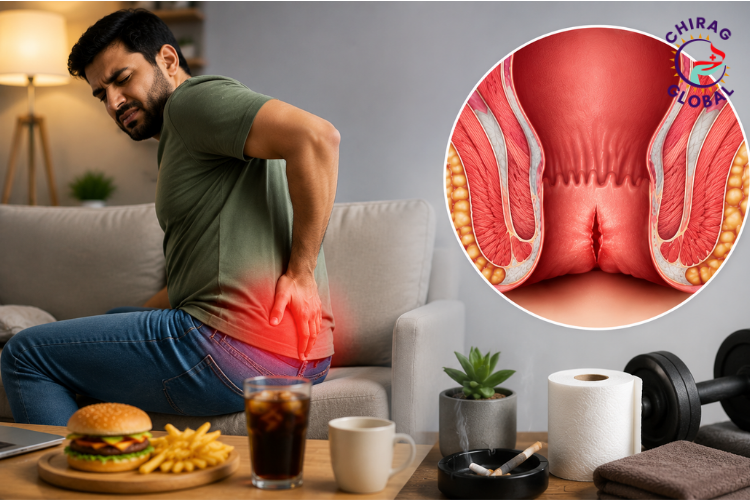

Constipation is often treated as a minor digestive problem, especially when it happens occasionally. But when difficult or infrequent bowel movements continue for a long time, the effects can extend beyond simply feeling uncomfortable during a trip to the toilet.
Persistent constipation can influence the way the bowel functions, increase pressure around the anus and pelvis, interfere with daily activities, and contribute to complications such as hemorrhoids and anal fissures. In more severe cases, stool can become severely impacted and difficult to pass without medical assistance.
Understanding the effects of constipation on the body can help people recognise when an apparently routine bowel problem deserves medical attention.
At Chirag Global Hospitals, Bangalore, persistent constipation can be evaluated to identify contributing factors and determine whether there is an underlying bowel or anorectal condition requiring treatment.
Book a Consultation | Call 08065903127
Constipation Is More Than a Bowel-Movement Problem
The digestive system is connected to several other processes in the body. When stool remains in the colon for longer than usual, more water can be absorbed from it, potentially making the stool harder and more difficult to pass.
This can create a cycle in which:
Hard stool → difficult bowel movement → straining → discomfort → delaying the next bowel movement → harder stool
If this pattern continues, the consequences can become more significant.
The impact also depends on how long constipation has been present, its underlying cause, the severity of symptoms, and the individual’s overall health.
1. The Colon Has to Deal With Increasingly Harder Stool
One of the earliest effects of ongoing constipation is a change in stool consistency.
When stool moves slowly through the colon, water continues to be absorbed. The stool can therefore become:
- Dry
- Hard
- Compact
- Difficult to pass
This can make each bowel movement more demanding and may encourage repeated straining.
In some people, long-standing constipation can also affect normal bowel habits and the sensation of needing to empty the bowel.
2. Constipation Can Create a Straining Cycle
Repeated straining is one of the most important ways constipation can affect the anorectal region.
When a person repeatedly pushes forcefully to pass hard stool, pressure increases around the blood vessels and tissues of the anus and rectum.
Over time, this may contribute to or aggravate conditions such as:
- Hemorrhoids
- Anal fissures
- Rectal discomfort
The problem can become self-perpetuating. Pain caused by an anal fissure, for example, may make someone reluctant to pass stool, potentially worsening constipation.
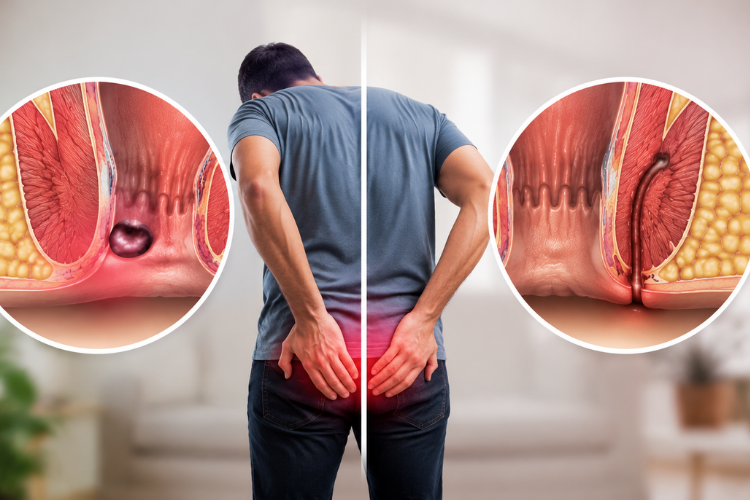
3. Hemorrhoids May Become More Troublesome
Hemorrhoids are swollen vascular structures in the anal and lower rectal region.
Constipation does not explain every case of hemorrhoids, but repeated straining and hard bowel movements can aggravate existing hemorrhoids and may contribute to their development.
Possible symptoms include:
- Bright-red rectal bleeding
- Itching
- Swelling
- Discomfort
- A lump around the anus
- Prolapse in more advanced cases
If rectal bleeding occurs repeatedly, it should not automatically be assumed to be caused by hemorrhoids. A medical evaluation may be needed to establish the cause.
4. Anal Fissures Can Develop
A hard or bulky stool can stretch and injure the delicate lining of the anal canal.
This may result in an anal fissure, which is a small tear that can cause considerable pain.
A fissure may lead to:
Pain → fear of bowel movements → stool retention → harder stool → further irritation
This cycle can make both constipation and fissure symptoms more difficult to manage.
5. Severe Constipation Can Lead to Fecal Impaction
One of the more serious consequences of prolonged constipation is fecal impaction.
This occurs when a large, hardened mass of stool becomes lodged in the rectum or colon and cannot be passed normally.
Possible features include:
- Significant abdominal discomfort
- Bloating
- Difficulty passing stool
- Rectal fullness
- Straining without successful bowel movement
- Nausea
- Occasionally, loose stool leaking around the impacted mass
Fecal impaction may require medical treatment to safely remove the retained stool.
6. The Abdomen Can Feel Distended and Uncomfortable
Constipation can cause the abdomen to feel:
- Bloated
- Full
- Tight
- Uncomfortable
Retained stool and increased intestinal contents can contribute to this sensation.
Some people describe feeling heavier or unusually full even when they have not eaten a large meal.
If abdominal distension is severe, persistent, or accompanied by vomiting or significant pain, medical assessment is important.
7. Appetite May Change
Persistent constipation can affect appetite in some people.
A person may feel full or uncomfortable because bowel contents are not moving normally. This can make eating less appealing.
A persistent reduction in appetite should not automatically be attributed to constipation, particularly if it occurs alongside unexplained weight loss, vomiting, abdominal pain, or other concerning symptoms.
8. Nausea Can Occur
Constipation can sometimes be accompanied by nausea, particularly when stool retention is significant.
Mild nausea may occur alongside bloating and abdominal discomfort.
However, persistent vomiting with severe constipation is a warning sign because it can occur with significant bowel obstruction or other serious abdominal conditions.
9. Constipation Can Affect the Pelvic Region
The rectum sits within the pelvis alongside organs involved in urinary and reproductive function.
A heavily loaded rectum can sometimes contribute to pressure in the pelvic region.
This may be particularly relevant in people with severe or long-standing constipation.
Pelvic pressure, however, has many possible causes. Persistent pelvic symptoms should therefore be evaluated rather than automatically blamed on constipation.
10. Urinary Symptoms May Sometimes Occur
Severe stool retention can place pressure on nearby structures, including the bladder.
In some situations, this may contribute to urinary symptoms.
People with constipation may notice changes such as:
- Increased urinary frequency
- Difficulty emptying the bladder
- A feeling of pelvic pressure
Urinary symptoms have many causes, so they should be medically assessed when persistent or significant.
11. Constipation Can Interfere With Daily Activities
The effects are not always limited to physical symptoms.
Persistent abdominal discomfort, bloating, urgency, or difficulty passing stool can become distracting during:
- Work
- Travel
- Exercise
- Social activities
- Sleep
Some people may also spend excessive amounts of time in the bathroom or plan their day around bowel movements.
This can affect overall quality of life even when there is no serious complication.
12. Sleep and Rest May Be Disturbed
Abdominal discomfort, bloating, or the sensation of needing to pass stool can make it difficult for some people to relax at night.
If constipation is accompanied by pain from hemorrhoids or an anal fissure, nighttime discomfort may become more noticeable.
Poor sleep can then make daytime fatigue and irritability more noticeable.
13. Physical Activity May Become More Difficult
A bloated or uncomfortable abdomen can make physical activity less appealing.
Some people reduce exercise because they feel uncomfortable, which can create another cycle:
Constipation → discomfort → less activity → slower bowel movement → constipation
Maintaining appropriate physical activity can therefore be useful for overall bowel health.
14. Chronic Constipation Can Affect Bowel Habits
Repeatedly postponing bowel movements or relying on excessive straining can interfere with healthy toilet habits.
Over time, some people may become accustomed to delaying bowel movements or spending prolonged periods on the toilet.
Constipation can therefore become a recurring pattern rather than an occasional episode.
Understanding the underlying reason for persistent constipation is more useful than repeatedly treating individual episodes without addressing the cause.
15. Severe Constipation Can Cause Overflow Diarrhoea
This may seem contradictory, but severe stool retention can sometimes be associated with loose stool leaking around an impacted mass.
A person may therefore believe they have diarrhoea when the underlying problem is actually stool impaction.
This is one reason unusual changes in bowel movements should be assessed if they occur alongside a history of prolonged constipation.
Key Takeaway
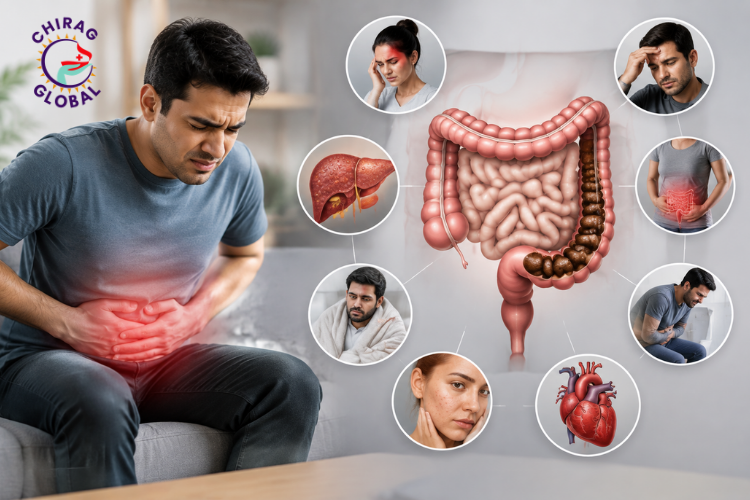
The effects of constipation on the body can extend well beyond difficulty passing stool. Persistent constipation can contribute to hard stools, abdominal discomfort, straining, hemorrhoids, anal fissures, fecal impaction, and disruption of normal bowel habits.
The goal should not simply be to tolerate constipation until it becomes uncomfortable. Addressing persistent bowel changes early can help reduce the likelihood of complications and may reveal an underlying condition that needs treatment.
If constipation keeps returning, becomes progressively worse, or occurs with bleeding, severe pain, vomiting, unexplained weight loss, or inability to pass stool or gas, professional medical evaluation is important.
Visit Chirag Global Hospitals Today!
Frequently Asked Questions
What are the main effects of constipation on the body?
Constipation can contribute to hard stools, abdominal discomfort, bloating, straining, hemorrhoids, anal fissures, and, in severe cases, fecal impaction. Persistent constipation may also interfere with daily activities and bowel habits.
Can constipation affect the whole body?
Constipation primarily affects the digestive and anorectal systems, but severe or persistent symptoms can also influence appetite, activity, sleep, comfort, and sometimes urinary function.
Can constipation cause hemorrhoids?
Constipation and repeated straining can aggravate hemorrhoids and may contribute to their development, although hemorrhoids have multiple possible causes.
Can constipation cause an anal fissure?
Yes. Passing hard or bulky stool can injure the anal lining and contribute to an anal fissure.
Can constipation cause nausea?
It can, particularly when stool retention is significant. Persistent vomiting or severe abdominal symptoms require prompt medical assessment.
Can constipation affect the bladder?
Severe stool retention can sometimes place pressure on nearby pelvic structures and contribute to urinary symptoms. Persistent urinary problems should be evaluated separately.
Is chronic constipation dangerous?
Chronic constipation is not always dangerous, but untreated persistent constipation can lead to complications such as hemorrhoids, fissures, fecal impaction, and significant bowel discomfort.
When should I see a doctor for constipation?
Seek medical advice when constipation is persistent, recurrent, difficult to manage, or accompanied by bleeding, severe abdominal pain, vomiting, unexplained weight loss, fever, or inability to pass stool or gas.