

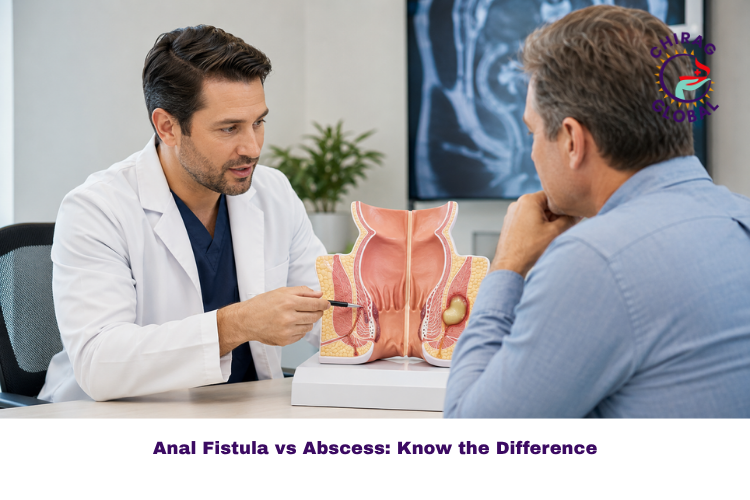
Pain, swelling, and discomfort around the anus can be caused by several colorectal conditions, but two of the most commonly confused are an anal abscess and an anal fistula. Although these conditions are closely related, they are not the same. An anal abscess is an active infection filled with pus, while an anal fistula is an abnormal tunnel that often develops after an abscess has drained or been treated.
At Chirag Global Hospitals, Bangalore, colorectal specialists frequently diagnose and treat both conditions. Understanding the difference between anal fistula vs abscess can help patients recognize symptoms early and seek timely medical care before complications develop.
This article explains what each condition is, how they differ, their symptoms, causes, diagnosis, treatment options, and when you should consult a specialist.
Book a Consultation | Call 08065903127
Anal Fistula vs Abscess: Understanding the Main Difference
The simplest way to understand anal fistula vs abscess is:
- Anal abscess = An active infection filled with pus.
- Anal fistula = A tunnel left behind after the infection.
An abscess is often the beginning of the disease process, while a fistula is a possible long-term complication if the infected tract remains.
Symptoms of an Anal Abscess
An anal abscess usually develops quickly.
Common symptoms include:
- Severe throbbing pain around the anus
- Swelling
- Redness
- Warm skin over the affected area
- Fever
- Chills
- Pain while sitting
- Pain during bowel movements
- Difficulty walking
- Pus drainage if the abscess bursts
The pain is often continuous and may worsen with movement.
Symptoms of an Anal Fistula
Symptoms of an anal fistula are usually different because the infection has already created a tunnel.
Common symptoms include:
- Persistent pus discharge
- Recurrent swelling
- Repeated abscess formation
- Small opening near the anus
- Skin irritation
- Mild to moderate pain
- Pain during bowel movements
- Foul-smelling drainage
- Blood-stained discharge
Unlike an abscess, the symptoms may come and go over time.
Why Does an Anal Abscess Develop?
An anal abscess usually develops because bacteria infect one of the anal glands.
Possible contributing factors include:
- Blocked anal glands
- Bacterial infection
- Crohn’s disease
- Diabetes
- Reduced immunity
- Trauma to the anal region
- Certain sexually transmitted infections (less common)
Anyone can develop an anal abscess, although some people have a higher risk.
Why Does an Anal Fistula Develop?
Most anal fistulas occur after an anal abscess.
When the abscess drains, either naturally or through surgery, the infected tract may fail to heal completely.
This leaves a tunnel connecting the anal canal to the surrounding skin.
Other causes include:
- Crohn’s disease
- Tuberculosis (rare)
- Previous anal surgery
- Radiation therapy
- Trauma
However, the majority of fistulas are linked to previous abscesses.
Anal Fistula vs Abscess: Symptom Comparison
| Feature | Anal Abscess | Anal Fistula |
| Main problem | Collection of pus | Abnormal tunnel |
| Onset | Sudden | Usually gradual |
| Pain | Severe and throbbing | Mild to moderate, may recur |
| Swelling | Common | May occur during flare-ups |
| Fever | Common | Less common unless infected |
| Pus discharge | May occur if abscess bursts | Persistent or recurring |
| Skin opening | Usually absent initially | Usually present |
| Recurrence | Possible | Often recurrent without treatment |
Can an Anal Abscess Turn Into a Fistula?
Yes. This is one of the most important facts patients should know.
Even after successful drainage of an abscess, some patients develop an anal fistula because the internal tract remains.
Not every abscess becomes a fistula, but the risk is significant enough that follow-up with a colorectal specialist is important.
How Are Anal Abscesses Treated?
Treatment for an abscess focuses on eliminating the infection.
Management may include:
- Surgical drainage of the pus
- Pain management
- Antibiotics in selected patients
- Wound care
- Follow-up to monitor healing
Simply taking antibiotics is often not enough because the pus usually needs to be drained.
How Are Anal Fistulas Treated?
Treatment aims to remove the fistula while protecting normal bowel control.
Depending on the type of fistula, management may include:
- Fistulotomy
- Seton placement
- Advancement flap procedures
- LIFT (Ligation of the Intersphincteric Fistula Tract) procedure
- Other sphincter-preserving techniques
The choice of treatment depends on the fistula’s location, complexity, and involvement of the anal sphincter muscles.
Can These Conditions Heal Without Treatment?
Anal Abscess
No. Although an abscess may occasionally burst and drain on its own, the infection often persists and requires medical evaluation.
Anal Fistula
No. An anal fistula rarely closes permanently without appropriate treatment because the abnormal tract remains.
Ignoring symptoms may lead to repeated infections.
Can Anal Abscesses and Fistulas Be Prevented?
Although prevention is not always possible, you may reduce your risk by:
- Maintaining good anal hygiene
- Managing constipation and diarrhea
- Seeking early treatment for anorectal infections
- Following medical advice if you have Crohn’s disease
- Attending follow-up appointments after abscess drainage
Early intervention may reduce the likelihood of complications.
Conclusion
Understanding the difference between anal fistula vs abscess is important because, although these conditions are closely related, they require different approaches to treatment. An anal abscess is an acute bacterial infection that causes severe pain, swelling, and pus formation, whereas an anal fistula is a chronic tunnel that often develops after an abscess has healed incompletely. Ignoring either condition can lead to recurrent infections, persistent drainage, and ongoing discomfort.
If you experience severe anal pain, swelling, fever, or recurring pus discharge, consulting the colorectal specialists at Chirag Global Hospitals, Bangalore, can help ensure an accurate diagnosis and timely treatment, reducing the risk of complications and supporting a smoother recovery.
Visit Chirag Global Hospitals Today!
Frequently Asked Questions
Is an anal abscess the same as an anal fistula?
No. An anal abscess is a collection of infected pus, while an anal fistula is an abnormal tunnel that often develops after an abscess.
Can every anal abscess become a fistula?
No. While many fistulas develop after an abscess, not every abscess leads to fistula formation.
Is an anal fistula always painful?
Not always. Some fistulas cause only mild discomfort but produce persistent or recurrent drainage.
Can antibiotics cure an anal abscess?
Antibiotics alone are usually insufficient because the pus often needs to be surgically drained.
Why does my abscess keep coming back?
Recurring abscesses may indicate an underlying anal fistula that has not yet been diagnosed or treated.