
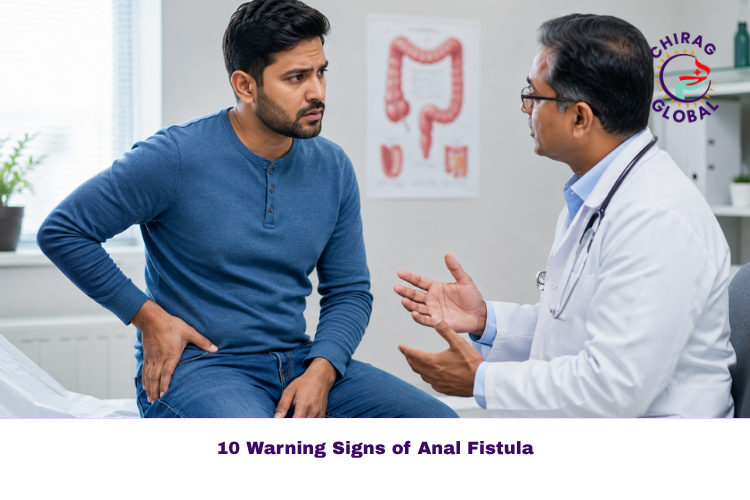
Many people dismiss discomfort around the anal area as piles, a skin infection, or a temporary irritation. However, some symptoms can point to a more serious condition known as an anal fistula. Recognizing the Warning Signs of Anal Fistula early is important because delaying medical attention can lead to repeated infections, persistent pain, and complications that may require more extensive treatment.
At Chirag Global Hospitals, Bangalore, colorectal specialists frequently evaluate patients who have ignored early symptoms, assuming they would resolve on their own. In reality, an anal fistula rarely heals without appropriate medical care. Knowing what warning signs to watch for can help you seek timely evaluation and avoid unnecessary discomfort.
In this article, we’ll discuss the most common warning signs of an anal fistula, why they occur, and when they require immediate medical attention.
Book a Consultation | Call 08065903127
What Is an Anal Fistula?
An anal fistula is a small tunnel that develops between the inside of the anal canal and the skin surrounding the anus. It most commonly forms after an anal abscess that does not heal completely. As the infection creates a pathway to drain, a fistula develops, leading to recurring symptoms.
While the condition is treatable, the symptoms often become more noticeable over time if left unattended.
1. Persistent Throbbing Pain Around the Anus
One of the earliest and most noticeable Warning Signs of Anal Fistula is constant pain around the anus.
Unlike temporary discomfort that improves within a day or two, fistula-related pain tends to persist and may gradually worsen.
You may notice the pain becomes more intense while:
- Sitting for long periods
- Walking
- Climbing stairs
- Passing stools
- Coughing or straining
Some people describe the pain as a deep throbbing sensation that doesn’t completely disappear, even after taking pain medication.
2. Recurrent Anal Abscesses
If you’ve experienced an anal abscess more than once, it should never be ignored.
A painful swelling near the anus that repeatedly fills with pus is one of the strongest Warning Signs of Anal Fistula.
Common symptoms include:
- Painful lump
- Redness
- Swelling
- Warm skin
- Difficulty sitting
Many patients believe the problem is solved once the abscess drains, but repeated abscesses often indicate that an underlying fistula remains.
3. Continuous or Foul-Smelling Discharge
Persistent drainage from the skin near the anus is another hallmark symptom.
The discharge may appear as:
- Yellow pus
- Greenish fluid
- Blood-stained discharge
- Thick fluid with an unpleasant odor
You may notice stains on your underwear or feel the need to clean the area frequently throughout the day.
Although drainage sometimes reduces pain by releasing pressure, it should never be mistaken for healing.
4. A Small Opening or Hole Near the Anus
One of the easiest warning signs to overlook is a tiny opening on the skin near the anus.
This opening may:
- Leak pus occasionally
- Close temporarily
- Reopen days or weeks later
- Become swollen again
Many people mistake it for a pimple or ingrown hair, allowing the fistula to progress unnoticed.
5. Swelling That Keeps Coming Back
A lump near the anus that repeatedly appears and disappears may indicate a chronic infection beneath the skin.
The swelling may initially be small but can gradually become larger and more painful.
Recurring swelling usually means the infection hasn’t completely resolved and requires evaluation by a colorectal specialist.
6. Bleeding Along With Discharge
While bleeding alone can occur in conditions such as piles, bleeding combined with pus or persistent drainage is one of the important Warning Signs of Anal Fistula.
You may notice:
- Blood on toilet paper
- Blood mixed with pus
- Light bleeding after sitting
- Occasional spotting on underwear
This symptom deserves prompt medical attention, especially when accompanied by pain or swelling.
7. Persistent Itching and Skin Irritation
Continuous drainage keeps the surrounding skin moist, which can lead to irritation.
Symptoms include:
- Constant itching
- Burning sensation
- Redness
- Skin peeling
- Rash around the anus
Applying creams may temporarily reduce itching, but they won’t address the underlying fistula causing the irritation.
8. Pain While Sitting or Walking
As inflammation worsens, everyday activities become increasingly uncomfortable.
Many patients report:
- Difficulty sitting through meetings
- Pain while driving
- Discomfort during long walks
- Pain while cycling
- Difficulty exercising
Pain that interferes with normal daily activities should never be considered normal.
9. Fever, Chills, or Feeling Unwell
An infected fistula may cause symptoms beyond the anal region.
These include:
- Fever
- Chills
- Fatigue
- Weakness
- Loss of appetite
These signs may indicate that the infection is becoming more severe and requires immediate medical evaluation.
10. Symptoms That Improve but Keep Returning
One of the most misleading Warning Signs of Anal Fistula is temporary improvement.
Many patients notice:
- Pain decreases after pus drains.
- Swelling disappears for a few days.
- Symptoms seem completely gone.
However, weeks later, the pain, swelling, and discharge return.
This cycle often continues because the fistula tract remains underneath the skin. Temporary relief should never be mistaken for permanent healing.
Why You Shouldn’t Ignore These Warning Signs
Ignoring the Warning Signs of Anal Fistula may increase the risk of:
- Repeated infections
- Chronic pain
- Larger abscesses
- Multiple fistula tracts
- More complex surgical treatment
- Reduced quality of life
Seeking medical attention early often leads to a quicker diagnosis and better treatment outcomes.
When Do These Warning Signs Require Immediate Medical Attention?
While any persistent symptom should be evaluated, certain situations require prompt medical care.
Consult a specialist immediately if you experience:
- Severe or worsening anal pain
- High fever with swelling
- Continuous pus discharge
- Rapidly increasing redness
- Difficulty sitting or walking due to pain
- Recurrent abscesses in the same location
- Persistent bleeding along with discharge
Delaying evaluation may allow the infection to spread or make the fistula more complex.
Listen to What Your Body Is Telling You
The body often provides warning signs long before a condition becomes severe. Persistent pain, recurring swelling, continuous discharge, skin irritation, or repeated abscesses around the anus are not symptoms that should be ignored or considered a normal part of daily life.
If you notice any of these Warning Signs of Anal Fistula, seeking medical evaluation at the earliest can help prevent repeated infections and unnecessary discomfort. At Chirag Global Hospitals, Bangalore, experienced colorectal specialists provide comprehensive evaluation and personalized care for patients with anal fistulas, ensuring an accurate diagnosis and an appropriate treatment plan based on individual needs.
Conclusion
Recognizing the Warning Signs of Anal Fistula can make a significant difference in preventing ongoing pain, recurrent infections, and complications. Symptoms such as persistent anal pain, foul-smelling discharge, recurring abscesses, swelling, skin irritation, or a small opening near the anus are the body’s way of signaling that something may be wrong. Rather than waiting for the symptoms to worsen or repeatedly treating them at home, seeking timely medical evaluation is the safest approach.
If you’re experiencing any of these warning signs, the colorectal specialists at Chirag Global Hospitals, Bangalore, can provide a thorough assessment and guide you toward the most appropriate care, helping you return to your daily routine with greater comfort and confidence.
Visit Chirag Global Hospitals Today!
Frequently Asked Questions
What is the first warning sign of an anal fistula?
Persistent throbbing pain around the anus, especially after an anal abscess, is often one of the earliest warning signs.
Can an anal fistula come and go?
The symptoms may temporarily improve when the fistula drains, but they usually return if the underlying tract remains.
Is pus discharge always a sign of an anal fistula?
Not always. However, recurring pus discharge, especially with pain or swelling, should be evaluated by a specialist.
Can I ignore mild symptoms?
Even mild symptoms that persist or keep recurring should not be ignored, as anal fistulas rarely heal without medical treatment.
When should I visit a doctor for fistula treatment?
If you have persistent anal pain, repeated swelling, discharge, bleeding, or fever, consult a colorectal specialist as soon as possible.