
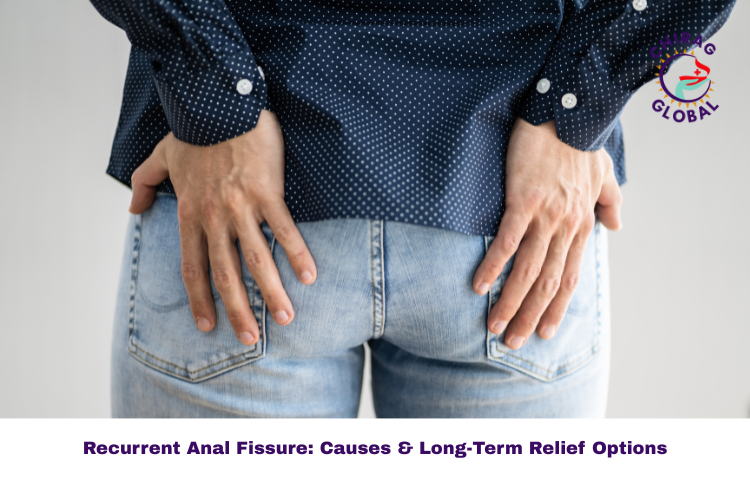
Recurrent anal fissure is one of the most common yet misunderstood anorectal problems seen in Bangalore today. Many patients experience temporary relief, only to face the same sharp pain, bleeding, and discomfort again after a few weeks or months. This repeated cycle leaves people confused, anxious, and unsure about the right treatment approach.
At Chirag Global Hospitals, known as the Best Colo – Rectal Hospital of India, colorectal specialists in Bangalore regularly treat patients who have been struggling with fissure recurrence for long periods. Understanding why an anal fissure keeps coming back is the key to achieving permanent relief.
If anal fissure pain keeps returning, book a consultation with a fissure specialist at Chirag Global Hospitals in Bangalore to explore long-term solutions.
What Is a Recurrent Anal Fissure?
An anal fissure is a small tear in the lining of the anal canal. When this tear does not heal completely or reopens repeatedly, it becomes a recurrent anal fissure.
When Is an Anal Fissure Considered Recurrent?
An anal fissure is labeled recurrent when:
- Pain and bleeding return after initial healing
- Symptoms persist beyond 6–8 weeks
- The fissure reopens with every hard bowel movement
- Temporary treatments fail repeatedly
Lifestyle patterns such as irregular meals, dehydration, and long sitting hours significantly contribute to fissure recurrence.
Why Does Anal Fissure Keep Coming Back?
1. Persistent Constipation and Hard Stools
The most common reason for recurrent anal fissure is ongoing constipation. Hard stools repeatedly stretch the healing tissue, causing the fissure to tear again.
Factors worsening constipation in Bangalore include:
- Low fiber diets
- Insufficient water intake
- Sedentary work culture
- Irregular eating habits
Unless bowel habits are corrected permanently, fissure recurrence is very likely.
2. Increased Anal Sphincter Muscle Spasm
In recurrent anal fissure, the anal sphincter muscle becomes excessively tight. This spasm:
- Reduces blood flow to the fissure
- Delays healing
- Causes severe pain during bowel movements
Without relaxing this muscle, fissure recurrence cannot be prevented.
3. Incomplete Healing of the Initial Fissure
Many patients stop treatment once pain reduces, assuming the fissure is healed. In reality, the tear may still be fragile.
Incomplete healing leads to:
- Reopening of the fissure
- Scar tissue formation
- Chronic pain cycles
Specialist follow-up at a colorectal hospital in Bangalore is crucial to confirm complete healing.
4. Over-Reliance on Home Remedies
Home remedies may reduce symptoms but rarely treat the root cause of recurrent anal fissure.
Common limitations include:
- Temporary symptom relief
- No effect on muscle spasm
- Delayed medical consultation
At Chirag Global Hospitals, doctors often see advanced fissure recurrence due to delayed specialist care.
Symptoms of Recurrent Anal Fissure
People suffering from recurrent anal fissure typically experience:
- Severe pain during bowel movements
- Burning pain lasting hours after passing stool
- Bright red bleeding
- Tightness or spasm sensation
- Fear of using the toilet
These symptoms often worsen over time if proper treatment is delayed.
Why Anal Fissure Becomes Chronic
An anal fissure becomes chronic when:
- It lasts longer than 6–8 weeks
- There is repeated reopening of the wound
- Scar tissue forms at the fissure site
- Pain becomes persistent
Chronic fissures almost always indicate fissure recurrence and require advanced treatment beyond basic ointments.
Diagnosis of Recurrent Anal Fissure in Bangalore
At Chirag Global Hospitals, Bangalore, diagnosing recurrent anal fissure focuses on accuracy and patient comfort.
Evaluation includes:
- Gentle clinical examination
- Assessment of sphincter muscle tightness
- Review of bowel habits
- Identification of recurrence triggers
Early diagnosis significantly improves treatment success and prevents further fissure recurrence.
Best Treatment Options for Recurrent Anal Fissure
Non-Surgical Treatment for Early Recurrence
For mild or early recurrent anal fissure, treatment may include:
- Prescription muscle-relaxing ointments
- Stool softeners
- Fiber and hydration plans
- Bowel retraining techniques
These are carefully monitored to prevent further recurrence.
Advanced Treatment for Chronic Recurrent Anal Fissure
When fissure recurrence continues despite medication, minimally invasive procedures are recommended.
Effective options include:
- Lateral Internal Sphincterotomy (LIS)
- Laser treatment for anal fissure
- Botox injection to relax sphincter muscle
These treatments are safely performed at Chirag Global Hospitals, widely recognized as the Best Colo – Rectal Hospital of India.
Recovery and Prevention of Fissure Recurrence
Long-term prevention after treatment includes:
- Maintaining soft, regular stools
- Adequate daily water intake
- High-fiber diet
- Avoiding prolonged straining
- Regular follow-up visits
Chirag Global Hospitals provides structured post-treatment care plans to minimize the risk of anal fissure recurrence.
FAQs – Recurrent Anal Fissure Treatment in Bangalore
1. Why does my anal fissure heal and then come back?
Recurrent anal fissure usually occurs due to muscle spasm or repeated constipation that prevents complete healing.
2. Can recurrent anal fissure heal without surgery?
Early recurrence may heal with advanced medications, but chronic fissure recurrence often needs minimally invasive procedures.
3. Is fissure treatment painful?
Modern fissure treatments are designed to minimize pain and promote faster healing.
4. How long does it take to recover from fissure surgery?
Most patients recover within a few days and resume normal activities soon.
5. Why is Chirag Global Hospitals trusted for recurrent anal fissure treatment?
Because of its specialized colorectal expertise, advanced treatments, and patient-focused care in Bangalore.