
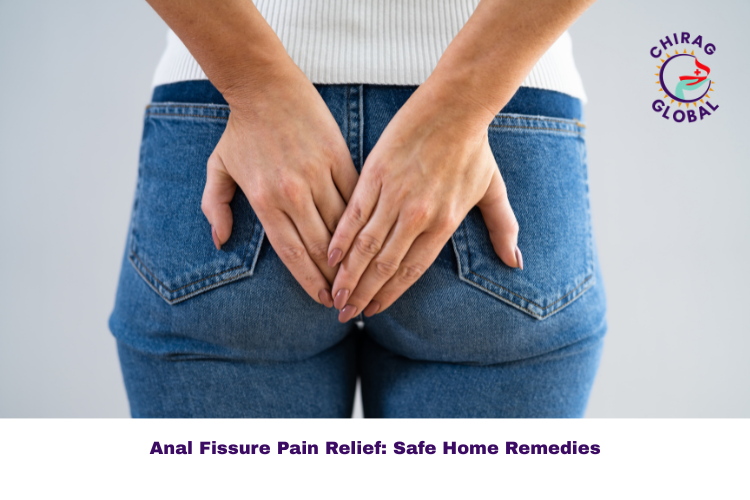
If you have an anal fissure, you already know how much it affects daily life. The sharp, burning pain during a bowel movement can last for minutes to hours afterward. And then, just when it starts to ease — it is time for the next one. The anticipation alone becomes its own kind of stress.
At Chirag Global Hospital, our proctologists understand how disruptive a fissure is. This guide gives you safe, doctor-approved steps for anal fissure pain relief at home — to help you manage discomfort while you arrange the right treatment. We will also tell you clearly when home measures are no longer sufficient.
| Don’t let an acute fissure become a chronic one. Early care makes all the difference.👉 Book your consultation at Chirag Global Hospital |
Why Does an Anal Fissure Cause Such Intense Pain?
Fissures are acute (less than 6 weeks — may heal with care) or chronic (more than 6 weeks — almost always need medical or surgical treatment).
Home Steps for Anal Fissure Pain Relief
1. Warm Sitz Baths — Twice a Day
A sitz bath involves sitting in a shallow basin of warm (not hot) water for 15–20 minutes. For anal fissure pain relief, this is the single most effective non-surgical measure available. Warm water relaxes the internal sphincter, temporarily breaking the spasm and improving blood flow to the healing tissue. Do this first thing in the morning, once in the afternoon, and within 15 minutes of every bowel movement.
Plain warm water is fine. Avoid soap, bubble bath, or scented products — all will irritate the already tender tissue.
2. Make Stools Softer — Aggressively
Hard stools re-tear the fissure with every bowel movement, cancelling any healing that happened overnight. For meaningful anal fissure pain relief, stool consistency is as critical as any cream or bath. Start all of these immediately:
• 25–30 g of dietary fibre daily — whole wheat rotis, rajma, oats, guava, pear with skin
• 2.5–3 litres of water daily — fibre without water hardens stools further
• Avoid spicy food, red meat, and alcohol — all constipating or irritating to inflamed tissue
3. Apply Natural Soothing Remedies
Certain natural remedies can help soothe irritation and support skin healing.
Common options include:
- Coconut oil – moisturizes and reduces friction
- Aloe vera gel – cools the area and reduces inflammation
- Petroleum jelly – creates a protective barrier during bowel movements
Apply gently after cleaning the area with warm water.
4. Maintain Good Hygiene
Keeping the area clean prevents infection and irritation.
Helpful habits include:
- Wash the area with lukewarm water after bowel movements
- Pat dry gently instead of rubbing
- Avoid scented soaps or harsh wipes
- Wear loose cotton underwear to keep the area dry
Proper hygiene helps the fissure heal without complications.
5. Avoid Straining During Bowel Movements
Straining increases pressure on the anal muscles and worsens the tear.
To prevent this:
- Go to the toilet as soon as you feel the urge
- Avoid sitting on the toilet for long periods
- Try a footstool under your feet to maintain a natural squatting posture
This posture helps stools pass more easily.
6. Stay Physically Active
Light daily movement improves digestion and prevents constipation.
Good activities include:
- Walking
- Gentle yoga
- Stretching exercises
Even 20–30 minutes of walking daily can support better bowel function.
What NOT to Do — Common Mistakes That Delay Healing
• Do not apply steroid creams (like betamethasone) without a prescription — steroids suppress the body’s natural healing response
• Do not ignore heavy or dark bleeding from the anal area — this needs urgent medical evaluation, not home treatment
• Do not self-diagnose — rectal bleeding has causes other than a fissure, some requiring urgent assessment
When Home Measures Are Not Enough
If your fissure has been present for more than 6 weeks, or keeps healing and re-opening, surgery becomes the appropriate next step. While Lateral sphincterotomy is usually done, we at Chirag have developed our in-house technique to relax the sphincters without cutting them.
Frequently Asked Questions
How long does an acute fissure take to heal at home?
An acute fissure can heal within 4–8 weeks with consistent sitz baths, stool softening, and topical creams. Healing is faster when stool consistency is addressed aggressively from day one.
Is it safe to use lignocaine cream every day?
Short-term use for up to 2 weeks before bowel movements is safe. For longer management, your doctor will prescribe a vasodilator cream (GTN or diltiazem) which is more appropriate for sustained use.
Does a fissure always need surgery?
No. Acute fissures often heal without surgery with correct management. Chronic fissures (more than 6 weeks) with underlying infection almost always require surgery
Can stress worsen a fissure?
Stress does not directly cause fissures but contributes to irregular bowel habits, reduced water intake, and altered diet — all of which worsen constipation and delay healing.
| 📍 Find Chirag Global Hospital – Directions & Contact |
| View on Google Maps 📞 Call/WhatsApp: 08065916422 | 🌐 chiragglobalhospital.com |