

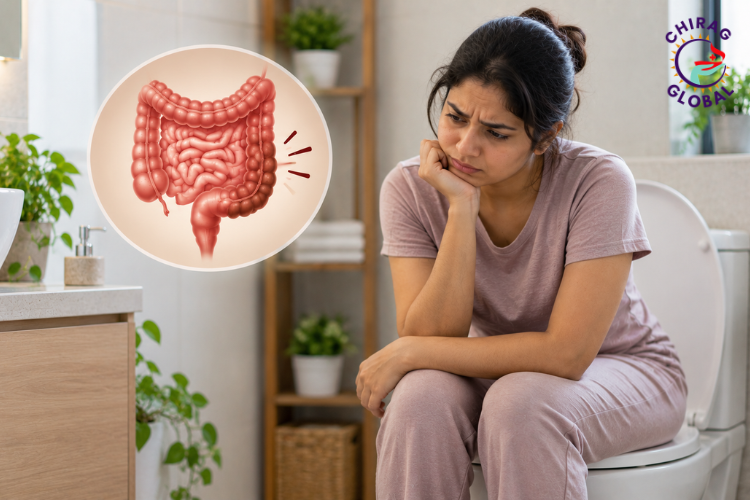
Constipation is often associated with a simple explanation: not eating enough fiber. But what if you are already eating fruits, vegetables, whole grains, and other fiber-rich foods and still struggle to have regular bowel movements?
If you keep wondering, “Why am I always constipated?”, the answer may not be your food alone. Constipation can result from several factors, including inadequate fluid intake, low physical activity, ignoring the urge to pass stool, certain medicines, changes in routine, slow movement of stool through the colon, pelvic-floor problems, or underlying health conditions.
At Chirag Global Hospitals, persistent constipation is approached by looking beyond individual foods and understanding the possible underlying reason for ongoing bowel changes.
Book a Consultation | Call 08065903127
What Does Constipation Actually Mean?
Constipation does not simply mean that you do not have a bowel movement every day. Bowel habits vary between individuals.
Constipation may involve:
- Having fewer than three bowel movements in a week
- Passing hard, dry, or lumpy stools
- Straining or experiencing pain while passing stool
- Feeling that your bowel has not completely emptied
- Experiencing bloating or abdominal discomfort
Some people may have bowel movements relatively often but still be constipated if their stools are difficult to pass or they consistently feel that their bowel has not emptied completely.
Why Am I Always Constipated Even When I Eat Healthy?
Eating a healthy diet is important, but it is only one part of healthy bowel function. If constipation continues despite dietary changes, several other factors may need to be considered.
1. You May Not Be Getting Enough Fluids
Fiber absorbs water and helps form softer stools. If you significantly increase fiber without getting enough fluids, your bowel movements may not improve as expected.
Fluid requirements vary depending on factors such as body size, activity level, health conditions, climate, and other individual circumstances. Rather than relying on one fixed amount for everyone, your fluid intake should be appropriate for your personal needs.
If you eat plenty of fiber but routinely drink very little water or other fluids, dehydration may contribute to harder stools.
2. Your Body May Need More Physical Activity
Movement can help support normal bowel function. Spending most of the day sitting, having a sedentary lifestyle, or becoming less active can contribute to constipation.
Regular physical activity does not necessarily mean intense exercise. Consistent movement, such as walking, may be helpful for some people with constipation.
3. You May Be Ignoring the Urge to Go
Repeatedly delaying bowel movements can interfere with regular bowel habits.
Some people postpone using the toilet because they are working, travelling, attending school, or uncomfortable using public bathrooms. Over time, repeatedly ignoring the urge may make it harder to establish a predictable bowel routine.
When you feel the urge to have a bowel movement, try to respond rather than repeatedly postponing it.
4. Your Toilet Routine May Be Working Against You
The way and timing in which you use the toilet can also affect bowel habits.
Giving yourself enough time, avoiding excessive straining, and maintaining a regular toilet routine may help. Some people find that trying to have a bowel movement after breakfast is useful because eating can stimulate colon movement.
A small footstool can also help position the knees higher than the hips, which may make passing stool easier for some people.
5. Your Medicines or Supplements Could Be Contributing
Some medications and supplements can cause or worsen constipation.
Examples include certain:
- Iron supplements
- Calcium-containing antacids
- Medicines used for depression
- Medicines used for Parkinson’s disease
- Anticonvulsants
- Pain medicines, particularly opioid medicines
- Other medicines that can affect intestinal movement
If constipation started after beginning a new medication or supplement, discuss it with your doctor rather than stopping the medicine yourself.
6. You May Have a Slow-Transit Problem
Sometimes the issue is not what you are eating but how quickly stool moves through the colon.
In some people, the colon moves stool more slowly than normal. This can result in infrequent bowel movements and persistent constipation despite reasonable dietary and lifestyle habits.
Long-standing constipation may therefore require evaluation rather than simply adding more fiber.
7. Your Pelvic Floor Muscles May Not Be Coordinating Properly
Passing stool requires coordinated relaxation and contraction of several muscles.
Some people have a pelvic-floor disorder in which the muscles involved in bowel movements do not relax or coordinate properly. This can cause difficulty emptying the rectum, excessive straining, or a persistent feeling that stool remains after using the toilet.
In these situations, simply eating more fiber may not solve the underlying problem.
8. Irritable Bowel Syndrome With Constipation May Be Involved
Irritable bowel syndrome, or IBS, can cause constipation along with abdominal pain and changes in bowel habits.
People with IBS may experience constipation, diarrhea, or alternating bowel patterns. Bloating and a feeling of incomplete bowel evacuation can also occur.
If constipation regularly occurs alongside abdominal pain and bloating, it is worth discussing the pattern with a healthcare professional rather than assuming it is only a dietary issue.
9. Certain Medical Conditions Can Cause Persistent Constipation
Constipation can sometimes be associated with an underlying health condition.
Examples include:
- Diabetes
- Hypothyroidism
- Celiac disease
- Certain neurological conditions
- Disorders affecting the digestive tract
- Some structural problems involving the bowel or rectum
This does not mean that persistent constipation automatically indicates a serious disease. However, when symptoms continue despite reasonable self-care, identifying the cause becomes more important.
Can Eating Too Much Fiber Make Constipation Worse?
More fiber is not always better.
Adults generally need around 22–34 grams of fiber per day, depending on age and sex. Fiber should generally be increased gradually because suddenly adding large amounts can cause gas, bloating, and discomfort. Adequate fluid intake is also important when increasing fiber.
For someone who is already consuming plenty of fiber, continually adding more may not address the actual reason for constipation.
The better question may be: Is the problem fiber intake, fluid intake, bowel habits, medication, colon movement, or difficulty emptying the rectum?
What Can You Do If Constipation Keeps Coming Back?
If your constipation is mild and you do not have warning signs, several habits may help.
Build a Balanced Diet
Include fiber-rich foods such as vegetables, fruits, legumes, whole grains, nuts, and seeds. Increase fiber gradually rather than making a sudden large change.
Drink Enough Fluids
Adequate fluid intake helps fiber work effectively and may make stools easier to pass. Your individual fluid needs can vary.
Stay Physically Active
Regular movement can support bowel regularity. Even incorporating walking into your daily routine may be useful.
Do Not Ignore the Urge
Try to use the toilet when you feel the need instead of repeatedly delaying bowel movements.
Establish a Routine
A consistent toilet routine, particularly after meals, may help some people develop more regular bowel habits.
Review Your Medicines
If constipation began after starting a medication or supplement, discuss the possibility with your doctor or pharmacist. Do not stop prescribed medication without medical advice.
When Should You See a Doctor for Persistent Constipation?
If you are regularly constipated despite making appropriate diet and lifestyle changes, it is reasonable to seek medical evaluation.
You should particularly speak with a healthcare professional if constipation is accompanied by:
- Blood in the stool or rectal bleeding
- Unexplained weight loss
- Persistent or severe abdominal pain
- Repeated bloating
- Vomiting
- Fever
- Inability to pass gas
- A sudden change in bowel habits
- Persistent fatigue
- Constipation that does not improve with self-care
Some of these symptoms can indicate a condition that requires prompt evaluation.
How Is the Cause of Chronic Constipation Evaluated?
When constipation persists, a doctor may look at the overall pattern rather than focusing only on diet.
The evaluation may include questions about:
- How often you pass stool
- Stool consistency
- How long you have been constipated
- Whether you strain
- Whether you feel incompletely emptied
- Your diet and fluid intake
- Physical activity
- Medicines and supplements
- Previous abdominal or bowel surgery
- Family medical history
- Other digestive symptoms
Depending on the situation, a physical examination, blood tests, imaging, colonoscopy, or specialized bowel-function tests may be considered.
Tests such as anorectal manometry, balloon expulsion testing, or colorectal transit studies can help evaluate certain causes of long-standing constipation.
Is Chronic Constipation Always Caused by Food?
No.
Food can certainly influence bowel movements, particularly fiber and fluid intake, but persistent constipation can have multiple causes.
A person may eat a healthy diet and still experience constipation because of low activity, inadequate hydration, medication side effects, slow intestinal transit, pelvic-floor dysfunction, IBS, or another medical condition.
This is why repeatedly changing foods without understanding the underlying pattern may not provide lasting relief.
Can Long-Term Constipation Cause Problems?
Persistent constipation can affect quality of life and may sometimes lead to complications.
One possible complication is fecal impaction, in which hard stool becomes stuck in the rectum. In some cases, watery stool can leak around the impacted stool and may be mistaken for diarrhea.
Chronic straining may also contribute to anorectal problems such as hemorrhoids.
If constipation is persistent, addressing the underlying cause can be more useful than repeatedly treating individual episodes.
Conclusion
If you keep asking, “Why am I always constipated no matter what I eat?”, the answer may be that your bowel problem is not caused by food alone.
A healthy diet, adequate fluids, physical activity, and good toilet habits are important foundations. But persistent constipation can also be related to medications, IBS, slow movement of stool through the colon, pelvic-floor dysfunction, or other medical conditions.
When constipation keeps returning despite reasonable lifestyle changes, identifying the underlying cause is more useful than continually adding or removing individual foods. A proper medical evaluation can help determine why your bowel movements remain difficult and what treatment is appropriate for your situation.
At Chirag Global Hospitals, persistent bowel and colorectal symptoms can be evaluated with attention to the underlying cause rather than treating constipation as only a dietary problem.
Visit Chirag Global Hospitals Today!
Frequently Asked Questions
Why Am I Always Constipated Even Though I Eat Vegetables?
Vegetables provide fiber, but constipation can have causes beyond diet. Low fluid intake, inactivity, medications, ignoring the urge to pass stool, slow bowel movement, pelvic-floor problems, or certain medical conditions may contribute.
Why Does My Constipation Not Improve After Increasing Fiber?
Fiber may not be the main problem. Increasing fiber too quickly can also cause bloating and discomfort. Adequate fluids and gradual dietary changes are important, while persistent constipation may require evaluation for other causes.
How Often Should a Healthy Person Have a Bowel Movement?
There is no single number that applies to everyone. Constipation is generally considered when bowel movements occur fewer than three times a week, or when stools are hard, difficult to pass, or associated with incomplete evacuation. Individual bowel patterns can vary.
Can Drinking More Water Alone Cure Chronic Constipation?
Not necessarily. Adequate fluids can help, particularly when combined with sufficient fiber, but chronic constipation may have other causes that require specific treatment.
Can Medicines Cause Constipation?
Yes. Several medicines and supplements can contribute to constipation, including some iron supplements, calcium-containing antacids, certain antidepressants, anticonvulsants, and opioid pain medicines. A doctor or pharmacist can help determine whether a medicine may be contributing.
When Should Persistent Constipation Be Checked by a Doctor?
If constipation is frequent, long-lasting, does not improve with appropriate self-care, or is accompanied by bleeding, unexplained weight loss, abdominal pain, vomiting, fever, inability to pass gas, or sudden bowel-habit changes, medical evaluation is important.