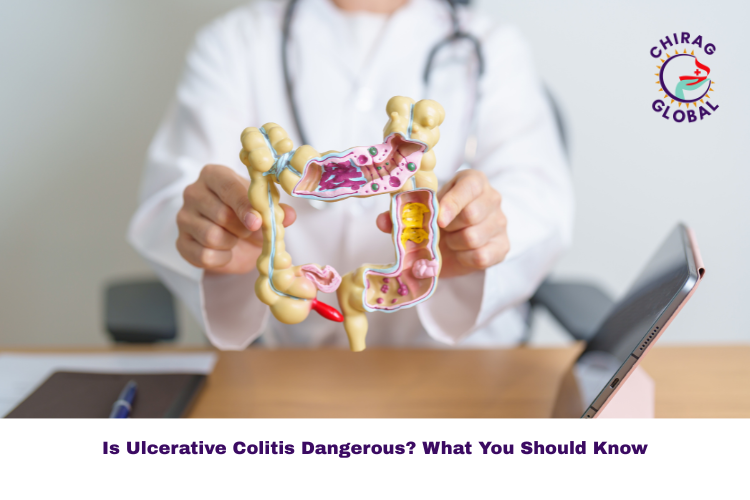


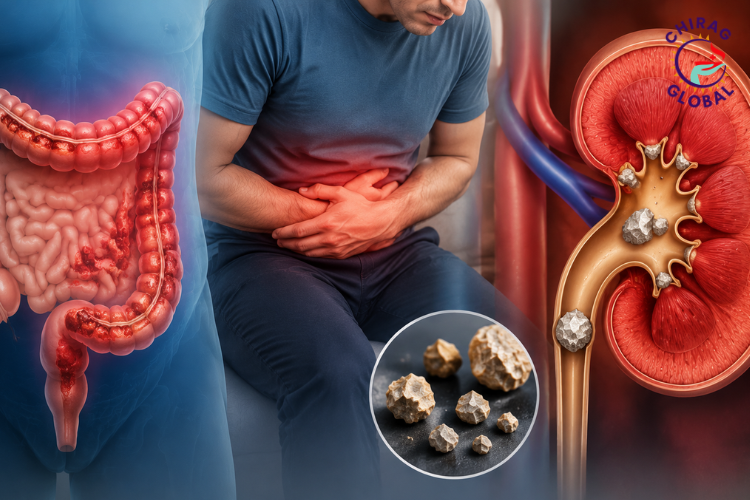
Ulcerative colitis (UC) is a chronic inflammatory bowel disease that primarily affects the lining of the large intestine. Although its main symptoms involve the digestive system, ulcerative colitis can also be associated with health problems outside the bowel.
One question people with UC may have is: Can ulcerative colitis cause kidney stones?
The answer is that people with ulcerative colitis may have an increased risk of developing kidney stones, although kidney stones are not a direct symptom of UC itself. Factors such as frequent diarrhoea, dehydration, changes in fluid and electrolyte balance, dietary changes, certain medications, and previous intestinal surgery may contribute to this risk in some individuals.
Understanding the possible connection between ulcerative colitis and kidney stones can help people recognise urinary symptoms early and seek appropriate care.
At Chirag Global Hospitals, Bangalore, patients experiencing ulcerative colitis symptoms along with urinary problems can receive appropriate evaluation to identify possible causes and determine suitable management.
Book a Consultation | Call 08065903127
What Are Kidney Stones?
Kidney stones are hard, crystal-like deposits that develop when certain substances in urine become concentrated and form crystals.
Kidney stones can vary in size. Some are small and may pass through the urinary tract without significant symptoms, while larger stones can become lodged and cause pain or urinary obstruction.
Common types of kidney stones include:
- Calcium-based stones
- Uric acid stones
- Struvite stones
- Cystine stones
The composition of a kidney stone can influence why it formed and how future stones may be prevented.
Is There a Direct Link Between Ulcerative Colitis and Kidney Stones?
There is no simple cause-and-effect relationship in which ulcerative colitis directly produces kidney stones.
Instead, some people with UC may have circumstances that make stone formation more likely.
One possible pathway is:
Frequent diarrhoea → fluid loss → dehydration → concentrated urine → increased potential for crystal formation
This may be particularly relevant during periods of active disease when diarrhoea is frequent or prolonged.
However, kidney stone formation is influenced by many factors. Developing a kidney stone does not necessarily mean that ulcerative colitis was the cause.
Why Might People With Ulcerative Colitis Develop Kidney Stones?
Several factors may contribute to kidney stone risk in people with UC.
Dehydration From Diarrhoea
Frequent diarrhoea can result in substantial fluid loss.
If lost fluids are not adequately replaced, urine can become more concentrated. Higher concentrations of certain substances in urine can increase the potential for crystal formation.
Maintaining appropriate hydration is therefore particularly important during periods of increased bowel activity.
Changes in Fluid and Electrolyte Balance
Diarrhoea can cause the loss of both fluids and electrolytes.
Significant or repeated fluid loss can alter the body’s overall fluid balance and may affect urine composition. In some people, these changes may contribute to conditions that favour kidney stone formation.
Not everyone with diarrhoea will develop kidney stones, but persistent fluid loss can increase the importance of maintaining adequate hydration.
Changes in Diet
People with ulcerative colitis may modify their diet to manage digestive symptoms.
Depending on the individual’s food choices and restrictions, this may alter intake of nutrients and substances such as:
- Calcium
- Protein
- Fibre
- Oxalate-containing foods
- Fluids
Highly restrictive diets may also create nutritional gaps if they are not properly planned.
People who have eliminated multiple food groups because of UC should consider discussing their nutritional requirements with a healthcare professional or qualified dietitian.
Increased Urinary Concentration
When the body loses significant amounts of fluid, the kidneys conserve water.
This can result in a smaller volume of more concentrated urine.
When urine is highly concentrated, certain substances may be more likely to form crystals, potentially contributing to stone formation.
Previous Intestinal Surgery
Some people with severe ulcerative colitis undergo surgery involving the colon.
Changes to the gastrointestinal tract following certain procedures can affect fluid and electrolyte handling and may influence the risk of kidney stones in some individuals.
The degree of risk depends on the type of surgery and the individual’s overall health.
What Symptoms Could Suggest a Kidney Stone?
Kidney stones may remain unnoticed when they are small or are not obstructing urine flow.
When a stone moves through the urinary tract or causes irritation or obstruction, symptoms may include:
- Sharp pain in the side or back
- Pain that spreads toward the lower abdomen or groin
- Pain that comes and goes in waves
- Burning or pain during urination
- Frequent urination or an increased urge to urinate
- Blood in the urine
- Nausea
- Vomiting
Symptoms can vary significantly. Some people experience severe pain, while others may have relatively mild symptoms.
Kidney Stone Symptoms vs Ulcerative Colitis Symptoms
Because ulcerative colitis can already cause abdominal discomfort, it may sometimes be difficult to determine whether new pain is related to the bowel or urinary tract.
| Ulcerative Colitis | Kidney Stones |
| Diarrhoea is common | Urinary symptoms may occur |
| Blood or mucus may occur in stool | Blood may occur in urine |
| Abdominal cramps | Sharp flank or back pain |
| Urgency to pass stool | Urgency or frequency of urination |
| Rectal bleeding may occur | Pain may radiate toward the groin |
| Symptoms are often associated with bowel movements | Pain may occur in waves |
These are general patterns rather than diagnostic rules. New, severe, or unexplained symptoms should be medically evaluated.
Can Kidney Stones Make UC Symptoms Worse?
Kidney stones do not directly cause ulcerative colitis flares.
However, having kidney stones and UC at the same time can make overall symptoms more difficult to manage.
Kidney stones may cause:
- Significant pain
- Nausea
- Reduced appetite
- Vomiting
- Difficulty maintaining normal fluid intake
- Physical stress
When kidney stone symptoms occur alongside diarrhoea from UC, maintaining adequate hydration may become particularly challenging.
Does Every Person With UC Need to Worry About Kidney Stones?
No.
Having ulcerative colitis does not mean that a person will necessarily develop kidney stones.
The overall risk can depend on factors such as:
- Hydration
- Frequency and severity of diarrhoea
- Dietary pattern
- Previous kidney stones
- Family history
- Certain medications
- Previous bowel surgery
- Individual metabolic or urinary factors
Ulcerative colitis is therefore only one part of the overall risk picture.
How Can People With UC Reduce Kidney Stone Risk?
There are several practical measures that may help reduce risk, depending on individual circumstances.
Prioritise Adequate Hydration
Maintaining adequate fluid intake can help prevent urine from becoming excessively concentrated.
This can be particularly important during periods of frequent diarrhoea.
People experiencing significant fluid loss may also need appropriate electrolyte replacement based on professional advice.
Avoid Becoming Severely Dehydrated
Do not wait until you are extremely thirsty before considering fluid intake, particularly during periods of increased bowel activity.
If diarrhoea is severe or persistent and you are unable to replace lost fluids, seek medical advice.
Avoid Unnecessary Dietary Restrictions
People with UC sometimes eliminate multiple foods because they are concerned about triggering symptoms.
However, unnecessary dietary restriction can make it harder to meet nutritional requirements.
Dietary changes should ideally be based on individual tolerance and discussed with a healthcare professional or qualified dietitian when significant restrictions are involved.
Manage Ulcerative Colitis Effectively
Appropriate management of UC can help control disease activity and reduce episodes of prolonged diarrhoea.
Follow the treatment plan recommended by your gastroenterologist.
Do not stop or change prescribed UC medication without medical advice.
What Happens If a Kidney Stone Is Suspected?
A healthcare professional may assess your:
- Pain pattern
- Urinary symptoms
- Fluid intake
- History of kidney stones
- UC activity
- Medications
- Previous bowel surgery
- Overall medical history
Depending on the symptoms, investigations may include urine tests, blood tests, and imaging.
Urine Testing
Urinalysis may help identify blood, signs of infection, or other abnormalities.
Blood Tests
Blood tests may be used to assess kidney function and identify certain abnormalities that may be relevant to stone formation.
Imaging
Ultrasound or CT imaging may be used when a kidney stone, obstruction, or another urinary problem needs to be identified.
The appropriate tests depend on the individual’s symptoms and clinical circumstances.
How Are Kidney Stones Treated?
Treatment depends on factors such as:
- Stone size
- Stone location
- Stone composition
- Degree of obstruction
- Presence of infection
- Overall health
Small stones may sometimes pass naturally with appropriate medical management.
Larger, obstructing, or complicated stones may require a procedure.
Treatment options can include:
- Medical management to support stone passage
- Shock-wave treatment in selected cases
- Ureteroscopy
- Other minimally invasive procedures
- Surgical treatment in specific circumstances
A urologist can determine the most appropriate treatment based on the stone and the patient’s condition.
When Is a Kidney Stone an Emergency?
Seek urgent medical attention if kidney stone symptoms occur with:
- Fever
- Chills
- Persistent vomiting
- Severe or worsening pain
- Difficulty passing urine
- Very low urine output
- Signs of infection
A blocked urinary tract combined with infection can become a serious medical problem and requires prompt treatment.
People with UC who have significant diarrhoea and cannot maintain adequate fluid intake should also seek medical advice because severe dehydration can affect kidney function.
Can Ulcerative Colitis Affect Kidney Function?
Ulcerative colitis primarily affects the colon, but people with inflammatory bowel disease can sometimes experience health problems outside the digestive tract.
Kidney-related concerns may be associated with factors such as:
- Dehydration
- Kidney stones
- Certain medications
- Changes in fluid or electrolyte balance
- Other associated conditions
This is why persistent urinary symptoms should not automatically be assumed to be part of a UC flare.
What About Ulcerative Colitis Medications?
Some medications used to manage inflammatory bowel disease can affect kidney function in certain circumstances.
This does not mean that patients should stop taking their medication.
Instead, prescribed medicines should be taken as directed, and recommended monitoring should be followed.
If you develop new urinary symptoms, reduced urine output, swelling, or other unusual symptoms, inform your healthcare professional.
When Should Someone With UC Discuss Kidney Stones With a Doctor?
People with ulcerative colitis should consider medical evaluation if they experience:
- Recurrent flank or back pain
- Blood in the urine
- Burning during urination
- Recurrent urinary problems
- A history of kidney stones
- Frequent dehydration
- Persistent diarrhoea
- Difficulty maintaining adequate fluid intake
Early assessment can help determine whether symptoms are related to a kidney stone, UC activity, dehydration, medication, infection, or another condition.
Ulcerative Colitis Care at Chirag Global Hospitals, Bangalore
At Chirag Global Hospitals, Bangalore, patients with ulcerative colitis can receive evaluation and ongoing care based on their symptoms, disease activity, and individual health needs.
When urinary symptoms or suspected kidney stones occur alongside UC, appropriate assessment can help identify possible contributing factors such as dehydration, urinary stones, medication-related concerns, infection, or other conditions.
Managing ulcerative colitis appropriately, maintaining adequate hydration, and addressing persistent urinary symptoms early can be important parts of protecting overall digestive and kidney health.
Key Takeaway
So, can ulcerative colitis cause kidney stones?
Not directly in every case, but people with ulcerative colitis may have factors that increase their susceptibility to kidney stones.
Frequent diarrhoea can lead to fluid loss and dehydration, which may make urine more concentrated. Dietary changes, previous intestinal surgery, certain medications, and individual metabolic factors may also influence kidney stone risk.
If you have UC and develop sharp flank pain, blood in the urine, painful urination, persistent vomiting, fever, or difficulty passing urine, seek medical evaluation rather than assuming the symptoms are simply part of an ulcerative colitis flare.
Managing UC appropriately, maintaining adequate hydration, and addressing persistent urinary symptoms early can help support overall digestive and kidney health.
Visit Chirag Global Hospitals Today!
Frequently Asked Questions About Ulcerative Colitis and Kidney Stones
Can ulcerative colitis cause kidney stones?
Ulcerative colitis does not directly cause kidney stones in every patient. However, people with UC may have factors that increase stone risk, including dehydration from diarrhoea, dietary changes, previous bowel surgery, and certain medications.
Why does diarrhoea increase kidney stone risk?
Frequent diarrhoea can cause fluid loss. If the lost fluid is not adequately replaced, urine can become more concentrated, which may increase the potential for crystal formation.
Are kidney stones common in people with ulcerative colitis?
Kidney stones can occur in people with UC, but having ulcerative colitis does not mean that a person will necessarily develop them. Individual risk varies according to several factors.
Can dehydration from a UC flare affect the kidneys?
Yes. Significant dehydration can reduce the amount of fluid available to the kidneys and may impair kidney function in severe cases. Persistent or severe dehydration requires appropriate medical attention.
What does kidney stone pain feel like?
Kidney stone pain is often sharp and may affect the side or back. It can sometimes move toward the lower abdomen or groin and may come in waves.
Can kidney stones be mistaken for UC symptoms?
Yes. Abdominal discomfort can overlap, but urinary symptoms such as blood in the urine, painful urination, urinary frequency, or flank pain may indicate a urinary tract problem.
Should people with UC drink more water?
Maintaining adequate hydration is important, particularly when diarrhoea is present. Individual fluid requirements vary, so people with significant fluid loss should follow appropriate medical advice regarding fluid and electrolyte replacement.
Can UC medication cause kidney problems?
Some medicines used to treat inflammatory bowel disease can affect kidney function in certain patients. This is one reason why prescribed treatment should be taken under medical supervision and recommended monitoring should be followed.
Can kidney stones cause ulcerative colitis?
No. Kidney stones do not cause ulcerative colitis. They are separate conditions, although certain factors associated with UC may increase the risk of developing kidney stones.
Should someone with UC and kidney stone symptoms see a doctor?
Yes. New or unexplained urinary symptoms, particularly severe flank pain, blood in the urine, fever, persistent vomiting, or difficulty passing urine, should be evaluated by a healthcare professional.