

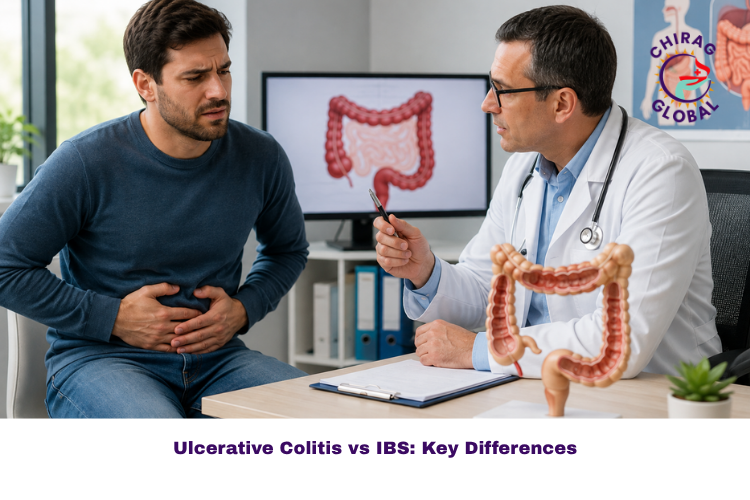
Abdominal discomfort, changes in bowel movements, diarrhoea, urgency, and bloating can occur in many digestive conditions. This can make it difficult to understand whether symptoms are related to irritable bowel syndrome (IBS) or a condition such as ulcerative colitis (UC).
Although ulcerative colitis vs IBS is a common comparison, these conditions are fundamentally different. IBS is a disorder of gut-brain interaction that affects how the digestive system functions, while ulcerative colitis is a chronic inflammatory bowel disease (IBD) in which inflammation affects the lining of the colon and rectum.
The distinction matters because their evaluation, long-term management, and treatment approaches are different.
At Chirag Global Hospitals, Bangalore, persistent bowel symptoms can be evaluated to determine whether they are more consistent with IBS, ulcerative colitis, or another gastrointestinal condition.
Book a Consultation | Call 08065903127
What Is IBS?
Irritable bowel syndrome (IBS) is a disorder involving the interaction between the gut and the nervous system.
IBS can affect bowel function without causing the type of visible intestinal inflammation associated with ulcerative colitis.
People with IBS may experience:
- Abdominal pain or discomfort
- Bloating
- Diarrhoea
- Constipation
- Alternating diarrhoea and constipation
- Changes in stool frequency
- Changes in stool consistency
- Urgency to pass stool
- Feeling of incomplete bowel emptying
IBS symptoms can fluctuate over time. Some people experience periods when symptoms are mild or absent followed by flare-ups.
What Is Ulcerative Colitis?
Ulcerative colitis is a chronic inflammatory bowel disease that causes inflammation and ulcers in the inner lining of the colon and rectum.
Unlike IBS, ulcerative colitis involves actual inflammation of the intestinal tissue.
Common symptoms may include:
- Persistent diarrhoea
- Blood in the stool
- Mucus in the stool
- Urgency to pass stool
- Abdominal cramps
- Rectal discomfort
- Frequent bowel movements
- Fatigue
- Reduced appetite
- Unintentional weight loss in some people
The severity and extent of ulcerative colitis can vary considerably.
Ulcerative Colitis vs IBS: The Main Difference
The most important difference is inflammation.
IBS
IBS does not cause the type of intestinal inflammation and tissue damage seen in ulcerative colitis.
Ulcerative Colitis
Ulcerative colitis causes inflammation of the colon and rectal lining and can result in ulcers.
This difference affects how doctors diagnose and treat the two conditions.
IBS vs UC: Comparison Table
| Feature | IBS | Ulcerative Colitis |
| Condition type | Disorder of gut-brain interaction | Inflammatory bowel disease |
| Intestinal inflammation | Not typical | Present |
| Abdominal pain | Common | Can occur |
| Diarrhoea | Common in IBS-D | Common |
| Constipation | Can occur | Less typical as the main symptom |
| Blood in stool | Not a typical IBS symptom | Common, particularly during active disease |
| Mucus | Can occur | Can occur |
| Urgency | Possible | Common |
| Weight loss | Not typical | Can occur |
| Fever | Not typical | May occur during significant inflammation |
| Tissue damage | Not characteristic | Can occur |
| Colonoscopy | Usually no visible inflammatory changes | May show inflammation and ulcers |
| Long-term monitoring | Depends on symptoms | Often required |
Symptoms can overlap, so a symptom checklist alone cannot reliably distinguish IBS from ulcerative colitis.
Does IBS Cause Weight Loss?
Significant unexplained weight loss is not typical of IBS.
Some people with IBS may change their eating habits because certain foods trigger symptoms, and this can sometimes affect weight.
However, unexplained or progressive weight loss combined with persistent bowel symptoms should be medically evaluated.
Ulcerative colitis can cause weight loss because active inflammation may affect appetite, nutrient intake, and overall health.
Can Ulcerative Colitis Cause Fatigue?
Yes.
Fatigue can occur in people with active ulcerative colitis.
Possible contributors include:
- Ongoing inflammation
- Blood loss
- Anaemia
- Poor nutritional intake
- Sleep disruption
- Increased metabolic demands during active disease
Fatigue is less characteristic of uncomplicated IBS.
Can Ulcerative Colitis Cause Constipation?
Although diarrhoea is more commonly associated with ulcerative colitis, some patients may experience constipation, particularly when inflammation affects the rectum.
Constipation-like symptoms should therefore not automatically exclude ulcerative colitis.
A person’s symptoms need to be interpreted in the context of their overall clinical picture.
What Causes IBS?
The exact cause of IBS is not completely understood.
Several factors may contribute, including:
- Altered gut-brain communication
- Changes in intestinal motility
- Increased sensitivity of the digestive tract
- Previous gastrointestinal infections
- Changes in the gut microbiome
- Stress and psychological factors
- Food-related triggers
IBS does not mean that symptoms are imaginary or simply “in the mind.” The symptoms are real and can significantly affect quality of life.
What Causes Ulcerative Colitis?
The exact cause of ulcerative colitis is also complex.
It is thought to involve interactions between:
- The immune system
- Genetics
- Gut microbiota
- Environmental factors
Ulcerative colitis is an immune-mediated inflammatory condition, but it is not simply caused by eating a particular food or experiencing everyday stress.
How Is IBS Treated?
IBS treatment focuses on controlling symptoms and improving quality of life.
Depending on the individual’s symptoms, management may include:
- Dietary modifications
- Identifying personal food triggers
- Adequate fibre when appropriate
- Regular physical activity
- Stress-management strategies
- Medicines for diarrhoea or constipation when indicated
- Treatment for abdominal pain or bloating
There is no single diet or treatment that works for every person with IBS.
How Is Ulcerative Colitis Treated?
Treatment for ulcerative colitis aims to reduce intestinal inflammation and maintain remission.
Depending on the severity and extent of disease, treatment may include:
- Anti-inflammatory medicines
- Immunomodulating medicines
- Biologic therapies
- Other targeted medicines
- Corticosteroids for selected short-term situations
- Surgery in selected cases
Treatment is individualised according to disease severity, location, previous response to treatment, and other health factors.
Ulcerative Colitis vs IBS: Which One Is More Serious?
It is not useful to think of one condition simply as “serious” and the other as “not serious.”
IBS can significantly affect quality of life even though it does not cause the intestinal inflammation associated with ulcerative colitis.
Ulcerative colitis requires medical management because ongoing inflammation can cause complications if inadequately controlled.
The important point is that IBS and ulcerative colitis require different approaches, so obtaining the correct diagnosis matters.
Conclusion
Understanding ulcerative colitis vs IBS is important because the two conditions can produce similar bowel symptoms but have fundamentally different underlying mechanisms.
IBS primarily involves altered gut-brain interaction and bowel function, while ulcerative colitis is an inflammatory bowel disease that causes inflammation of the colon and rectum.
Diarrhoea, urgency, bloating, and changes in bowel habits can occur with either condition. However, rectal bleeding, unexplained weight loss, persistent fever, significant fatigue, or other warning signs should not simply be attributed to IBS.
If bowel symptoms persist or change, appropriate medical evaluation can help determine the cause and guide treatment.
At Chirag Global Hospitals, Bangalore, patients with ongoing bowel symptoms can receive specialist evaluation to distinguish functional bowel disorders such as IBS from inflammatory conditions such as ulcerative colitis and other colorectal problems.
Visit Chirag Global Hospitals Today!
Frequently Asked Questions
What is the main difference between ulcerative colitis and IBS?
The main difference is inflammation. IBS is a disorder of gut-brain interaction and does not cause the intestinal inflammation characteristic of ulcerative colitis. Ulcerative colitis causes inflammation and ulcers in the lining of the colon and rectum.
Is blood in stool more likely to be IBS or ulcerative colitis?
Blood in the stool is not typical of IBS. It can occur with ulcerative colitis but can also have many other causes, including hemorrhoids and anal fissures. Unexplained bleeding should be medically evaluated.
Can IBS become ulcerative colitis?
No. IBS does not develop into ulcerative colitis. They are separate conditions.
Can IBS cause diarrhoea like ulcerative colitis?
Yes. IBS can cause recurrent diarrhoea, particularly IBS with diarrhoea. However, symptoms such as blood in stool, unexplained weight loss, fever, or significant inflammation require evaluation for other conditions.
Is ulcerative colitis curable?
Ulcerative colitis is a chronic condition. Treatment aims to control inflammation, achieve and maintain remission, manage symptoms, and prevent complications. Surgery may be appropriate for selected patients.