
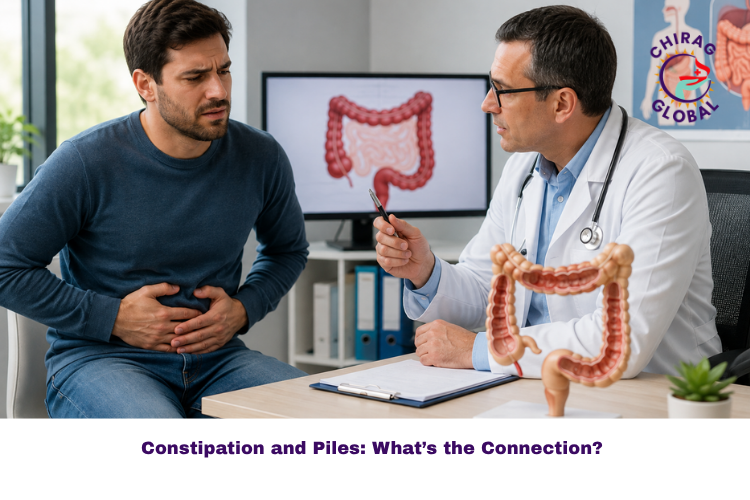
Constipation and piles often occur together, but the relationship is not as simple as constipation directly “causing” every case of hemorrhoids. Hard stools, repeated straining, prolonged toilet sitting, and difficulty passing bowel movements can increase pressure around the anal region and may contribute to the development or worsening of piles.
For someone who already has hemorrhoids, constipation can make symptoms more noticeable. Passing a hard stool may irritate swollen hemorrhoidal tissue and can sometimes contribute to bleeding, discomfort, or prolapse.
Understanding the connection between constipation and piles is therefore important for preventing repeated symptoms and supporting healthier bowel habits.
At Chirag Global Hospitals, Bangalore, patients experiencing persistent constipation, piles, rectal bleeding, anal discomfort, or difficulty passing stool can undergo specialist evaluation to identify the underlying problem and discuss appropriate treatment.
Book a Consultation | Call 08065903127
Can Constipation Cause Piles?
Constipation can contribute to the development or worsening of piles, particularly when it involves hard stools and repeated straining.
When stool is hard, a person may need to push harder to empty the bowel. Repeated straining can increase pressure on the blood vessels and supporting tissues around the anal canal.
However, piles have multiple contributing factors.
Other factors can include:
- Pregnancy
- Prolonged sitting
- Chronic diarrhoea
- Low-fibre diets
- Age-related tissue changes
- Obesity
- Frequent heavy lifting
- A family tendency toward hemorrhoids
Therefore, constipation is an important risk factor, but it is not the only possible cause.
How Does Constipation Affect Hemorrhoids?
The connection between constipation and piles can involve several mechanisms.
Hard Stool Can Irritate Anal Tissue
Hard, dry stool may rub against already sensitive tissue as it passes through the anal canal.
If hemorrhoids are present, this can make irritation more noticeable.
Straining Increases Pressure
When someone repeatedly strains to pass stool, pressure rises within the veins and tissues surrounding the anus.
Frequent straining may contribute to hemorrhoidal swelling and symptoms.
Constipation Can Prolong Toilet Time
People with constipation may spend considerably longer on the toilet because they feel unable to empty their bowel.
Prolonged sitting on the toilet can increase pressure around the anal region.
Hard Stools Can Trigger Bleeding
Passing a hard stool can irritate swollen hemorrhoidal tissue.
This may result in bright-red blood noticed:
- On toilet paper
- On the surface of the stool
- In the toilet bowl
However, rectal bleeding should not automatically be assumed to be caused by piles.
Does Straining Always Cause Piles?
No.
Straining is a recognised factor that can contribute to hemorrhoidal symptoms, but not everyone who strains develops piles.
The risk depends on several factors, including:
- How frequently straining occurs
- Stool consistency
- Duration of constipation
- Individual anatomy
- Existing hemorrhoids
- Age
- Pregnancy
- Other bowel habits
Reducing unnecessary straining is still an important part of maintaining healthy bowel habits.
Can Constipation Cause Bleeding Piles?
Constipation can contribute to bleeding from existing hemorrhoids.
Internal hemorrhoids commonly cause bright-red rectal bleeding, particularly during or after bowel movements.
However, bleeding should never automatically be attributed to hemorrhoids.
Other possible causes include:
- Anal fissures
- Polyps
- Diverticular disease
- Inflammatory bowel disease
- Other colorectal conditions
Persistent, recurrent, heavy, or unexplained rectal bleeding should be evaluated by a healthcare professional.
What Symptoms Suggest Constipation-Related Piles?
A person may experience:
- Hard or dry stools
- Difficulty passing stool
- Excessive straining
- Bright-red bleeding
- Anal itching
- Swelling around the anus
- A lump
- Discomfort after bowel movements
- Prolapse during or after passing stool
The presence and severity of symptoms vary depending on the type of hemorrhoid.
How Can You Prevent Piles Caused or Worsened by Constipation?
The most useful approach is to improve bowel habits and reduce unnecessary pressure during bowel movements.
Eat Enough Fibre
Fibre can help increase stool bulk and support softer, easier-to-pass stools.
Good sources include:
- Fruits
- Vegetables
- Whole grains
- Beans
- Lentils
- Nuts
- Seeds
Increase fibre gradually if your current intake is low.
Drink Enough Fluids
Adequate fluid intake can support normal stool consistency.
However, individual fluid requirements differ. People who have been advised to restrict fluids for a medical reason should follow their healthcare professional’s advice.
Stay Physically Active
Regular movement can support normal bowel function.
Walking and other suitable forms of physical activity can be incorporated into your daily routine.
Do Not Ignore the Urge
Repeatedly delaying bowel movements can allow stool to remain in the colon longer and become harder.
Try to respond to the natural urge to pass stool.
Avoid Excessive Straining
If stool is not passing easily, repeatedly forcing it can increase pressure around the anal canal.
Work on addressing the underlying constipation instead.
Avoid Spending Excessive Time on the Toilet
The toilet should be used for bowel evacuation rather than prolonged sitting.
Avoid turning toilet time into a routine period of reading or phone use.
Conclusion
The relationship between constipation and piles is largely connected to hard stools, repeated straining, and increased pressure around the anal region. Constipation can contribute to hemorrhoidal symptoms or make existing piles more troublesome.
However, constipation is not the only factor involved in hemorrhoids, and rectal bleeding or anal symptoms should not automatically be attributed to piles.
Maintaining adequate fibre intake, appropriate hydration, regular physical activity, healthy toilet habits, and avoiding excessive straining can help support bowel health and reduce the risk of constipation-related hemorrhoidal symptoms.
If constipation or piles are persistent, recurrent, or associated with bleeding, severe pain, prolapse, or other warning signs, professional evaluation is important. Chirag Global Hospitals, Bangalore can provide specialist assessment for piles, constipation, and related colorectal conditions.
Visit Chirag Global Hospitals Today!
Frequently Asked Questions
Can constipation cause piles?
Constipation, particularly hard stools and repeated straining, can contribute to the development or worsening of piles. However, hemorrhoids have multiple possible risk factors.
Can hard stools make piles worse?
Yes. Hard stools can irritate hemorrhoidal tissue and may increase straining, bleeding, swelling, and discomfort.
Does straining cause hemorrhoids?
Repeated straining can increase pressure around the anal canal and may contribute to hemorrhoidal swelling and symptoms.
Can piles go away after constipation is treated?
Mild symptoms may improve when constipation is controlled and straining is reduced. More advanced or prolapsing hemorrhoids may require additional treatment.
Is bleeding during constipation always caused by piles?
No. Hemorrhoids are one possible cause, but anal fissures and other colorectal conditions can also cause rectal bleeding.
What should I eat to prevent constipation and piles?
Fibre-rich foods such as fruits, vegetables, whole grains, legumes, nuts, and seeds can support softer stools. Fibre should generally be increased gradually.