
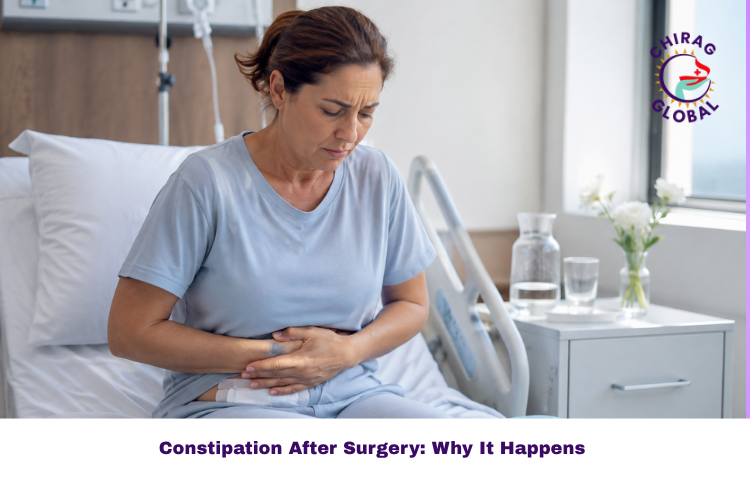
Constipation after surgery is a common problem that can occur during the recovery period. A person who normally has regular bowel movements may suddenly experience hard stools, fewer bowel movements, bloating, abdominal discomfort, or difficulty passing stool after an operation.
Several factors can contribute to this change. Anesthesia can temporarily slow bowel activity, while prescription pain medicines, reduced physical activity, changes in diet, and lower fluid intake can make constipation more likely. Depending on the type of surgery, the digestive system may also take some time to return to its usual activity.
Although mild constipation can occur during recovery, persistent or severe constipation after surgery should not be ignored. In some situations, difficulty passing stool can be associated with fecal impaction, bowel obstruction, or another postoperative complication.
At Chirag Global Hospitals, Bangalore, colorectal specialists evaluate persistent constipation and other bowel problems to identify the underlying cause and recommend appropriate treatment.
Book a Consultation | Call 08065903127
Why Does Constipation Happen After Surgery?
There is usually not one single cause of postoperative constipation. Several factors can affect bowel movements at the same time.
1. Anesthesia Can Slow Bowel Activity
General anesthesia and some other medications used around the time of surgery can temporarily reduce intestinal movement.
The digestive system may take some time to return to its normal activity after the procedure.
This can result in:
- Fewer bowel movements
- Bloating
- Abdominal discomfort
- Difficulty passing stool
- Feeling that the bowel is moving more slowly than usual
The effect is usually temporary, but the duration varies depending on the surgery, medications, and individual recovery.
2. Pain Medicines Can Cause Constipation
One of the most important causes of constipation after surgery is the use of opioid pain medicines.
Opioids can slow the movement of stool through the intestine and increase the amount of water absorbed from stool.
This can make stools:
- Harder
- Drier
- More difficult to pass
If you are taking opioid pain medication after surgery, ask your healthcare team whether you should also use a bowel-management plan.
Do not stop prescribed pain medication without speaking with your doctor.
3. Reduced Physical Activity
After surgery, patients often spend more time in bed or sitting and may temporarily reduce their normal physical activity.
Movement naturally stimulates bowel function.
Reduced activity can therefore contribute to slower intestinal movement and constipation.
As your surgeon allows, gradually returning to walking and other appropriate activities may support bowel function.
4. Changes in Diet
Your diet may change significantly after an operation.
Depending on the procedure, you may initially eat less food or follow a modified diet.
If your usual intake of fibre decreases, stool may become harder and bowel movements may become less frequent.
Dietary recommendations vary depending on the type of surgery, so do not increase fibre suddenly without considering your surgeon’s instructions.
5. Not Drinking Enough Fluids
Fluid intake may decrease after surgery because of:
- Reduced appetite
- Nausea
- Difficulty drinking
- Dietary restrictions
- Fear of vomiting
- Medical fluid restrictions
When the body does not receive enough fluids, stool can become harder.
However, patients with certain heart, kidney, or other medical conditions may have specific fluid restrictions. Always follow your healthcare team’s advice.
6. Delaying the Urge to Pass Stool
Some patients avoid bowel movements because they are worried about pain, particularly after abdominal, colorectal, pelvic, or anorectal surgery.
Repeatedly delaying the urge to pass stool can allow more water to be absorbed from the stool, making it harder.
If your healthcare provider says it is safe, try to respond to the urge to have a bowel movement rather than repeatedly postponing it.
What Does Constipation After Surgery Feel Like?
Symptoms can vary.
Common signs include:
- Fewer bowel movements than usual
- Hard or dry stools
- Difficulty passing stool
- Excessive straining
- Feeling that the bowel has not completely emptied
- Abdominal bloating
- Mild abdominal discomfort
- A feeling of fullness
Some people may pass small amounts of stool but still feel constipated.
How Long Does Constipation Last After Surgery?
There is no fixed recovery time for everyone.
The duration depends on:
- Type of surgery
- Type of anesthesia
- Pain medicines used
- Physical activity
- Food and fluid intake
- Existing bowel habits
- Other medical conditions
- Whether the intestines were directly involved in the surgery
A temporary delay in bowel movements can occur after surgery, but your surgical team should advise you about what is expected for your particular procedure.
If constipation persists or is becoming worse, contact your healthcare provider.
How to Relieve Constipation After Surgery
Management depends on the cause and type of surgery you have undergone.
1. Follow Your Postoperative Diet
Follow the diet recommended by your surgical team.
When appropriate, gradually include fibre-rich foods such as:
- Fruits
- Vegetables
- Whole grains
- Oats
- Legumes
However, some abdominal and bowel surgeries require temporary dietary restrictions. Your surgeon’s instructions should take priority.
2. Drink Adequate Fluids
If you have not been given a fluid restriction, adequate hydration can help keep stool softer.
Water is generally a simple choice.
If nausea or difficulty drinking prevents adequate fluid intake, tell your healthcare team.
3. Start Gentle Movement When Allowed
Walking can support normal bowel activity.
Depending on your surgery and recovery, your healthcare provider may encourage short, frequent walks rather than prolonged bed rest.
Do not begin strenuous exercise or heavy lifting until your surgical team says it is safe.
4. Follow a Bowel-Movement Routine
Try to allow enough time for a bowel movement without prolonged sitting or straining.
Avoid forcing stool out.
If you have pain related to your surgery, ask your healthcare provider about safe bowel habits and appropriate pain management.
5. Ask About Stool Softeners or Laxatives
Your doctor may recommend a stool softener, osmotic laxative, or another medication depending on your condition.
This is particularly important if opioid pain medicines are being used.
Do not take large amounts of laxatives on your own if you have severe abdominal pain, vomiting, significant swelling, or an inability to pass gas, because these symptoms may indicate an obstruction or another complication.
What Should You Eat for Constipation After Surgery?
The appropriate diet depends on your surgery.
If your healthcare provider permits a regular or fibre-containing diet, options may include:
Fruits
Examples include:
- Pears
- Apples
- Kiwi
- Oranges
- Prunes or prune-based foods where appropriate
Vegetables
Vegetables can provide dietary fibre and contribute to overall nutritional recovery.
Whole Grains
Oats and other whole-grain foods may help increase fibre intake.
Legumes
Beans, lentils, and similar foods can provide fibre and nutrients.
Increase fibre gradually if your body is not accustomed to a high-fibre diet.
What Foods Should You Avoid?
There is no universal list of foods that every postoperative patient must avoid.
However, if certain foods consistently worsen your bloating or constipation, discuss your diet with your healthcare provider.
More importantly, follow any dietary restrictions specifically provided for your type of surgery.
Can Constipation After Surgery Cause Hemorrhoids?
Yes.
Hard stools and repeated straining can increase pressure around the anus and contribute to hemorrhoid symptoms.
This can lead to:
- Anal discomfort
- Itching
- Bleeding
- Swelling
Preventing constipation during recovery can therefore also help reduce the risk of hemorrhoid-related problems.
Does Surgery Always Cause Constipation?
No.
Not everyone experiences constipation after an operation.
The likelihood depends on factors such as the type of procedure, anesthesia, pain medication, mobility, diet, fluid intake, and previous bowel habits.
Some patients may instead experience temporary loose stools or changes in bowel frequency depending on the procedure and medications.
Conclusion
Constipation after surgery can occur because of anesthesia, opioid pain medicines, reduced physical activity, changes in diet and fluid intake, and temporary changes in bowel function. In many cases, it improves as normal activity and bowel function return.
Supporting recovery with adequate hydration when permitted, appropriate dietary fibre, gentle movement, healthy toilet habits, and doctor-recommended bowel medicines can help prevent or manage postoperative constipation.
However, constipation accompanied by severe abdominal pain, vomiting, significant swelling, fever, or inability to pass stool and gas requires prompt medical assessment.
If constipation persists after surgery or begins interfering with your recovery, consult a healthcare professional to identify the cause and determine the safest treatment. At Chirag Global Hospitals, Bangalore, colorectal specialists can evaluate persistent bowel symptoms and provide individualized management based on your condition and surgical history.
Visit Chirag Global Hospitals Today!
Frequently Asked Questions
How common is constipation after surgery?
It is relatively common, particularly when surgery involves anesthesia, reduced mobility, changes in diet, or opioid pain medication.
Why can’t I poop after surgery?
Several factors can slow bowel movements after surgery, including anesthesia, opioid pain medicines, reduced activity, changes in food and fluid intake, and delaying bowel movements.
How can I relieve constipation after surgery?
Follow your postoperative diet and fluid instructions, stay gently active when permitted, maintain appropriate fibre intake when allowed, and ask your healthcare provider whether a stool softener or laxative is suitable.
Can painkillers cause constipation after surgery?
Yes. Opioid pain medicines are a common cause of postoperative constipation because they can slow intestinal movement.
Should I strain to have a bowel movement after surgery?
No. Excessive straining can worsen discomfort and contribute to hemorrhoids or anal fissures. Ask your healthcare team how to manage difficult bowel movements safely.
When should I worry about constipation after surgery?
Seek prompt medical care if constipation is accompanied by severe abdominal pain, significant swelling, persistent vomiting, fever, or an inability to pass stool and gas.
Can constipation happen after colorectal surgery?
Yes. Bowel function can change after colorectal surgery, and the recovery pattern depends on the specific procedure. Follow your surgeon’s postoperative instructions and report concerning or persistent symptoms.