
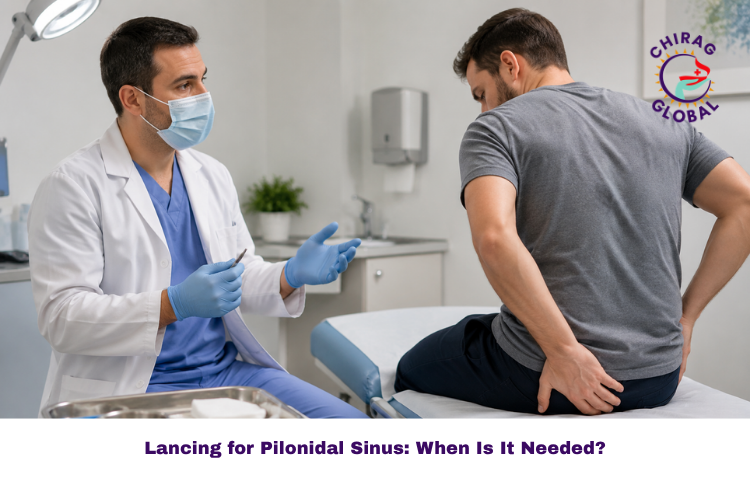
A painful swelling near the tailbone that suddenly becomes red, tender, and starts draining pus is often a sign of an infected pilonidal sinus. In such cases, doctors may recommend lancing to relieve the infection quickly and reduce severe pain. Many patients worry when they hear the term and wonder whether it is a permanent treatment or simply the first step in managing the condition.
At Chirag Global Hospitals, Bangalore, experienced colorectal specialists evaluate patients with pilonidal sinus and recommend the most appropriate treatment based on the severity of the infection. While lancing can provide rapid relief by draining an infected abscess, it does not remove the underlying pilonidal sinus. Some patients may require additional treatment to prevent recurrence.
This article explains what lancing is, when it is needed, how the procedure is performed, what recovery looks like, and whether further surgery may be necessary.
Book a Consultation | Call 08065903127
What Is Lancing?
Lancing is a minor surgical procedure in which a doctor makes a small incision to drain pus from an infected abscess. In patients with an infected pilonidal sinus, the procedure helps reduce pressure, relieve pain, and remove the collection of infected material.
The primary goal of lancing is to treat the acute infection rather than permanently cure the pilonidal sinus itself.
What Is a Pilonidal Sinus?
A pilonidal sinus is a small tunnel or cavity that develops beneath the skin, usually in the cleft between the buttocks near the tailbone (coccyx). Hair, dead skin cells, and debris can become trapped inside the sinus, increasing the risk of infection.
When bacteria multiply within the sinus, an abscess may form, causing severe pain and swelling that often requires lancing.
When Is Lancing Recommended?
Doctors may recommend lancing when an infected pilonidal sinus causes:
- Severe pain near the tailbone
- A swollen lump between the buttocks
- Redness and warmth over the affected area
- Pus discharge
- Difficulty sitting or walking
- Fever associated with an abscess
Prompt drainage helps relieve symptoms and prevents the infection from worsening.
Can Antibiotics Alone Treat an Infected Pilonidal Sinus?
Many patients hope that antibiotics alone will cure the infection.
However, once an abscess has formed, antibiotics usually cannot remove the trapped pus.
In these situations, lancing is often required to:
- Drain the abscess
- Reduce pressure
- Relieve pain
- Allow the infection to heal more effectively
Antibiotics may still be prescribed in selected patients, particularly if there is spreading infection or certain underlying medical conditions.
How Is Lancing Performed?
The procedure is usually performed as an outpatient treatment.
The steps generally include:
1. Examination
The colorectal surgeon examines the swelling to confirm that an abscess is present.
2. Local Anesthesia
A local anesthetic is used to numb the area so the procedure is as comfortable as possible.
3. Small Incision
A small incision is made over the abscess.
4. Drainage
The accumulated pus is gently drained, reducing pressure and relieving pain.
5. Cleaning the Cavity
The cavity may be irrigated to remove infected material and debris.
6. Dressing the Wound
A sterile dressing is applied, and patients receive instructions on wound care at home.
The entire procedure is usually completed within a short period.
Does Lancing Cure a Pilonidal Sinus?
No.
This is one of the most important points patients should understand.
Lancing treats the infected abscess but does not remove the sinus tract that caused the infection.
Because the underlying sinus remains, the infection may return unless definitive treatment is performed when appropriate.
What Happens After Lancing?
Most patients experience noticeable improvement within the first few days.
Common changes include:
- Significant pain relief
- Reduced swelling
- Continued drainage for several days
- Improved ability to sit and walk
- Gradual wound healing
Regular dressing changes and proper wound care help support recovery.
Recovery After Lancing
Recovery varies depending on the size of the abscess and the extent of infection.
Many patients can:
- Return to light daily activities within a few days
- Resume desk work as discomfort improves
- Continue wound care until healing is complete
The wound is often left open to heal naturally from the inside out, which helps reduce the chance of another abscess forming immediately.
Will I Need More Treatment After Lancing?
Possibly.
After the infection settles, your colorectal surgeon will assess whether additional treatment is needed.
Further treatment may be recommended if:
- The pilonidal sinus repeatedly becomes infected
- Persistent drainage continues
- Multiple sinus openings are present
- The disease is extensive
- Symptoms keep returning
Definitive surgery aims to remove the sinus tract and reduce the risk of recurrence.
When Should You Contact Your Doctor After Lancing?
Seek medical attention if you experience:
- Fever
- Increasing pain
- Heavy bleeding
- Excessive swelling
- Foul-smelling discharge
- Persistent pus drainage
- The wound stops improving
- A new painful lump develops
Early evaluation can help prevent further complications.
Conclusion
Lancing is an effective procedure for relieving the pain and pressure caused by an infected pilonidal sinus abscess. By draining the collection of pus, it provides rapid symptom relief and helps control the acute infection. However, lancing does not remove the underlying sinus tract, so some patients may require further treatment to prevent repeated infections and long-term complications.
If you have a painful swelling near your tailbone or recurrent pilonidal sinus infections, the experienced colorectal specialists at Chirag Global Hospitals, Bangalore, can provide prompt evaluation, perform lancing when necessary, and recommend the most appropriate long-term treatment to help you recover safely and reduce the risk of recurrence.
Visit Chirag Global Hospitals Today!
Frequently Asked Questions
Is lancing painful?
The procedure is usually performed under local anesthesia, so discomfort during lancing is generally minimal. Mild soreness afterward is common and usually improves over the next few days.
Does lancing permanently cure pilonidal sinus?
No. Lancing drains the abscess but does not remove the underlying pilonidal sinus. Additional treatment may be needed to prevent recurrence.
How long does recovery take after lancing?
Many patients experience significant symptom relief within a few days, although complete wound healing may take several weeks depending on the size of the abscess.
Can the infection return after lancing?
Yes. Since the sinus tract remains, the abscess may recur if definitive treatment is not performed when indicated.
When should I see a colorectal specialist?
Consult a specialist if you develop recurrent swelling, repeated infections, persistent drainage, or ongoing discomfort near the tailbone.