
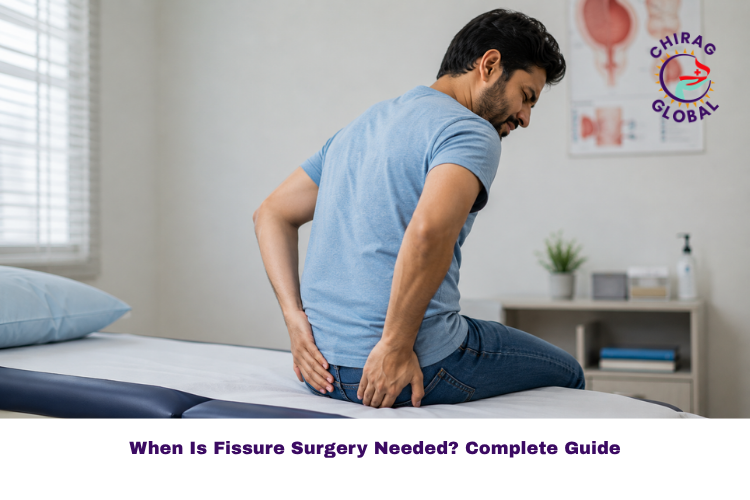
Fissure surgery is often considered when persistent discomfort, delayed healing, or recurring symptoms begin to affect daily life. While many fissures improve with simple care, some cases require a more structured and definitive treatment approach.
Patients visiting Chirag Global Hospital commonly ask: “Is it time to consider fissure surgery?”
This guide provides a clear, practical answer—helping you understand when surgery is needed, when it can be avoided, and what to expect from treatment.
Book a Consultation | Call 08065903127
Understanding Fissures and Why Healing Fails
A fissure is a small tear in the lining of the anal canal. In most cases, it heals within a few weeks with proper care. However, healing may fail due to:
- Tight anal muscles reducing blood flow
- Repeated strain during bowel movements
- Incomplete or inconsistent treatment
- Delayed medical attention
When this cycle continues, the fissure becomes chronic. At this stage, fissure surgery is often the most effective way to restore healing.
Acute vs Chronic Fissures
Understanding this difference is key:
Acute Fissure
- Duration less than 6 weeks
- Responds well to medication and lifestyle changes
Chronic Fissure
- Lasts more than 6 weeks
- Shows minimal healing
- Often requires fissure surgery
When Is Fissure Surgery Needed?
1. Fissure Lasting More Than 6 Weeks
A fissure that does not heal within 6 weeks is considered chronic. At this stage, natural healing is unlikely, making fissure surgery the recommended option.
2. Fissure Not Responding to Treatment
If symptoms persist despite:
- Medications
- Dietary improvements
- Sitz baths
It indicates that conservative care is not sufficient. In such cases, fissure surgery helps achieve lasting results.
3. Recurrent Fissures
Repeated episodes suggest an unresolved underlying issue. Instead of repeated temporary treatments, fissure surgery offers a long-term solution.
4. Signs of Chronic Condition
Doctors may identify:
- Skin changes around the fissure
- Thickened tissue
- Persistent discomfort
These signs indicate that fissure surgery is required.
5. Impact on Daily Life
If symptoms affect sitting, working, or routine activities, delaying treatment may worsen the condition. Timely fissure surgery helps restore comfort.
Comprehensive Management of Fissures at Chirag Global Hospital
At Chirag Global Hospital, fissure care is not limited to just procedures. It follows a complete pathway—from diagnosis to long-term prevention.
1. Clinical Evaluation & Diagnosis
Every treatment begins with a detailed assessment to determine:
- Severity and duration
- Underlying cause
- Previous treatment response
2. Conservative Management (Early Stage)
For mild fissures:
- Diet and hydration guidance
- Medications
- Sitz baths
This stage helps many patients avoid fissure surgery.
3. Anal Sphincter Tone Optimization
Chronic fissures are often linked to muscle tightness.
Treatment focuses on:
- Relaxing the muscle
- Improving blood flow
- Supporting healing
4. Sphincterotomy (Definitive Fissure Surgery)
This is the most effective and widely used fissure surgery.
Key benefits:
- Reduces muscle pressure
- Promotes healing
- Provides long-term relief
5. Post-Treatment Care
Recovery includes:
- High-fiber diet
- Proper hydration
- Avoiding strain
6. Long-Term Prevention
Patients are guided on:
- Sustainable lifestyle habits
- Bowel routine management
- Preventing recurrence
Is Fissure Surgery Safe?
Yes. When performed by experienced specialists, fissure surgery is safe and effective. Careful technique ensures normal function is preserved.
At Chirag Global Hospital, patient safety and precision are top priorities.
Conclusion
Fissure surgery is not always the first step—but it becomes the right step when conservative treatments fail. Understanding when to act helps you avoid prolonged discomfort and achieve lasting relief.
If symptoms are persistent or recurring, a consultation can provide clarity and the right treatment direction.
Frequently Asked Questions
1. How long should I wait before considering fissure surgery?
If symptoms continue beyond 6 weeks despite proper medication, diet, and care, it may indicate a chronic condition. In such cases, consulting a specialist for fissure surgery evaluation is recommended.
2. Is fissure surgery painful?
The procedure is performed under anesthesia, so you will not feel pain during surgery. Afterward, mild discomfort may occur but is usually manageable with prescribed medication and care.
3. How long does recovery take after fissure surgery?
Most patients resume daily activities within a few days, depending on their routine. Complete healing generally occurs within 4–6 weeks with proper diet and hygiene.
4. Can fissures come back after surgery?
Recurrence is uncommon when proper lifestyle habits like high-fiber diet and hydration are maintained. Following your doctor’s advice plays a key role in long-term results.
5. Is fissure surgery a permanent solution?
It is considered a long-term solution for chronic fissures that do not respond to other treatments. Maintaining healthy bowel habits further ensures lasting outcomes.