

When it comes to foods to avoid for constipation, understanding your diet is the first step toward long-term digestive relief. Constipation is one of the most common digestive concerns among adults in Bangalore, largely due to sedentary lifestyles, irregular eating patterns, and low-fiber urban diets.
At Chirag Global Hospitals, recognized as one of the Best Colo – Rectal Hospital of India, patients receive comprehensive evaluation and personalized dietary guidance for chronic constipation and related colorectal conditions. As one of Bangalore’s leading colorectal hospitals located in Bangalore, the hospital combines advanced treatment with preventive nutrition counseling.
If you are struggling with bloating, hard stools, straining, or incomplete bowel movements, don’t ignore the signs.
Book a consultation today at Chirag Global Hospitals in Bangalore and speak with a colorectal specialist who can help you find lasting relief.
Understanding Constipation: Why Diet Matters
Constipation occurs when bowel movements become infrequent, difficult, or painful. While stress, medications, and underlying medical conditions can contribute, diet is one of the most significant factors.
Many people ask:
- What foods cause constipation?
- Is milk causing constipation?
- What are the worst foods for constipation?
- What should I include in a constipation diet plan?
Let’s explore the answers in detail.
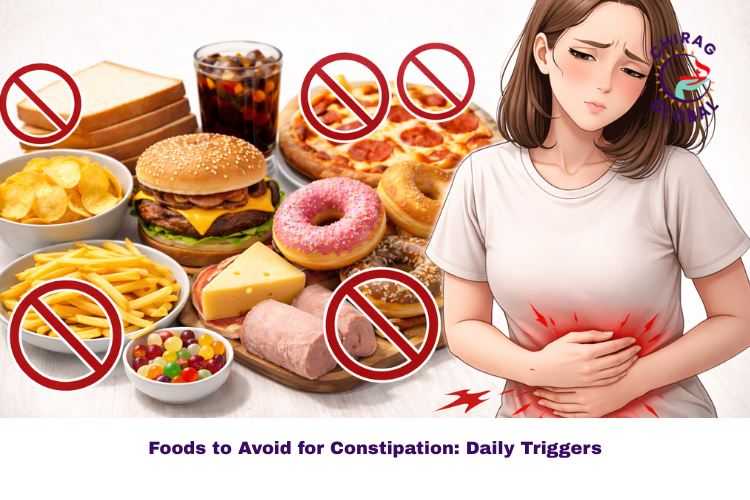
Foods to Avoid for Constipation
Certain foods slow down digestion, reduce stool bulk, or dehydrate the body. Avoiding or limiting them can dramatically improve symptoms.
1. Processed and Refined Foods
Refined foods are among the worst foods for constipation because they lack fiber.
Examples:
- White bread
- White rice
- Maida-based foods
- Bakery items
- Packaged snacks
- Instant noodles
In Bangalore’s fast-paced lifestyle, these foods are convenient but harmful to gut health. They contain little to no fiber, which is essential for stool formation and easy passage.
2. Excess Dairy Products
Many patients ask, is milk causing constipation?
For some adults, especially those with lactose intolerance or slow gut motility, excessive dairy can contribute to constipation.
Dairy items that may worsen symptoms:
- Full-fat milk
- Cheese
- Paneer
- Ice cream
These foods can be constipating foods for adults when consumed in large quantities without adequate fiber intake.
Red meat is difficult to digest and contains no fiber.
Why it worsens constipation:
- High fat content slows digestion
- Low fiber content
- Replaces fiber-rich foods in the diet
If you frequently consume red meat in your weekly meals, it may be one of the foods that make constipation worse.
4. Fried and Oily Foods
Deep-fried snacks like samosas, pakoras, and fast-food items are common in Bangalore’s street food culture.
These foods:
- Slow intestinal movement
- Increase bloating
- Delay gastric emptying
They are considered some of the worst foods for constipation due to their high fat and low fiber content.
5. Excess Caffeine Without Water
Coffee can stimulate bowel movements in some people, but excess caffeine without hydration can cause dehydration, making stools harder.
If you consume multiple cups daily but drink little water, constipation may worsen.
6. Unripe Bananas
Ripe bananas help digestion, but unripe bananas are high in resistant starch and may worsen constipation.
7. Highly Processed Frozen Foods
Frozen meals often:
- Lack fiber
- Contain preservatives
- Are high in sodium
These foods are commonly included in lists of foods to avoid in chronic constipation.
What Foods Cause Constipation in Adults?
Common constipating foods for adults include:
- White flour products
- Cheese-heavy meals
- Fast food
- Sugary desserts
- Carbonated beverages
- Alcohol
- Red meat
If you frequently eat outside in Bangalore’s IT corridors and business hubs, these dietary patterns may be contributing to digestive discomfort.
What to Eat for Constipation Relief
Avoiding the wrong foods is only half the solution. Let’s discuss what to eat for constipation relief.
High Fiber Foods for Constipation
Fiber increases stool bulk and promotes smooth bowel movements.
Include:
- Whole grains (brown rice, oats)
- Green leafy vegetables
- Carrots
- Beans and lentils
- Apples and pears (with skin)
- Papaya
- Include more fluids along with the food (adding more rasam/dal to rice)
- Banana
High fiber foods for constipation should be gradually introduced to avoid bloating.
Hydration Is Essential
Bangalore’s moderate climate can make people underestimate hydration needs.
Drink:
- 2.5–3 liters of water daily
- Coconut water
- Buttermilk
- Fresh vegetable juices
Without adequate fluids, fiber cannot work effectively.
Probiotic Foods
Probiotics support gut bacteria balance.
Examples:
- Curd
- Buttermilk
- Fermented foods
These are valuable additions to a constipation remedies diet.
Sample Constipation Diet Plan
Here is a simple constipation diet plan tailored for adults in Bangalore:
Morning
- Warm water with lemon
- Soaked raisins or figs
Breakfast
- Oats with fruits
- Vegetable upma with added greens
Mid-morning
- Papaya or guava
Lunch
- Brown rice or millet
- Dal
- 2 vegetable dishes
- Curd
Evening
- Handful of nuts
- Herbal tea
Dinner
- Light meal
- Vegetable soup
- Chapati with sabzi
This approach helps avoid foods that make constipation worse while increasing fiber intake.
When Constipation Becomes Chronic
If symptoms persist for weeks, it may indicate:
- Chronic constipation
- Rectal prolapse
- Hemorrhoids
- Anal fissures
- Pelvic floor dysfunction
In such cases, dietary changes alone may not be sufficient.
Chirag Global Hospitals in Bangalore offers advanced diagnostic tools and minimally invasive treatments.
If you are searching for the right guidance on foods to avoid for constipation, expert dietary planning, and advanced treatment in Bangalore, trust the specialists at Chirag Global Hospitals.
FAQs About Constipation Treatment in Bangalore
1. Is constipation painful?
Yes. Chronic constipation can cause abdominal pain, rectal pain, and straining discomfort. Early treatment prevents complications.
2. Why trust Chirag Global Hospitals for constipation care?
Chirag Global Hospitals is recognized as the Best Colo – Rectal Hospital of India, offering specialized colorectal treatment with experienced surgeons in Bangalore.
3. How long does constipation treatment take?
Mild cases improve within days with dietary changes. Chronic cases may require medical therapy or procedures, depending on severity.
4. Will treatment be uncomfortable?
Most constipation treatments are non-invasive. If procedures are required, minimally invasive techniques ensure faster recovery and comfort.
5. Do I need follow-ups?
Yes. Follow-ups ensure long-term bowel health and help prevent recurrence, especially in chronic constipation cases.