


Fissure vs piles is one of the most common confusions among patients experiencing anal pain or bleeding in Bangalore. Adding to this confusion is another condition—fistula—which often goes undiagnosed until complications appear. While all three affect the same region, their behavior, progression, pain pattern, and long-term impact are entirely different.
At Chirag Global Hospitals, the Best Colo – Rectal Hospital of India, specialists frequently treat patients who have lived with the wrong diagnosis for months. This blog is written to only explain the differences—clearly, clinically, and without overlap.
If symptoms feel unclear, book a consultation with a colorectal specialist in Bangalore today.
Why Understanding the Difference Matters More Than the Name
Many patients in Bangalore try home remedies assuming all anal conditions are the same. This leads to:
- Delayed healing
- Chronic fissure formation
- Advanced disease stages
- Avoidable pain
Understanding fissure vs piles vs fistula helps you recognize what your body is signaling, not just what the symptom looks like.
Difference in How Pain Is Experienced
Fissure vs Piles: Pain Pattern Comparison
Pain is the most telling difference in fissure vs piles.
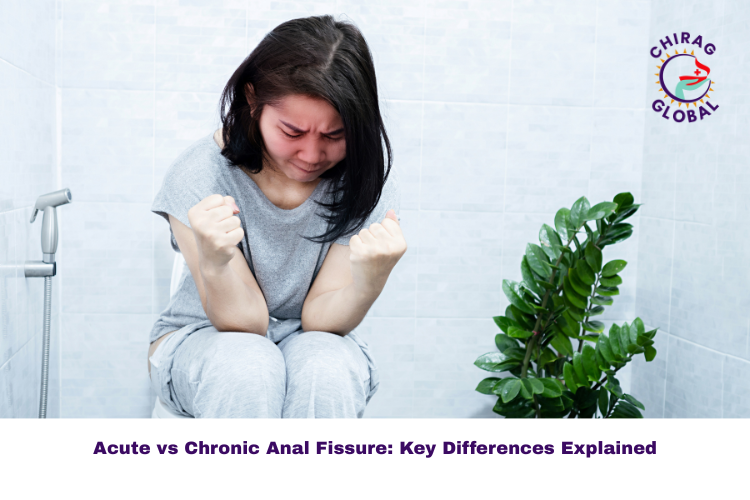
- Anal fissure pain
- Sudden, sharp, cutting pain
- Pain peaks during bowel movement
- Burning pain may last for hours afterward
- Sudden, sharp, cutting pain
- Piles pain
- Usually absent in early stages
- Discomfort rather than sharp pain
- Pain appears only if piles become thrombosed or infected
- Usually absent in early stages
If pain makes you fear going to the toilet, it strongly points toward a fissure rather than piles.
Fissure vs Fistula: Pain Behavior Over Time
When comparing fissure vs fistula, pain behaves very differently.
- Fissure pain
- Triggered mainly by bowel movements
- Reduces between toilet visits
- Triggered mainly by bowel movements
- Fistula pain
- Continuous or recurring
- Associated with swelling or discharge
- Often worsens without bowel movement
- Continuous or recurring
This distinction is critical for early diagnosis in Bangalore patients.
Difference in Bleeding Characteristics
Fissure vs Piles: Bleeding Is Not the Same
Though both may show blood, the pattern differs.
- Fissure bleeding
- Small streaks of bright red blood
- Occurs with intense pain
- Seen mostly on toilet paper
- Small streaks of bright red blood
- Piles bleeding
- Drips or splashes into the toilet
- Usually painless
- May happen repeatedly
- Drips or splashes into the toilet
Understanding this difference often clarifies fissure vs piles instantly.
Difference in Discharge and Infection Risk
This is where fissure vs fistula becomes unmistakable.
- Anal fissure
- No pus or discharge
- No external opening
- No pus or discharge
- Anal fistula
- Persistent discharge or pus
- Wetness or staining of underwear
- Often associated with infection
- Persistent discharge or pus
Any ongoing discharge is never piles or fissure—it is almost always fistula and needs expert care in Bangalore.
Difference in Disease Progression
Chronic Fissure vs Long-Standing Piles
- Chronic fissure
- Develops when healing fails
- Pain becomes predictable and recurrent
- Muscle spasm prevents natural recovery
- Develops when healing fails
- Piles
- Progress in grades
- Symptoms worsen gradually
- May prolapse externally over time
- Progress in grades
This progression difference is a key clinical marker at Chirag Global Hospitals.
Difference in Visual & Physical Findings
Doctors rely heavily on physical examination to separate fissure vs piles vs fistula.
- Fissure
- Single tear at the anal margin
- Tight sphincter tone
- Single tear at the anal margin
- Piles
- Swollen tissue or prolapsing mass
- Soft or firm bulge
- Swollen tissue or prolapsing mass
- Fistula
- External opening near the anus
- Signs of infection or scarring
- External opening near the anus
Each condition leaves a distinct physical signature.
Difference in Recovery Expectations
Patients in Bangalore often ask how long healing takes. The answer depends on correct identification.
- Fissure recovery
- Fast if treated early
- Chronic fissure takes longer
- Fast if treated early
- Piles recovery
- Depends on grade
- May recur if lifestyle remains unchanged
- Depends on grade
- Fistula recovery
- Requires structured surgical care
- Follow-ups are essential
- Requires structured surgical care
Why Accurate Diagnosis in Bangalore Is Crucial
Urban lifestyle, stress, dehydration, and delayed consultations increase colorectal issues in Bangalore. At Chirag Global Hospitals, one of Bangalore’s leading colorectal hospitals located in Bangalore, specialists focus on precise differentiation, not assumptions..
Talk to a specialist at Chirag Global Hospitals for clarity and confidence.
Take the Next Step Toward the Right Diagnosis
If you’re unsure about fissure vs piles or confused between fissure vs fistula, expert evaluation matters more than symptom guessing.
Visit Chirag Global Hospitals in Bangalore and consult trusted colorectal specialists today.
FAQs
1. Can fissure and piles exist together?
Yes, but pain dominance usually indicates fissure rather than piles.
2. Does fistula ever cause bleeding like piles?
Rarely. Discharge is more common than bleeding in fistula.
3. Why does fissure pain last longer than piles pain?
Because muscle spasm prevents the tear from relaxing and healing.
4. How do doctors at Chirag Global Hospitals differentiate these conditions?
Through detailed examination, symptom mapping, and advanced diagnostics.
5. Does chronic fissure always become fistula?
No. Fistula usually develops from abscess, not fissure.