
Colon cancer is one of the most common and serious digestive health conditions affecting adults today—but the good news is that it is also highly treatable when detected early. If you’ve been searching for what is colon cancer or trying to understand the colon cancer meaning, this guide will help you with a clear, patient-friendly overview.
At Chirag Global Hospitals, patients across Bangalore and nearby areas trust our team for advanced diagnosis, expert care, and compassionate support. When it comes to colorectal health, choosing the right hospital matters—and many patients consider us the Best Colo – Rectal Hospital of India for specialised care and outcomes.
If you’re noticing symptoms like blood in stool, persistent constipation, or unexplained weight loss, don’t wait. Book a consultation at Chirag Global Hospitals, Bangalore, and get clarity from an experienced colorectal specialist.
What Is Colon Cancer?
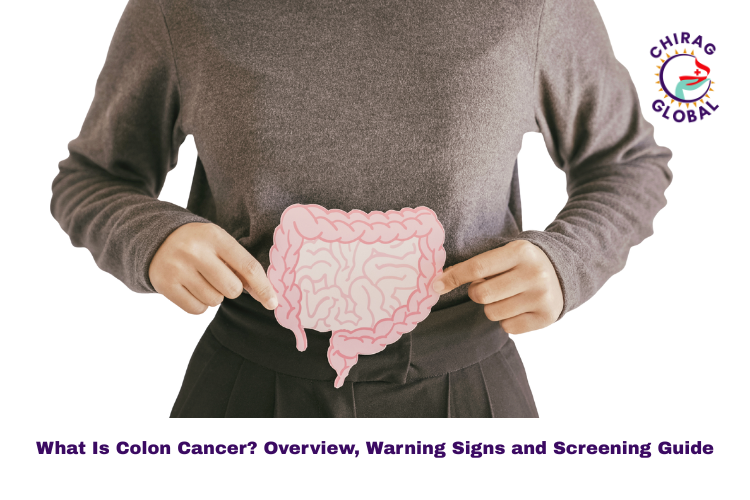
Colon cancer is a type of cancer that begins in the colon, which is the longest part of the large intestine. The colon’s main role is to absorb water and salts from food waste and help move stool out of the body.
Meaning in Simple Terms
The colon cancer meaning is simple:
It happens when abnormal cells grow uncontrollably in the colon lining and form a tumour. Over time, these cancer cells can spread to nearby lymph nodes or other organs if not treated early.
How Colon Cancer Develops
In many cases, colon cancer begins as small, non-cancerous growths called polyps. Not all polyps turn into cancer, but certain types can become cancerous over time.
Common Steps of Colon Cancer Development
- Healthy colon lining develops a polyp
- Polyp gradually changes and becomes pre-cancerous
- Pre-cancerous cells become cancer
- Cancer may spread beyond the colon if untreated
This is why screening plays a big role in prevention—especially for people over 45 or those with risk factors.
Colon Cancer Symptoms You Should Never Ignore
Many people in Bangalore delay medical attention because early symptoms can look like common digestive issues. But early diagnosis is exactly what saves lives.
Early Colon Cancer Symptoms
Some early signs may include:
- Changes in bowel habits (constipation or diarrhoea lasting more than 2 weeks)
- Feeling that the bowel doesn’t empty completely
- Mild abdominal cramps or discomfort
- Unexplained fatigue
Advanced Colon Cancer Symptoms
As the disease progresses, symptoms may become more noticeable:
- Blood in stool (bright red or dark)
- Persistent abdominal pain or bloating
- Sudden unexplained weight loss
- Weakness or dizziness (may indicate anaemia)
- Narrow stools or changes in stool shape
- Loss of appetite
What Causes Colon Cancer?
If you’re wondering what causes colon cancer, it’s important to know that there isn’t always one clear reason. Most cases happen due to a mix of genetic factors, lifestyle habits, and age-related changes.
Common Causes and Risk Factors of Colon Cancer
1. Age Above 45
Risk increases as you get older, though younger adults can also develop colon cancer.
2. Family History or Genetics
You may be at higher risk if:
- A parent or sibling had colon cancer
- You have inherited syndromes like Lynch syndrome
3. Colon Polyps
Certain polyps can slowly turn into cancer over years.
4. Diet and Lifestyle
Risk may rise due to:
- High intake of red meat or processed foods
- Low-fibre diet
- Lack of physical activity
5. Obesity and Smoking
These contribute to inflammation and cellular damage in the digestive tract.
6. Alcohol Consumption
Frequent alcohol intake can increase risk over time.
7. Long-Term Digestive Conditions
Chronic inflammatory conditions like ulcerative colitis or Crohn’s disease can increase risk.
Who Is at High Risk for Colon Cancer in Bangalore?
With modern lifestyles, desk jobs, irregular meals, and stress, many residents in Bangalore face digestive health issues. While not every digestive problem leads to cancer, certain people should be extra careful.
You May Need Early Screening If You Have:
- Family history of colon cancer
- Long-term constipation or IBS-like symptoms
- Diabetes or obesity
- Smoking habit
- Prior history of polyps
- Persistent bleeding in stool
How Is Colon Cancer Diagnosed?
Accurate diagnosis is the first step toward effective treatment. At Chirag Global Hospitals, our approach focuses on early detection, patient comfort, and precise staging.
Common Tests for Colon Cancer
- Colonoscopy (gold standard): A camera checks the entire colon for polyps or tumours
- Biopsy: Tissue sample is tested for cancer cells
- CT scan / MRI / PET scan: Helps determine spread (staging)
- Blood tests: Checks anaemia and tumour markers
- Stool tests: Sometimes used as initial screening
Stages of Colon Cancer
Understanding the stage helps doctors decide the best treatment plan.
Colon Cancer Staging Overview
- Stage 0: Cancer only in the inner lining
- Stage I: Cancer grows into the colon wall
- Stage II: Cancer spreads deeper but not to lymph nodes
- Stage III: Cancer reaches nearby lymph nodes
- Stage IV: Cancer spreads to distant organs like liver or lungs
Colon Cancer Treatment Options
Colon-cancer treatment depends on:
- Stage of cancer
- Location of tumour
- Patient age and health
Common Treatment Methods
1. Surgery (Most Common)
Surgery removes the tumour and may involve:
- Polyp removal (early-stage)
- Partial colectomy (removing affected colon part)
- Lymph node removal if needed
2. Chemotherapy
Used when cancer has spread or to reduce recurrence risk.
3. Radiation Therapy
More common in rectal cancer but sometimes used in colon cancer cases too.
4. Targeted Therapy / Immunotherapy
For selected advanced-stage cancers, based on tumour biology.
At Chirag Global Hospitals, our specialists focus on personalised care plans and patient-friendly guidance throughout treatment and recovery.
Recovery and Follow-Up After Colon Cancer Treatment
Recovery depends on treatment type and overall health. Many patients can return to daily activities gradually with proper follow-up and nutrition.
What Follow-Up Usually Includes
- Regular doctor consultations
- Repeat colonoscopy schedules
- Imaging tests if required
- Diet and lifestyle guidance
- Monitoring for recurrence
Patients in Bangalore often find comfort in choosing a hospital that offers long-term follow-up and continuity of care.
Final Thoughts: Don’t Ignore Colon Cancer Symptoms in Bangalore
Colon cancer is serious, but it is also highly manageable with early diagnosis and the right medical team. If you’ve been searching online for what is colon cancer or want to understand the colon cancer meaning, remember this: awareness and action can make all the difference.
Book Your Colon Cancer Consultation in Bangalore
If you or a loved one is experiencing symptoms or needs screening, visit Chirag Global Hospitals in Bangalore today.
Frequently Asked Questions
1. Is colon cancer painful in the beginning?
In many cases, early colon cancer may not cause pain. Some patients feel mild cramps, bloating, or discomfort, which is why screening is important.
2. I have blood in my stool—does it always mean colon cancer?
Not always. It could be piles, fissures, or infection. But because colon cancer can also cause bleeding, it’s safest to consult a colorectal specialist in Bangalore.
3. How long does a colonoscopy take at Chirag Global Hospitals?
A colonoscopy typically takes 20–40 minutes, but the full visit may take longer due to preparation and recovery time. Our team ensures comfort and safety throughout.
4. Can colon cancer be cured completely?
Yes, especially when detected early. Many patients recover well with timely treatment and proper follow-ups.
5. Why should I choose Chirag Global Hospitals in Bangalore for colon cancer care?
Patients choose Chirag Global Hospitals for specialist-led care, accurate diagnosis, and structured treatment planning in Bangalore with a strong focus on patient comfort and trust.