
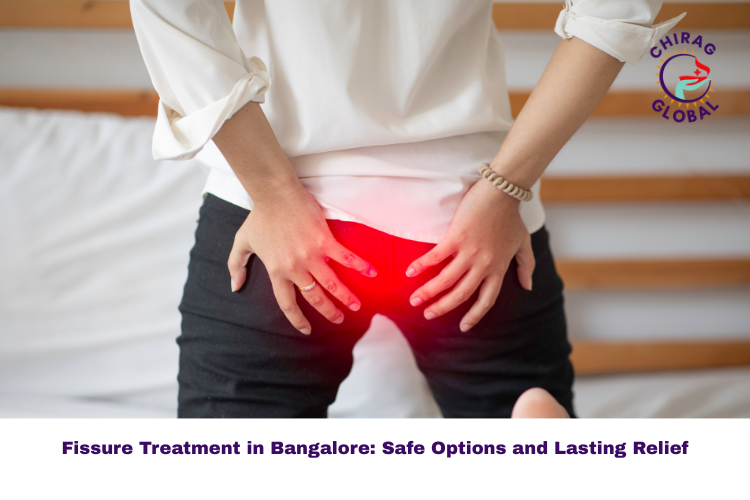
Pain while passing stool can be distressing, especially when it is sharp, burning, or followed by bleeding. One of the common reasons for this type of pain is an anal fissure. A fissure is a small cut or tear in the lining of the anus, often caused by hard stool, constipation, straining, or repeated irritation during bowel movements.
If you are looking for fissure treatment in Bangalore, the right treatment depends on whether the fissure is new or chronic, how severe the pain is, whether bleeding is present, and whether the anal muscle has gone into spasm. Some fissures may heal with medicines, stool softeners, sitz bath, and bowel habit correction. Long-standing or recurring fissures may need advanced treatment or surgery.
At Chirag Global Hospitals, our expert colorectal specialists provide safe, effective, and stage-based fissure management, combining advanced techniques with a patient-first approach.
Facing pain or bleeding? Book your fissure consultation at Chirag Global Hospitals, Bangalore.
What Is an Anal Fissure?
An anal fissure is a small tear in the skin or lining of the anal canal. It usually develops when hard stool stretches the anal opening during bowel movement. The tear can cause sharp pain, burning, bleeding, and discomfort that may last even after passing stool.
Fissures are often confused with piles because both may cause bleeding and pain. However, the pain pattern is usually different. Fissure pain is often sharp, cutting, or burning, especially during and after stool passage.
Fissures may be:
- Acute fissures: Recent tears that may heal with proper medical care and bowel habit correction.
- Chronic fissures: Long-standing fissures that keep returning or do not heal properly.
- Recurrent fissures: Fissures that improve temporarily but come back due to constipation, hard stool, or anal muscle spasm.
Understanding the type of fissure is important before deciding the right fissure treatment in Bangalore.
Common Symptoms of Anal Fissure
The symptoms of fissure may be mild at first but can become severe if constipation or anal spasm continues.
Common symptoms include:
- Sharp pain while passing stool
- Burning sensation after bowel movements
- Bright red bleeding on stool or tissue
- Pain that continues for minutes or hours after stool passage
- Tightness or spasm around the anus
- Fear of passing stool due to pain
- Itching or irritation around the anal opening
- Small tear or cut near the anus
- Constipation due to avoiding bowel movements
- Recurring pain after hard stool
If pain and bleeding continue for more than a few days, it is better to consult a fissure doctor in Bangalore for proper evaluation.
What Causes Anal Fissures?
Anal fissures are often triggered by increased strain or irritation to the anal lining. Some of the major causes include:
1️. Hard or Large Stools
Passing hard stool can stretch and tear the delicate lining, causing a fissure.
2️. Chronic Constipation
Repeated straining puts pressure on the anal canal, increasing the chances of tearing.
3️. Chronic Diarrhea
Frequent watery stools irritate and inflame the tissue.
4️. Low-Fiber Diet
A diet lacking fiber leads to dry stools that are harder to pass.
5️. Dehydration
Insufficient water intake contributes to stool hardness and friction.
6️. Childbirth-Related Strain
Many women experience fissures during or after delivery due to increased pelvic pressure.
7️. Inflammatory Bowel Conditions
Conditions like Crohn’s disease can decrease blood flow and weaken tissues.
Why Early Treatment Matters
Ignoring fissure symptoms can turn a simple tear into a chronic and recurring issue. Delayed treatment may result in:
- Persistent severe pain
- Continuous bleeding
- Infection or abscess
- Sentinel pile formation
- Increased muscle spasms
- Longer healing time
Seeking timely medical attention ensures faster healing and reduces complications.
Fissure vs Piles: How Are They Different?
Fissure and piles are often confused because both can cause bleeding and discomfort. However, they are different conditions.
| Feature | Fissure | Piles |
|---|---|---|
| Main issue | Small tear in anal lining | Swollen blood vessels |
| Pain pattern | Sharp, cutting, burning pain during stool passage | Pain may occur with swelling, thrombosis, or prolapse |
| Bleeding | Usually bright red streaks | Bright red bleeding may occur during stool passage |
| Common trigger | Hard stool, constipation, anal spasm | Constipation, straining, pressure on veins |
| Feeling after stool | Burning or spasm may continue | Discomfort, swelling, or incomplete evacuation may occur |
If bleeding is present, do not assume it is only fissure or piles. A proper examination helps confirm the diagnosis.
Patients who have bleeding without sharp cutting pain may also need evaluation for piles. Chirag Global Hospitals also has a detailed page on piles treatment in Bangalore for patients who want to understand the difference in treatment approach.
Fissure Treatment Options at Chirag Global Hospitals, Bangalore
Chirag Global Hospitals provides a structured, stage-based approach to fissure management. Our specialized team evaluates the severity of the fissure and recommends the most effective and comfortable treatment plan.
1. Anal Sphincter Tone Optimization
One of the key reasons for fissure pain is involuntary tightening of the anal sphincter muscle.
Our specialists focus on reducing spasm and improving blood supply through:
- Prescribed creams
- Muscle relaxants
- Warm sitz baths
- Gentle lifestyle adjustments
This helps relieve pain and promotes natural healing.
2️. Sphincterotomy
For chronic, non-healing fissures, a minimally invasive sphincterotomy may be recommended.
Benefits include:
- Reduced muscle spasm
- Improved blood flow
- Faster healing
- Long-term symptom relief
This procedure is performed only when conservative options fail.
3️. Sitz Bath Therapy
Warm sitz baths are extremely effective for soothing pain and reducing inflammation.
They work by:
- Relaxing the anal muscles
- Improving circulation
- Reducing irritation
Patients receive detailed guidance on how and when to use sitz baths for best results.
4️. Simple Medication for Early Fissures
Early-stage fissures often heal with medication if started promptly.
Treatment may include:
- Pain-relief ointments
- Anti-inflammatory medications
- Blood flow–enhancing creams
- Stool softeners
These reduce discomfort and promote tissue healing.
5️. Dietary & Lifestyle Modification
Long-term fissure care requires digestive health improvement.
Our specialists recommend changes such as:
- A fiber-rich diet
- Adequate hydration
- Avoiding spicy foods
- Regular physical activity
- Not delaying bowel movements
- Proper toilet habits
These adjustments help healing and prevent recurrence.
Can Fissure Heal Without Surgery?
Yes, many acute fissures can heal without surgery when treated early. Stool softening, medicines, sitz bath, and avoiding straining may help the tear heal.
However, chronic fissures may not heal properly if anal spasm, scar tissue, constipation, or repeated tearing continues. In such cases, a doctor may discuss advanced treatment options.
The right treatment depends on examination, not assumptions.
Why Choose Chirag Global Hospitals for Fissure Treatment in Bangalore?
Chirag Global Hospitals stands out as a trusted colorectal care center for several reasons:
Highly Experienced Specialists
Our team has deep expertise in treating both acute and chronic fissures.
Advanced Treatment Methods
From medication to sphincterotomy, all options are available under one roof.
Focus on Comfort & Safety
Treatments are designed to minimize discomfort and maximize recovery.
Individualized Treatment Plans
Every patient receives a personalized plan based on their condition.
FAQs – Fissure Treatment in Bangalore
1. How do I know if the pain I feel is a fissure?
If you experience sharp pain during bowel movements along with bleeding, it is likely a fissure. A specialist can confirm the diagnosis.
2. Do fissures always require surgery?
No. Most early fissures heal with medication and lifestyle changes. Surgery is only needed for chronic or severe cases.
3. Are sitz baths really effective?
Yes. Warm sitz baths help relax muscles and reduce pain significantly.
4. How soon can I recover after treatment?
Depending on severity, many patients experience relief within a few days of starting treatment.
5. Can fissures come back?
Recurrence can happen if diet and toilet habits are not managed properly. Following your doctor’s guidance helps prevent relapse.