
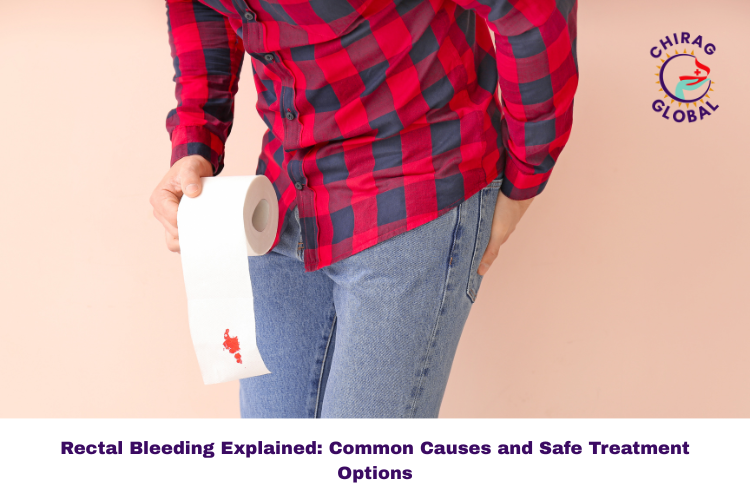
Rectal bleeding is one of the most common symptoms people ignore or misjudge. Many assume it is “just piles,” but in reality, rectal bleeding can point to several conditions—some mild, some serious, and a few potentially life-threatening if neglected. If you live in Bangalore and are experiencing rectal bleeding, understanding the causes and knowing when it becomes serious can help you take the right steps at the right time.
Before rushing to home remedies or self-medication, it is important to get the condition professionally evaluated. Chirag Global Hospitals in Bangalore specialises in advanced colorectal care, offering accurate diagnosis and safe, effective treatment for conditions that cause rectal bleeding.
If you notice rectal bleeding, do not ignore it. Visit Chirag Global Hospitals, Bangalore, for safe diagnosis and expert colorectal treatment.
What Is Rectal Bleeding?
Rectal bleeding refers to any blood—bright red, maroon, or dark—coming from the rectum or seen in the stool. Depending on the cause, rectal bleeding may appear as:
- Blood on toilet paper
- Blood streaks on stool
- Blood mixed inside stool
- Drops of blood after passing motion
- A dark, tarry appearance of stool
The type and colour of bleeding can provide important clues about the source of the problem.
Common Causes of Rectal Bleeding
Rectal bleeding can occur due to several reasons, ranging from harmless to serious. Some of the most common causes include:
1. Piles (Hemorrhoids)
Swollen veins in the rectum or anus cause bright red bleeding, usually painless. Bleeding often occurs after passing stool.
2. Anal Fissures
Small tears in the anal lining. Bleeding is usually accompanied by sharp pain and burning.
3. Fistula
An abnormal tunnel near the anus. May cause bleeding, discharge, and repeated infections.
4. Infections or Inflammation
Conditions like colitis or gastroenteritis can lead to rectal bleeding.
5. Polyps
Growths in the colon or rectum; some types can progress to cancer.
6. Colorectal Cancer
Although not common in young adults, persistent rectal bleeding in older individuals can be an early warning sign.
Because rectal bleeding can come from many sources, getting the right diagnosis early is essential.
When Is Rectal Bleeding Serious?
Rectal bleeding becomes serious when accompanied by:
- Persistent or increasing bleeding
- Severe anal pain
- Blood mixed inside stool (not just outside)
- Change in bowel habits (constipation/diarrhea)
- Black or tar-like stools
- Weakness, dizziness, or fatigue
- Unexplained weight loss
- Fever or pus discharge
If you experience any of these symptoms, seek immediate medical evaluation.
Why You Should Not Self-Treat Rectal Bleeding
Many people assume rectal bleeding is due to piles and start using over-the-counter creams or home remedies. This can delay diagnosis and worsen the underlying condition.
Self-treating is risky because:
- Bleeding may be from a fissure or fistula—not piles
- Internal conditions like polyps or IBD need medical management
- Serious bleeding can lead to anemia
- Cancer symptoms may be mistaken for piles
A doctor can determine the exact reason for bleeding using simple, painless diagnostic methods.
How Chirag Global Hospitals Helps Diagnose Rectal Bleeding
Chirag Global Hospitals in Bangalore provides specialised colorectal evaluation through:
Detailed physical examination
To identify piles, fissures, or external issues.
Proctoscopy / Anoscopy
A simple test to view internal hemorrhoids or tearing.
Sigmoidoscopy or Colonoscopy (if needed)
To examine deeper parts of the colon for polyps, inflammation, or cancer.
This structured approach ensures nothing is missed, and the right treatment is provided immediately.
Treatment Options for Rectal Bleeding at Chirag Global Hospitals
Treatment depends on the underlying cause:
1. Lifestyle & Dietary Correction
Useful in mild cases of constipation-related bleeding.
Includes hydration, high-fibre diet, and healthy bowel habits.
2. Medication-Based Management
Prescribed for piles, fissures, infections, or inflammation.
Includes pain relief, stool softeners, antibiotics, or anti-inflammatory medication.
3. Minimally Invasive Procedures
Suitable for internal hemorrhoids or small polyps.
Includes rubber-band ligation, sclerotherapy, or infrared coagulation.
4. Laser Treatment
A modern, precise, minimally invasive option for fissures, fistula, or piles.
Benefits include less pain, minimal bleeding, and faster recovery.
5. Surgical Intervention
Recommended only when necessary, such as severe piles, recurrent fistula, large polyps, or cancer.
When to Visit Chirag Global Hospitals
Consult a specialist if you have:
- Bleeding lasting more than 2–3 days
- Severe or increasing pain
- Recurrent bleeding
- Blood mixed inside stool
- Discharge or swelling near anus
- Changes in bowel habits
Early evaluation ensures quicker relief and avoids complications.
FAQs
1. Is rectal bleeding always due to piles?
No. Although piles are common, rectal bleeding can also occur due to fissures, fistula, infections, or even polyps.
2. Should I see a doctor for minor bleeding?
Yes. Even small bleeding episodes should be evaluated to rule out serious issues.
3. Is laser treatment available for rectal bleeding causes?
Yes. Laser treatment is available for piles, fissures, and fistulas at Chirag Global Hospitals.
4. Can constipation cause rectal bleeding?
Yes. Straining due to constipation can trigger or worsen bleeding.
5. Is rectal bleeding a sign of cancer?
Not always, but persistent or unexplained bleeding requires evaluation to rule out colorectal cancer.