
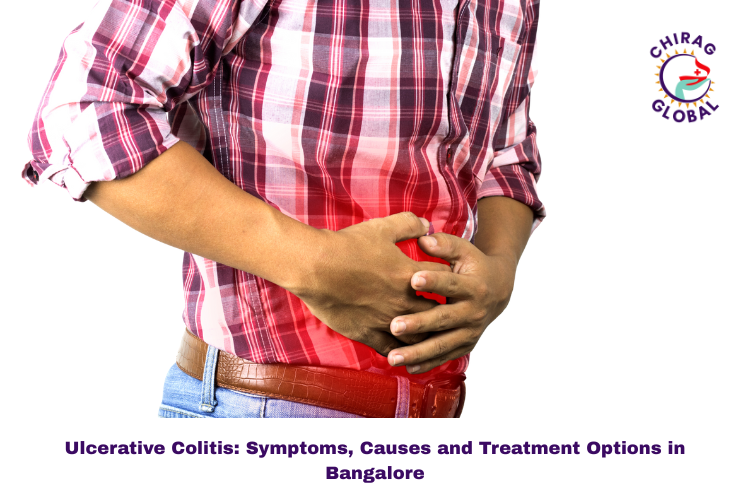
Ulcerative colitis is a chronic inflammatory bowel disease (IBD) that affects the inner lining of the large intestine (colon) and rectum, often causing long-term digestive discomfort and flare-ups. If you are experiencing frequent loose stools, blood in stools, or persistent abdominal pain, understanding this condition early can make a major difference in your health and quality of life.
At Chirag Global Hospitals, patients come for trusted evaluation and advanced treatment support. Many patients consider us the Best Colo – Rectal Hospital of India for comprehensive colorectal care and patient-first outcomes.
Need clarity about your symptoms? Don’t wait for flare-ups to worsen. Book a consultation at Chirag Global Hospitals in Bangalore to speak with an experienced colorectal specialist and get a personalized treatment plan.
What Is Ulcerative Colitis?
If you’re searching online for what is ulcerative colitis, here’s the simplest explanation:
Ulcerative colitis meaning refers to long-term inflammation and ulcer formation in the colon and rectum. Unlike occasional indigestion, ulcerative colitis is a medical condition that can cause repeated episodes of symptoms, called flares, followed by periods where symptoms reduce, known as remission.
Key Points to Understand
- It is an autoimmune-related inflammatory condition
- It affects the colon (large intestine) and rectum
- It causes ulcers and bleeding in the intestinal lining
- It usually follows a flare-remission pattern
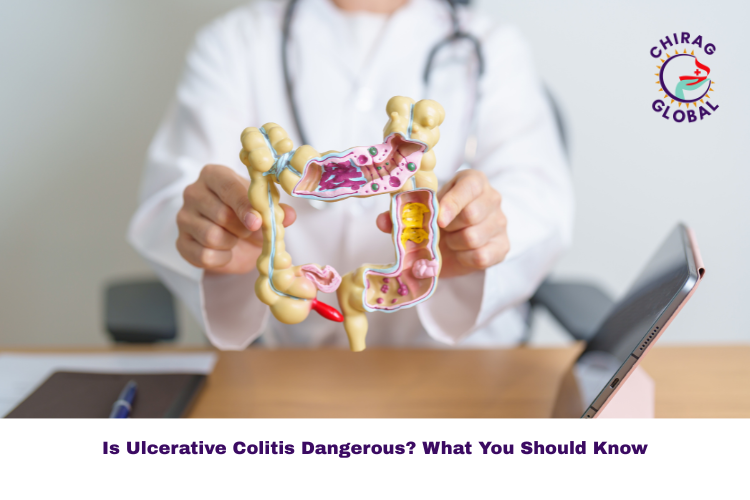
How Ulcerative Colitis Affects the Digestive System
To understand ulcerative colitis, it helps to know what your colon does:
- Absorbs water and salts
- Forms stool
- Helps maintain gut balance
In ulcerative colitis, inflammation damages the colon lining, leading to:
- Reduced water absorption → diarrhea
- Fragile blood vessels → bleeding
- Painful ulcers → cramps and urgency
Patients in Bangalore often report symptoms worsening after:
- Long work hours
- Irregular meals
- Travel stress
- Frequent outside food
While lifestyle can influence flare-ups, ulcerative colitis is not caused solely by food.
Types of Ulcerative Colitis
Ulcerative colitis can affect different parts of the colon. Doctors classify it based on location:
1) Ulcerative Proctitis
- Inflammation limited to the rectum
- Symptoms may include:
- Rectal bleeding
- Mild diarrhea
- Urgency
- Rectal bleeding
2) Proctosigmoiditis
- Affects the rectum + sigmoid colon
- Common symptoms:
- Bloody diarrhea
- Cramping
- Tenesmus (feeling of incomplete evacuation)
- Bloody diarrhea
3) Left-Sided Colitis
- Affects the left side of the colon
- Symptoms include:
- Abdominal pain (usually left side)
- Weight loss
- Fatigue
- Abdominal pain (usually left side)
4) Pancolitis
- Affects the entire colon
- May cause:
- Severe diarrhea
- Fever
- Significant weakness
- Higher risk of complications
- Severe diarrhea
At Chirag Global Hospitals in Bangalore, evaluation includes identifying the type and severity so treatment is precise—not generic.
Ulcerative Colitis Symptoms: What You Should Not Ignore
Ulcerative colitis symptoms can vary from mild to severe. Some people experience symptoms for weeks before seeking help, especially when they assume it’s piles, infection, or food intolerance.
Common Symptoms of Ulcerative Colitis
- Diarrhea (often frequent and urgent)
- Blood in stool
- Mucus in stool
- Abdominal cramps and pain
- Urgency to pass stool
- Fatigue and low energy
- Loss of appetite
- Unexplained weight loss
- Fever (in moderate/severe cases)
Symptoms That Need Urgent Medical Attention
If you are in Bangalore and notice any of the following, consult a specialist quickly:
- Heavy rectal bleeding
- Severe abdominal pain
- Signs of dehydration
- High fever with diarrhea
- Dizziness or weakness
- Rapid weight loss
Many patients feel anxious or embarrassed discussing bowel symptoms. At Chirag Global Hospitals, we maintain a respectful, private, and supportive environment.
What Causes Ulcerative Colitis?
One of the most searched questions is: what is ulcerative colitis caused by?
The truth is, there is no single confirmed cause, but experts believe it develops due to a combination of factors.
1) Immune System Dysfunction
In ulcerative colitis, the immune system may mistakenly attack the colon lining, causing inflammation.
2) Genetic Risk (Family History)
You may have a higher risk if:
- A parent or sibling has IBD
- You have a family history of autoimmune conditions
3) Environmental Triggers
These don’t directly “cause” the disease, but can trigger flare-ups:
- Stress
- Certain medications (in some cases)
- Gut infections
- Dietary changes
4) Gut Microbiome Imbalance
Changes in healthy gut bacteria may contribute to inflammation.
Important: Ulcerative colitis is not contagious, and it’s not caused simply by eating spicy food—though certain foods can worsen symptoms during flares.
Is Ulcerative Colitis the Same as IBS?
No. This is a very common confusion in Bangalore clinics.
Ulcerative Colitis vs IBS (Key Differences)
Ulcerative colitis:
- Has inflammation and ulcers
- Can cause bleeding
- Seen on colonoscopy
- Needs medical treatment and monitoring
IBS (Irritable Bowel Syndrome):
- Functional disorder (no visible ulcers)
- Usually no blood in stool
- Triggered by stress/diet
- Managed differently
If you have blood in stool, don’t self-diagnose as IBS. Get evaluated.
How Ulcerative Colitis Is Diagnosed in Bangalore
At a specialized colorectal center like Chirag Global Hospitals, diagnosis is structured and thorough to ensure safe, accurate treatment planning.
Tests Commonly Used
- Detailed clinical consultation
- Blood tests (anemia, inflammation markers)
- Stool tests (rule out infection)
- Colonoscopy (most important test)
- Biopsy (to confirm inflammation type)
- Imaging if needed (CT/MRI in specific cases)
Many patients worry colonoscopy will be painful. In most cases, it is performed with sedation and is generally well-tolerated.
Ulcerative Colitis Treatment Options
Treatment depends on:
- Disease severity
- Area affected
- Frequency of flare-ups
- Patient lifestyle and tolerance
1) Medications
Doctors may prescribe:
- Anti-inflammatory medicines (to reduce swelling)
- Immunomodulators (for immune control)
- Biologic therapy (for moderate to severe cases)
- Supportive medicines for symptoms
2) Dietary and Lifestyle Support
There is no “one diet” that cures ulcerative colitis, but food planning helps.
During flare-ups, many patients do better with:
- Soft, low-fiber meals
- Plenty of fluids
- Smaller, frequent meals
Some common trigger foods may include:
- Fried foods
- Alcohol
- Excess caffeine
- Very spicy foods
- High dairy (in sensitive individuals)
3) Surgery (When Required)
Surgery may be recommended if:
- Symptoms don’t respond to treatment
- There is severe bleeding
- There are complications
- Cancer risk increases
At Chirag Global Hospitals—one of Bangalore’s leading colorectal hospitals located in Bangalore—patients receive complete guidance on whether surgery is needed and what recovery looks like.
Can Ulcerative Colitis Be Cured?
Ulcerative colitis is a chronic condition, meaning it can be long-term. However, many patients achieve:
- Long remission periods
- Better bowel control
- Improved energy levels
- Strong quality of life with ongoing care
With expert support in Bangalore, it is absolutely possible to manage the condition effectively.
Living With Ulcerative Colitis : Practical Tips
Managing ulcerative colitis is not just about medication—it’s also about everyday planning.
Helpful Lifestyle Habits
- Keep a food and symptom journal
- Stay hydrated (especially in Bangalore summers)
- Avoid skipping meals due to work pressure
- Plan bathroom access during travel
- Prioritize sleep and stress reduction
- Never stop medicines suddenly without advice
Follow-Up Matters
Regular follow-ups help prevent:
- Severe flare-ups
- Nutritional deficiencies
- Colon-related complications
Why Choose Chirag Global Hospitals in Bangalore for Ulcerative Colitis Care?
Ulcerative colitis can affect your confidence, social life, work productivity, and mental health. Choosing the right specialist makes a huge difference.
At Chirag Global Hospitals, Bangalore, patients receive:
- Expert colorectal consultations
- Advanced diagnostic support
- Patient-friendly explanations
- Personalized treatment planning
- Long-term follow-up care
If you want trusted guidance from specialists at the Best Colo – Rectal Hospital of India, we’re here to support you with compassion and clinical excellence.
Conclusion
If you’re experiencing frequent diarrhea, bleeding, or persistent stomach pain, don’t delay care. Ulcerative colitis is treatable—and early diagnosis can protect your long-term health.
Visit Chirag Global Hospitals in Bangalore to consult a colorectal specialist and explore the most effective treatment options with confidence.
FAQs
1) Is ulcerative colitis painful?
Yes, it can cause abdominal cramps, urgency, and discomfort—especially during flare-ups. Pain levels vary by severity and how much of the colon is affected.
2) Can I trust Chirag Global Hospitals in Bangalore for ulcerative colitis treatment?
Yes. Chirag Global Hospitals is known for structured colorectal evaluation, transparent treatment planning, and patient-focused care in Bangalore.
3) How long does ulcerative colitis treatment take?
Treatment is usually long-term. Many patients feel improvement within weeks of starting the right plan, but maintenance care and follow-ups are important to prevent relapse.
4) Will I need surgery for ulcerative colitis?
Not always. Many patients manage well with medication and monitoring. Surgery is considered only in severe or complicated cases, or when medical therapy doesn’t help.
5) Are follow-ups necessary even if I feel better?
Yes. Even during remission, follow-ups help track inflammation, adjust medications, and reduce the risk of complications over time.