
When it comes to rectal prolapse vs hemorrhoids, many people in Bangalore feel confused, worried, or even embarrassed to seek help. Both conditions can cause discomfort, swelling, and bleeding—but the truth is, they are very different problems and require different treatments.
At Chirag Global Hospitals, patients across Bangalore regularly consult our colorectal specialists for accurate diagnosis and advanced treatment options. Early evaluation can prevent complications and help you return to daily life comfortably.
If you’re noticing a lump, pain, bleeding, or a “something coming out” sensation while passing stool—don’t wait.
Book a consultation at Chirag Global Hospitals in Bangalore today and get clarity from an experienced colo-rectal specialist.
Understanding the Basics: What’s Happening in Your Body?
Before comparing prolapse vs hemorrhoids, it helps to understand what each condition actually is.
What Are Hemorrhoids (Piles)?
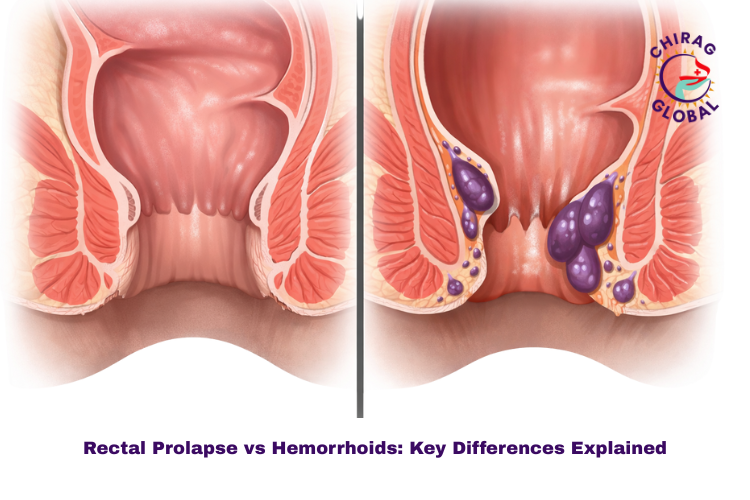
Hemorrhoids, commonly called piles, are swollen veins in the lower rectum or anus. They can be:
- Internal hemorrhoids (inside the rectum)
- External hemorrhoids (around the anus)
- Thrombosed hemorrhoids (clotted, painful external hemorrhoids)
Hemorrhoids are extremely common and often linked to constipation, straining, and long sitting hours—something many working professionals in Bangalore experience due to desk jobs and sedentary lifestyles.
What Is Rectal Prolapse?
Rectal prolapse happens when the rectum (the last part of the large intestine) slips down and protrudes out through the anus. This is not just swelling—this is an actual structural problem where the rectum loses its normal support.
Rectal prolapse can be:
- Partial prolapse (only inner lining slips out)
- Complete prolapse (full thickness of rectum protrudes)
- Internal prolapse (rectum folds inward but doesn’t come out)
Rectal Prolapse vs Hemorrhoids: Key Differences at a Glance
Here’s a simple way to compare piles vs rectal prolapse clearly:
1) Appearance of the Lump
Hemorrhoids
- Looks like a small swelling or grape-like lump
- Often appears as a single bulge (or multiple small lumps)
- External piles may look bluish if thrombosed
Rectal Prolapse
- Looks like a larger, circular tissue mass
- Often described as a “donut-like” protrusion
- May show concentric rings of rectal tissue
2) When It Comes Out
Hemorrhoids
- May protrude during bowel movements
- Often goes back in on its own (early stages)
- In advanced cases, may need manual pushing back
Rectal Prolapse
- Comes out during bowel movements, coughing, or standing
- More likely to worsen over time
- May stay out longer or permanently in severe cases
3) Pain Level
Hemorrhoids
- External piles can be very painful
- Internal piles may be painless but bleed
Rectal Prolapse
- Usually more of a pressure or heaviness sensation
- Pain may occur due to irritation, ulceration, or trapped tissue
4) Bleeding Pattern
Hemorrhoids
- Bright red blood on tissue or stool surface
- Bleeding is common, especially with constipation
Rectal Prolapse
- Bleeding can occur due to friction or mucosal damage
- Often associated with mucus discharge too
5) Mucus Discharge and Leakage
Hemorrhoids
- Usually no mucus leakage unless severe irritation exists
Rectal Prolapse
- Mucus discharge is common
- Some patients experience stool leakage or incontinence
Symptoms: How to Identify Prolapse vs Hemorrhoids at Home
Many people try home remedies first, especially when symptoms feel mild. But with rectal prolapse vs hemorrhoids, guessing can delay the right treatment.
Common Symptoms of Hemorrhoids (Piles)
You may be dealing with piles if you notice:
- Itching around the anus
- Burning sensation after passing stool
- Bright red bleeding
- Small painful swelling near the anal opening
- Discomfort while sitting (common for Bangalore commuters and office workers)
- Pain during bowel movements (especially with hard stool)
Common Symptoms of Rectal Prolapse
Rectal prolapse symptoms often include:
- A visible bulge coming out of the anus
- Feeling of incomplete bowel emptying
- Mucus discharge or wetness
- Difficulty controlling gas or stool
- Frequent urge to pass stool
- Worsening symptoms over time
Why It Happens: Causes of Piles vs Rectal Prolapse
Understanding causes helps prevent recurrence and supports long-term recovery.
Causes of Hemorrhoids
Hemorrhoids can be triggered by:
- Chronic constipation or diarrhea
- Straining during bowel movements
- Low-fiber diet (common with fast food habits)
- Pregnancy and childbirth
- Obesity
- Prolonged sitting (work-from-home or desk jobs)
- Heavy lifting in gyms or physical work
Causes of Rectal Prolapse
Rectal prolapse is often linked to:
- Weak pelvic floor muscles
- Chronic constipation and straining
- Aging-related tissue weakness
- Previous pelvic surgeries
- Neurological issues affecting bowel control
- Multiple childbirths (in some women)
- Long-standing untreated hemorrhoids (rarely, but symptoms may overlap)
Is It Serious? When to See a Specialist in Bangalore
Some people ignore symptoms until they worsen. But if you’re unsure about rectal prolapse vs hemorrhoids, a colorectal evaluation is the safest step.
Seek immediate medical attention if you have:
- Persistent bleeding
- Severe pain or swelling
- A lump that doesn’t go back in
- Stool leakage or loss of control
- Fever or pus discharge
- Sudden worsening of symptoms
In Bangalore’s fast-paced lifestyle, it’s easy to postpone care—but early diagnosis often means simpler treatment and faster relief.
Diagnosis: How Doctors Confirm Prolapse vs Hemorrhoids
At Chirag Global Hospitals, one of Bangalore’s leading colorectal hospitals located in Bangalore, diagnosis is done in a respectful, patient-friendly manner with complete privacy.
Common Diagnostic Methods
Your specialist may recommend:
- Clinical examination (most important first step)
- Digital rectal exam
- Proctoscopy/Anoscopy (to view internal piles)
- Sigmoidoscopy or Colonoscopy (if bleeding needs deeper evaluation)
- Defecography (in selected prolapse cases)
- Pelvic floor evaluation if needed
The goal is to identify the exact cause—because treating piles when you actually have prolapse will not solve the problem.
Treatment Options in Bangalore: Rectal Prolapse vs Hemorrhoids
Treatment depends on severity, symptoms, and overall health.
Hemorrhoids Treatment Options
Lifestyle & Non-Surgical Care
Mild piles may improve with:
- High-fiber diet (fruits, vegetables, whole grains)
- Increased water intake
- Stool softeners (if prescribed)
- Sitz baths
- Topical ointments (short-term use only)
- Avoiding straining and long toilet sitting
Advanced Hemorrhoid Treatments
For persistent or severe hemorrhoids, options may include:
- Rubber band ligation
- Injection therapy
- Laser treatment (in selected cases)
- Hemorrhoidectomy (surgical removal in advanced cases)
Rectal Prolapse Treatment Options
Non-Surgical Support (Early or Mild Cases)
Some early prolapse cases may benefit from:
- Constipation management
- Pelvic floor physiotherapy
- Dietary changes and bowel training
Surgical Treatment for Rectal Prolapse
Most complete rectal prolapse cases require surgery, such as:
- Rectopexy (fixing rectum back into place)
- Perineal procedures (in selected patients)
- Minimally invasive approaches when suitable
Your surgeon will recommend the safest and most effective option based on your condition.
Recovery & Comfort: What Patients in Bangalore Can Expect
Many patients fear pain or long recovery time, especially those balancing work and family responsibilities.
Hemorrhoids Recovery
- Mild treatments: relief within days to weeks
- Procedures: often quick recovery depending on technique
- Lifestyle changes reduce recurrence
Rectal Prolapse Recovery
- Surgical recovery varies by procedure
- Bowel habits and pelvic floor strength improve gradually
- Follow-up care is important to prevent recurrence
Prevention Tips: Reduce Risk of Piles and Prolapse
Whether you’re dealing with piles or prolapse, prevention matters.
Daily Habits That Help
- Eat fiber-rich foods daily
- Drink 2–3 liters of water (unless medically restricted)
- Avoid straining
- Don’t sit on the toilet for long periods
- Exercise regularly (walking is enough)
- Treat constipation early
- Avoid self-medicating for rectal bleeding
Final Thoughts: Don’t Ignore the Signs
Rectal symptoms are common—but they should never be ignored. When it comes to rectal prolapse vs hemorrhoids, early diagnosis can prevent worsening, reduce pain, and improve quality of life.
If you’re in Bangalore and experiencing bleeding, swelling, discomfort, or a protruding lump, the right step is a specialist consultation—not home guesses.
Visit Chirag Global Hospitals in Bangalore today to consult a colorectal expert, explore treatment options, and get lasting relief with confidence.
FAQs: Rectal Prolapse vs Hemorrhoids
1) How do I know if I have hemorrhoids or rectal prolapse?
Hemorrhoids usually feel like swollen lumps or cause bleeding and itching, while rectal prolapse often looks like a larger tissue mass coming out. A specialist consultation in Bangalore is the best way to confirm.
2) Is rectal prolapse painful?
Rectal prolapse may cause discomfort, heaviness, mucus discharge, or leakage. Pain can occur if the tissue gets irritated or trapped.
3) Can piles turn into rectal prolapse?
Piles and prolapse are different conditions, but long-term straining and chronic constipation can increase risk for both. Proper evaluation helps avoid misdiagnosis.
4) Is treatment at Chirag Global Hospitals safe and comfortable?
Yes. Chirag Global Hospitals focuses on patient comfort, privacy, accurate diagnosis, and advanced colorectal treatments with supportive follow-ups.
5) How many days does it take to recover after treatment?
Recovery depends on the condition and treatment type. Many piles procedures allow faster recovery, while prolapse surgery may take longer. Your doctor will guide you based on your lifestyle needs in Bangalore.